Genome-edited Cells
Pancreas
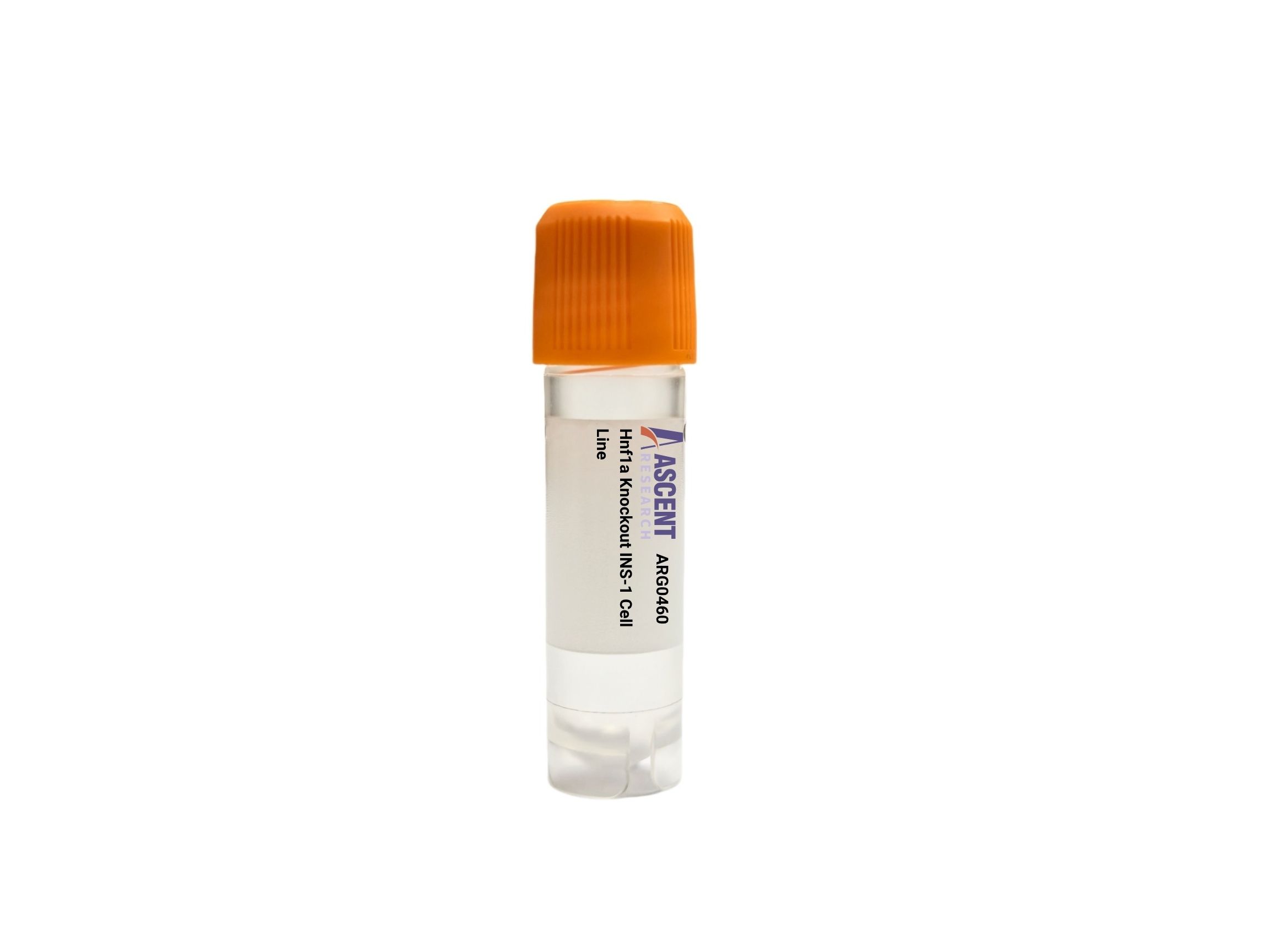
The Hnf1a Knockout INS-1 Cell Line is a CRISPR/Cas9-edited knockout cell line derived from rat pancreatic beta cells (INS-1), featuring disruption of the Hnf1a gene. HNF1A is a transcription factor that regulates key beta cell genes, including insulin (INS) and glucose transporter 2 (GLUT2), and is controlled by upstream factors such as HNF4A and PDX1. This model is suited for investigating MODY3, insulin secretion, and beta cell function. Applications include diabetes drug screening, gene regulatory network analysis, and mechanistic studies of beta cell failure. Researchers can employ GSIS assays, ChIP-qPCR, and RNA-seq to characterize the loss-of-function phenotype.
 ABHD4 Knockout HEK293T Polyclonal Cells
Cat. No. ARG25561
HCCS Knockout MES-OV Polyclonal Cells
Cat. No. ARG24507
GNS Knockout A2780 Polyclonal Cells
Cat. No. ARG29014
GTF2IRD1 Knockout HGC-27 Polyclonal Cells
Cat. No. ARG29883
HTRA1 Knockout jurkat Polyclonal Cells
Cat. No. ARG34294
ARAP1 Knockout AGS Polyclonal Cells
Cat. No. ARG26613
ABHD4 Knockout HEK293T Polyclonal Cells
Cat. No. ARG25561
HCCS Knockout MES-OV Polyclonal Cells
Cat. No. ARG24507
GNS Knockout A2780 Polyclonal Cells
Cat. No. ARG29014
GTF2IRD1 Knockout HGC-27 Polyclonal Cells
Cat. No. ARG29883
HTRA1 Knockout jurkat Polyclonal Cells
Cat. No. ARG34294
ARAP1 Knockout AGS Polyclonal Cells
Cat. No. ARG26613
The Hnf1a Knockout INS-1 Cell Line is a CRISPR/Cas9-edited knockout cell line designed for targeted disruption of the Hnf1a gene in Rattus norvegicus pancreatic beta cells. This loss-of-function model is generated using CRISPR/Cas9-mediated gene disruption, providing a stable knockout background for investigating HNF1A-dependent regulatory networks. Developed in the INS-1 host cell line, this product enables precise dissection of transcriptional mechanisms governing beta cell function without the variables of transient knockdown systems.
The INS-1 cell line is a well-established rat insulinoma-derived pancreatic beta cell line that retains glucose-responsive insulin secretion. Originating from Rattus norvegicus, INS-1 cells exhibit hallmark beta cell characteristics, including expression of key beta cell markers and the capacity to release insulin in response to physiological glucose concentrations. This makes the INS-1 line an ideal host for modeling beta cell biology, as it closely mimics primary islet beta cell behavior while offering robust and reproducible in vitro culture properties.
HNF1A is a critical transcription factor that orchestrates pancreatic beta cell identity and function. It directly binds to the promoters of essential beta cell genes, including insulin (INS) and glucose transporter 2 (SLC2A2/GLUT2), activating their transcription and thereby enabling glucose-stimulated insulin secretion. HNF1A functions within a complex regulatory network: it is regulated by upstream factors such as HNF4A, FOXA2, PDX1, and PAX6, and is influenced by Wnt signaling. It also interacts with transcriptional coactivators including PCAF, CREBBP, and EP300, and can cross-regulate HNF4A, forming a feed-forward loop. Downstream targets of HNF1A extend to PKLR and G6PC, linking it to broader glucose metabolism pathways. This network positions HNF1A as a master regulator of the mature beta cell phenotype.
Targeted disruption of Hnf1a in INS-1 cells directly compromises the beta cell transcriptional program. Loss of HNF1A leads to reduced expression of its target genes, particularly INS and GLUT2, resulting in diminished glucose-stimulated insulin secretion and a partial loss of beta cell identity. This phenotype recapitulates key features of maturity-onset diabetes of the young type 3 (MODY3) and aspects of type 2 diabetes, making the knockout cell line a physiologically relevant model for studying beta cell failure. By ablating HNF1A function, researchers can interrogate the molecular events driving impaired insulin secretion and explore compensatory mechanisms within the beta cell regulatory network.
This knockout cell line supports a wide array of investigative applications, including mechanistic studies of MODY3 pathogenesis, screening of potential antidiabetic compounds, and dissection of insulin secretion pathways. It is particularly valuable for gene regulatory network analysis, employing techniques such as ChIP-qPCR to map HNF1A target engagement and RNA-seq for transcriptomic profiling. Key supporting assays include genomic PCR and Sanger sequencing for knockout confirmation, western blotting for HNF1A protein, RT-qPCR for insulin and GLUT2 transcripts, GSIS assays, and immunofluorescence staining for insulin. Contact Ascent Research for more information.