Genome-edited Cells
Pancreas
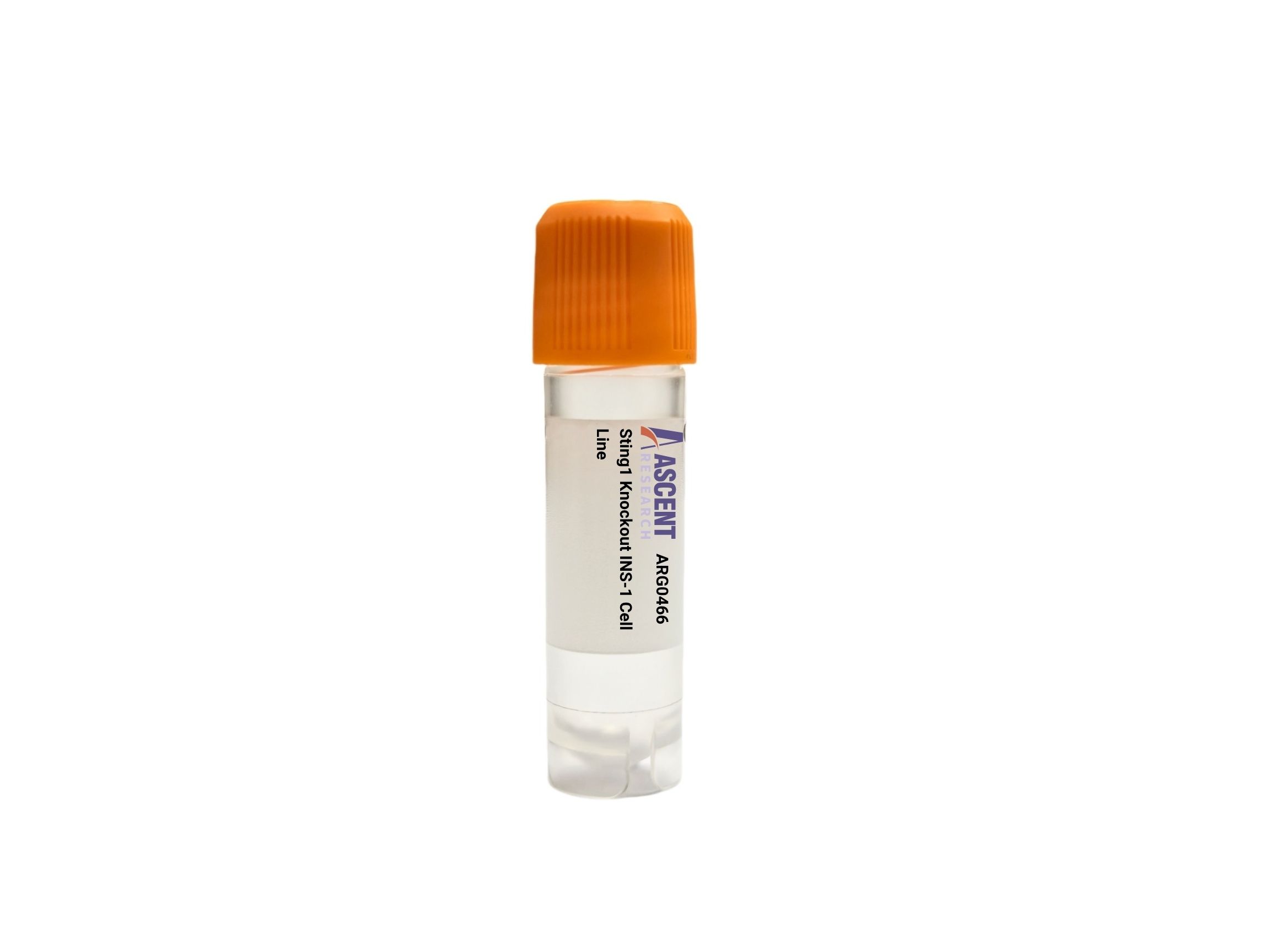
The Sting1 Knockout INS-1 Cell Line is a CRISPR/Cas9-edited knockout cell line derived from rat INS-1 insulinoma cells. It eliminates STING, an ER-resident sensor that upon binding cGAMP activates TBK1 and IKK, leading to IRF3- and NF-??B-mediated transcription of type I interferons and cytokines like IFN-??, IL-6, and TNF-??. These pathways are critical for innate immune responses to cytosolic DNA and cyclic dinucleotides. This model enables the study of STING-dependent innate immunity in pancreatic beta cells, relevant to diabetes inflammation, viral infection, autoimmunity, and STING-targeted therapies. The INS-1 host maintains glucose-stimulated insulin secretion, facilitating investigation of immune-metabolic crosstalk via techniques such as western blotting, RT-qPCR, and IFN-?? ELISA.
 MAP3K11 Knockout HEK293 Polyclonal Cells
Cat. No. ARG12666
GPR65 Knockout HAP1 Polyclonal Cells
Cat. No. ARG22353
BLOC1S1 Knockout huh-7 Polyclonal Cells
Cat. No. ARG28098
PHACTR4 Knockout MES-OV Polyclonal Cells
Cat. No. ARG5815
NRAS Knockout AGS Polyclonal Cells
Cat. No. ARG2100
MAP3K11 Knockout HEK293 Polyclonal Cells
Cat. No. ARG12666
GPR65 Knockout HAP1 Polyclonal Cells
Cat. No. ARG22353
BLOC1S1 Knockout huh-7 Polyclonal Cells
Cat. No. ARG28098
PHACTR4 Knockout MES-OV Polyclonal Cells
Cat. No. ARG5815
NRAS Knockout AGS Polyclonal Cells
Cat. No. ARG2100
 RBE
Cat. No. ARC0751
RBE
Cat. No. ARC0751
The Sting1 Knockout INS-1 Cell Line is a CRISPR/Cas9-edited knockout cell model derived from the rat INS-1 insulinoma cell line. This product provides a stable loss-of-function system for studying the stimulator of interferon genes (STING) protein, encoded by Sting1, in a pancreatic beta cell context. CRISPR/Cas9-mediated gene disruption ablates STING expression, enabling researchers to dissect innate immune signaling pathways without the confounding effects of endogenous STING activity.
INS-1 cells are a well-established rat pancreatic beta cell line originating from a radiation-induced insulinoma. They retain key physiological features, including glucose-stimulated insulin secretion, and are extensively used as a model for beta cell function, insulin secretion mechanisms, and the impact of inflammatory signals on islet biology. Their robustness and genetic tractability make them an ideal host for investigating molecular interactions between metabolism and innate immunity.
STING is an endoplasmic reticulum-resident adaptor protein central to the cGAS?CSTING pathway. Upon sensing cytosolic DNA, cGAS synthesizes cGAMP, which binds STING and triggers its translocation to the Golgi. STING then recruits and activates TBK1 and IKK, leading to phosphorylation and nuclear translocation of IRF3 and NF-??B. These transcription factors induce the expression of type I interferons (IFN-??, IFN-??), pro-inflammatory cytokines (IL-6, TNF-??), and interferon-stimulated genes. STING activity is modulated by upstream sensors (cGAS, IFI16, DDX41), nucleases (TREX1), and E3 ligases (TRIM32, AMFR, RNF5) that regulate its stability and signaling amplitude.
In pancreatic beta cells, aberrant STING activation has been implicated in diabetes pathogenesis. Cytosolic DNA from viral infections, mitochondrial stress, or cellular damage can engage STING, driving interferon and cytokine responses that promote beta cell dysfunction and apoptosis. By eliminating STING in INS-1 cells, this knockout line permits the dissection of the specific contributions of the cGAS?CSTING?CTBK1?CIRF3/NF-??B axis to beta cell impairment. It enables studies on how loss of STING alters responses to stimuli such as synthetic cyclic dinucleotides, DNA transfection, or coxsackievirus infection, providing insights into potential therapeutic strategies for preserving beta cell mass.
Application of this knockout cell line includes western blotting for STING and phospho-IRF3, RT-qPCR for Ifnb1, Il6, and Tnf, immunofluorescence for STING translocation, and IFN-?? ELISA. Co-immunoprecipitation assays can assess STING?CTBK1 complex disruption, while ISRE-luciferase reporter assays quantify interferon pathway activity. The model is suited for research on innate immune signaling in beta cells, diabetes inflammation, viral sensing, autoimmunity, and cancer immunotherapy. For further information, please contact Ascent Research.