Genome-edited Cells
Blood (peripheral blood)
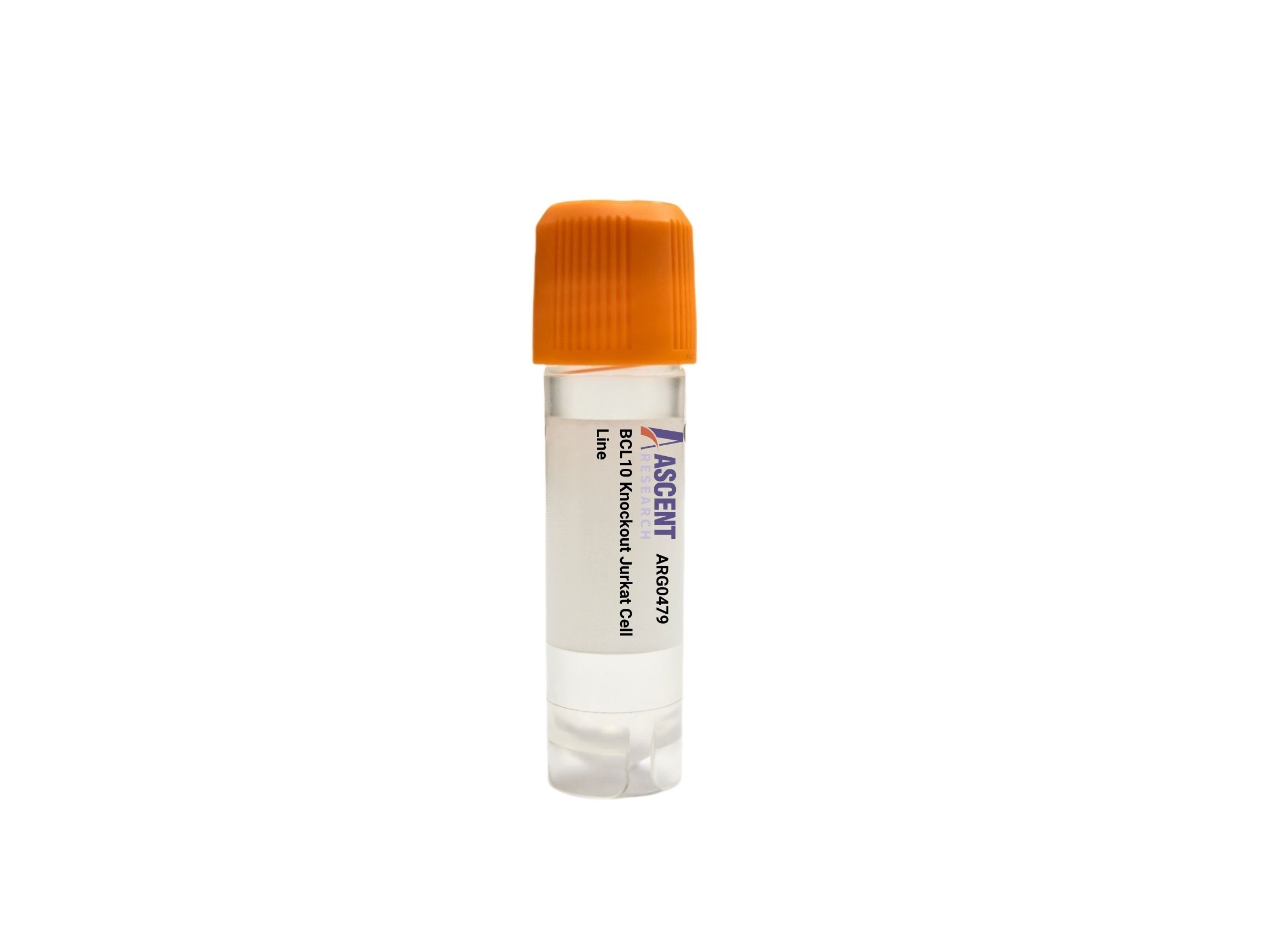
The BCL10 Knockout Jurkat Cell Line is a CRISPR/Cas9-edited human T lymphocyte line lacking functional BCL10, a scaffold protein essential for CBM complex-mediated NF-??B activation. BCL10 bridges T-cell receptor (TCR) signals through CARD11 and MALT1 to the IKK complex, driving pro-inflammatory cytokine and pro-survival gene expression. Knockout disrupts TCR?CPKC?ȨCCARD11?CBCL10?CMALT1?CNF-??B signaling, impairing IL-2 and TNF?? transcription. This cell line enables detailed investigation of T-cell activation, lymphomagenesis, and NF-??B pathway dynamics, and serves as a platform for screening BCL10-dependent therapeutics.
 ARHGEF12 Knockout A549 Polyclonal Cells
Cat. No. ARG19919
MAPRE2 Knockout jurkat Polyclonal Cells
Cat. No. ARG13031
C1GALT1 Knockout MES-OV Polyclonal Cells
Cat. No. ARG24380
HAVCR1 Knockout SK-Hep-1 Polyclonal Cells
Cat. No. ARG36667
DNAJC19 Knockout huh-7 Polyclonal Cells
Cat. No. ARG39238
ARHGEF12 Knockout A549 Polyclonal Cells
Cat. No. ARG19919
MAPRE2 Knockout jurkat Polyclonal Cells
Cat. No. ARG13031
C1GALT1 Knockout MES-OV Polyclonal Cells
Cat. No. ARG24380
HAVCR1 Knockout SK-Hep-1 Polyclonal Cells
Cat. No. ARG36667
DNAJC19 Knockout huh-7 Polyclonal Cells
Cat. No. ARG39238
 SHG-44
Cat. No. ARC0814
SHG-44
Cat. No. ARC0814
The BCL10 Knockout Jurkat Cell Line is a CRISPR/Cas9-edited human T lymphocyte cell line with targeted disruption of the BCL10 gene. Derived from the Jurkat host, it serves as a stable loss-of-function model for studying BCL10-dependent signaling. This isogenic knockout line enables precise dissection of antigen receptor pathways without pharmacological interference, ensuring reproducible results. It retains the Jurkat T-cell leukemia background while eliminating functional BCL10, making it valuable for NF-??B and immune activation research.
Jurkat cells are immortalized human T lymphocytes derived from an acute T-cell leukemia patient, widely used to study T-cell receptor (TCR) signaling, immune synapse formation, and transcriptional responses. They express key proximal signaling components, including protein kinase C theta (PKC??) and the CARD11?CBCL10?CMALT1 (CBM) complex, making them ideal for investigating antigen receptor-driven NF-??B activation. Their leukemic origin also provides a relevant context for T-cell malignancy and lymphomagenesis research.
BCL10 is an essential scaffold in the CBM complex, linking TCR signals to IKK complex activation and NF-??B transcription. Upon TCR stimulation, PKC?? phosphorylates CARD11, which recruits BCL10 and MALT1, facilitating TRAF6 recruitment and IKK?? (NEMO)-dependent IKK activation. Active IKK phosphorylates I??B??, leading to its degradation and release of NF-??B p65/p50 dimers for nuclear translocation. NF-??B then drives expression of pro-inflammatory cytokines (IL-2, TNF??) and pro-survival genes. BCL10 interacts directly with CARD11, MALT1, TRAF6, and IKK??, acting as a signaling bridge that converts extracellular antigen recognition into transcriptional programs governing T-cell activation, proliferation, and survival.
In Jurkat cells, BCL10 knockout disrupts TCR-induced NF-??B activity, impairing downstream gene transcription and immune responses. This defect arises from impaired CBM complex formation, which is critical for full T-cell activation and is implicated in MALT lymphoma, immunodeficiencies, and autoimmunity. This clean genetic ablation enables unambiguous assignment of BCL10’s roles in malignant transformation and immune dysregulation, free from confounding residual protein function.
Research applications include NF-??B pathway characterization, immunological synapse analysis, and lymphomagenesis modeling. Typical assays encompass Western blotting for phospho-I??B??, NF-??B luciferase reporter assays, IL-2 ELISA, and flow cytometry for CD69. Co-immunoprecipitation assesses CBM complex integrity, qPCR monitors NF-??B transcriptional targets, and apoptosis assays evaluate survival signaling post-TCR stimulation. This model supports drug screening for BCL10-dependent cancers and mechanistic T-cell signaling studies. For further information, please contact Ascent Research.