Genome-edited Cells
Brain
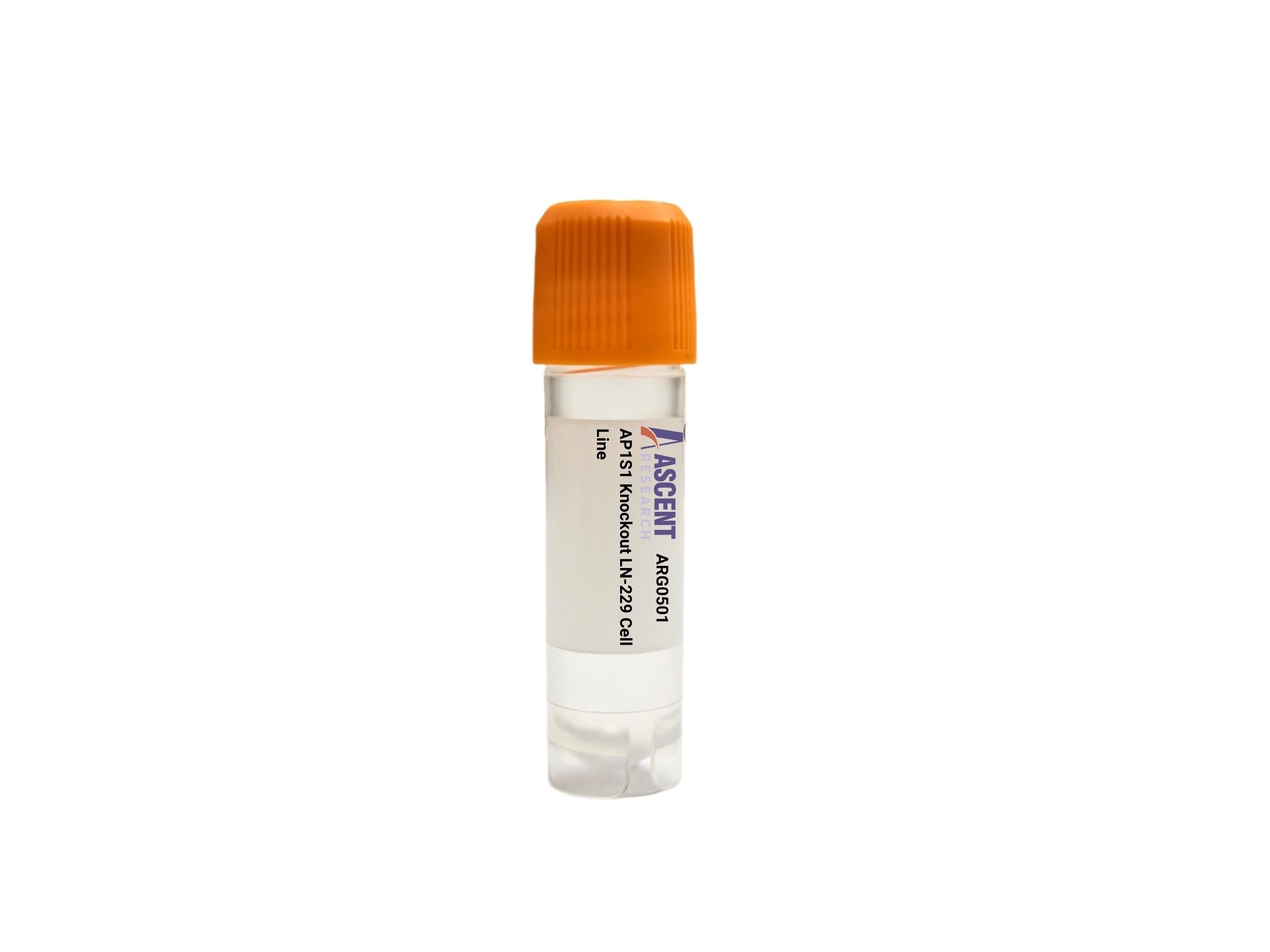
The AP1S1 Knockout LN-229 Cell Line is a CRISPR/Cas9-edited human glioblastoma model lacking the sigma1A subunit of the AP-1 adaptor complex, which is essential for clathrin-mediated vesicular trafficking from the trans-Golgi network to endosomes and lysosomes. This deficiency disrupts the sorting of mannose-6-phosphate receptors and lysosomal membrane proteins, thereby impairing lysosomal enzyme delivery and receptor recycling. The knockout line is a valuable tool for investigating AP-1-dependent cargo sorting, glioblastoma invasion mechanisms, and drug-sensitivity profiles. It supports assays such as transferrin uptake, LysoTracker staining, and western blotting to explore trafficking defects and lysosomal dysfunction in a cancer-relevant context.
 NTRK3 Knockout A2780 Polyclonal Cells
Cat. No. ARG18883
NTRK3 Knockout A2780 Polyclonal Cells
Cat. No. ARG18883
 UBE2S Knockout Huh-7 Cell Line
Cat. No. ARG44205
EOGT Knockout Hela Polyclonal Cells
Cat. No. ARG8099
ABCA12 Knockout Hela Polyclonal Cells
Cat. No. ARG37206
ARHGAP12 Knockout HAP1 Polyclonal Cells
Cat. No. ARG27303
UBE2S Knockout Huh-7 Cell Line
Cat. No. ARG44205
EOGT Knockout Hela Polyclonal Cells
Cat. No. ARG8099
ABCA12 Knockout Hela Polyclonal Cells
Cat. No. ARG37206
ARHGAP12 Knockout HAP1 Polyclonal Cells
Cat. No. ARG27303
 Dog Tracheal Epithelial Cells
Cat. No. ARP0981
Dog Tracheal Epithelial Cells
Cat. No. ARP0981
The AP1S1 Knockout LN-229 Cell Line is a CRISPR/Cas9-edited human glioblastoma cell line in which the AP1S1 gene has been disrupted to abolish expression of the sigma1A subunit of the adaptor protein complex 1 (AP-1). This knockout cell line provides a defined loss-of-function model for investigating the cellular consequences of AP1S1 deficiency in a grade IV astrocytoma background. The CRISPR/Cas9-mediated gene disruption ensures stable ablation of the sigma1A subunit, enabling robust and reproducible studies of adaptor complex assembly and clathrin-mediated trafficking.
LN-229 is a widely used human glioblastoma cell line with epithelial morphology, derived from a female patient. It serves as a representative model for grade IV astrocytoma, the most aggressive and common primary brain tumor. The LN-229 line features well-characterized growth properties, invasive behavior, and responsiveness to standard therapeutic agents, making it suitable for cancer cell biology and drug discovery research. This parental line has been extensively employed in studies of glioblastoma signaling, migration, and intracellular transport pathways. The knockout of AP1S1 in this context allows direct examination of the gene’s role in glioblastoma pathophysiology without confounding genetic heterogeneity.
AP1S1 encodes the sigma1A subunit, a critical component of the heterotetrameric AP-1 adaptor complex. This complex mediates clathrin-dependent vesicular trafficking between the trans-Golgi network (TGN) and endosomes, as well as endosomal recycling. The AP-1 complex, composed of ??1, ??, ??1, and ??1A subunits, is recruited to membranes via interactions with GTP-bound ARF1 and phosphatidylinositol 4-phosphate (PI4P). Through its ??1 subunit and cargo-binding domains, AP-1 recognizes tyrosine-based sorting motifs (YXX??) on cargo proteins such as mannose-6-phosphate receptors (MPRs) and lysosomal membrane proteins, directing them into clathrin-coated vesicles. The sigma1A subunit contributes to complex stability and cargo recognition. AP1S1 knockout prohibits assembly of the intact AP-1 complex, thereby disrupting the trafficking of lysosomal hydrolases, receptor recycling, and downstream signaling pathways. The AP-1 complex also interacts with clathrin heavy chain, Golgi-localized ??-ear-containing ARF-binding proteins (GGAs), and EpsinR, coordinating cargo sorting and vesicle formation. Loss of AP1S1 function impairs these processes, leading to mislocalization of MPRs and accumulation of lysosomal enzymes in the TGN, ultimately affecting lysosomal biogenesis and degradation capacity.
In glioblastoma cells, AP-1-mediated trafficking is essential for sustaining high proliferative rates, invasive capacity, and adaptation to the tumor microenvironment. Dysregulation of endosomal-lysosomal pathways has been implicated in glioblastoma progression, therapy resistance, and autophagy modulation. The AP1S1 knockout LN-229 line enables exploration of how AP-1 deficiency alters growth factor receptor sorting, extracellular matrix degradation, and nutrient sensing via mTORC1 signaling. This model also offers a platform to study the interplay between vesicular trafficking and oncogenic signaling networks, including receptor tyrosine kinase recycling and integrin trafficking that contribute to glioblastoma cell motility and invasion. By eliminating sigma1A, researchers can dissect AP-1-dependent versus independent trafficking routes and identify compensatory mechanisms that may be targetable therapeutically. Additionally, the model recapitulates features of MEDNIK syndrome, a genetic disorder caused by AP1S1 mutations, providing insight into neurodevelopmental and neurodegenerative processes relevant to brain tumors.
This knockout cell line is suitable for a wide range of experimental applications, including intracellular trafficking studies using transferrin uptake and LysoTracker staining assays, cargo sorting analysis via immunofluorescence and clathrin-coated vesicle isolation, and functional genomics approaches such as RT-qPCR and western blotting to assess downstream effects. The model is also well-suited for drug sensitivity screens to identify compounds that preferentially target cells with compromised AP-1 function, as well as wound healing and transwell invasion assays to evaluate the impact of AP1S1 loss on glioblastoma cell migration and invasiveness. Furthermore, it can be utilized to investigate lysosomal pathway integrity and its role in therapeutic resistance. Researchers may employ this cell line in co-culture models, xenograft studies, or high-content screening for trafficking modulators. The AP1S1 Knockout LN-229 Cell Line is a robust tool for dissecting adaptor protein complex functions in cancer and neurodegenerative disease contexts. For additional technical specifications or order inquiries, please contact Ascent Research.