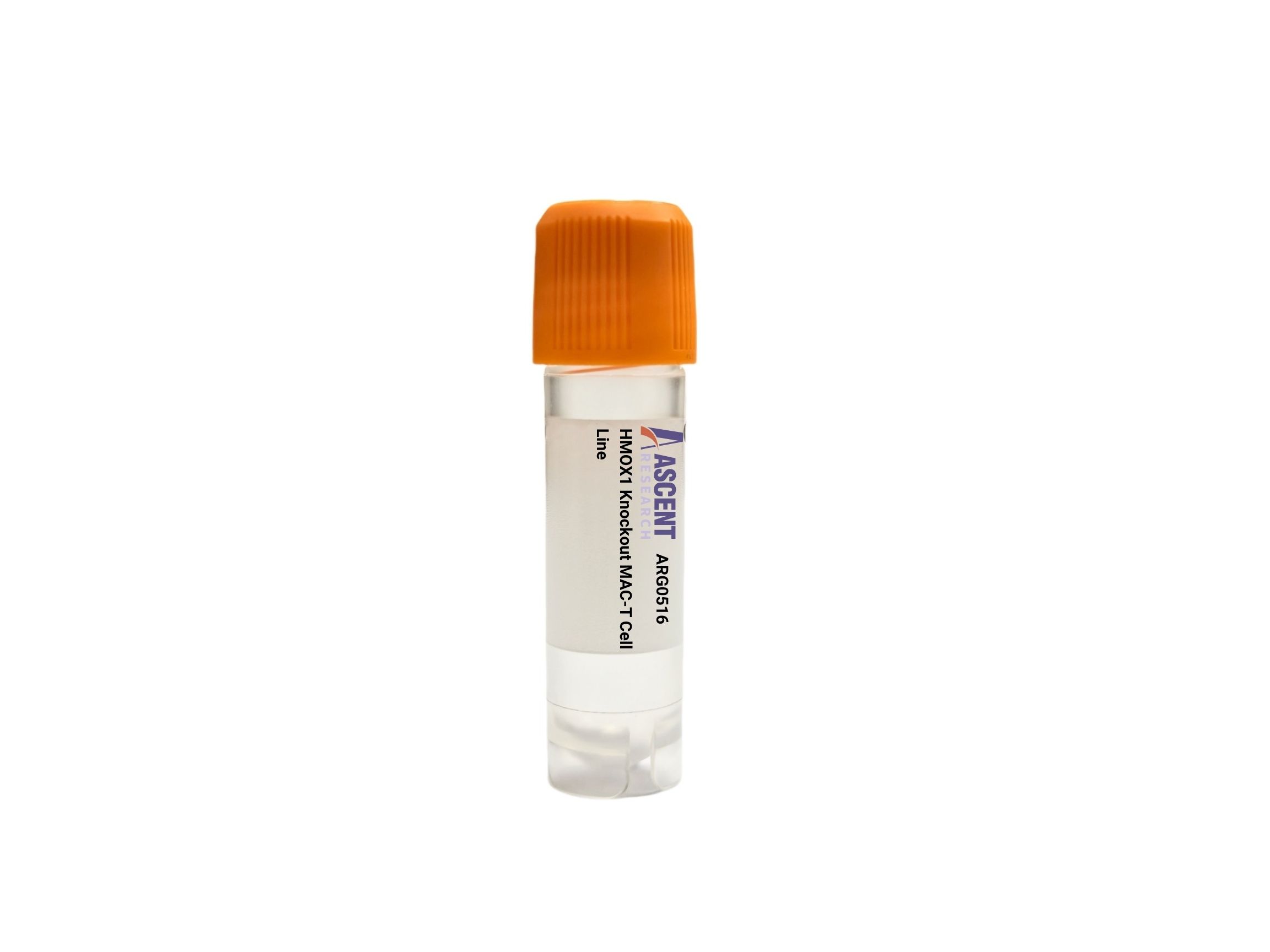
Genome-edited Cells
Breast (mammary gland)
The HMOX1 Knockout MAC-T Cell Line is a CRISPR/Cas9-edited bovine mammary epithelial cell line with targeted disruption of heme oxygenase-1 (HO-1). It provides a stable loss-of-function model for studying oxidative stress, inflammatory signaling, and cytoprotection in a physiologically relevant lactation model. HMOX1 is transcriptionally induced by NRF2 (NFE2L2) and repressed by Bach1; its products biliverdin and carbon monoxide modulate MAPK (ERK) and NF-??B signaling. The knockout cell line is suitable for studies on bovine mastitis, drug screening for NRF2 activators, and oxidative stress research, with applications including ROS detection, bilirubin assays, cytokine profiling, and Western blotting.
 FOXO3 Knockout 143B Polyclonal Cells
Cat. No. ARG11877
JRKL Knockout HT29 Polyclonal Cells
Cat. No. ARG33498
C1orf210 Knockout HAP1 Polyclonal Cells
Cat. No. ARG41299
EIF5A2 Knockout NCI-H1299 Polyclonal Cells
Cat. No. ARG41089
HDAC2 Knockout huh-7 Polyclonal Cells
Cat. No. ARG28273
FOXO3 Knockout 143B Polyclonal Cells
Cat. No. ARG11877
JRKL Knockout HT29 Polyclonal Cells
Cat. No. ARG33498
C1orf210 Knockout HAP1 Polyclonal Cells
Cat. No. ARG41299
EIF5A2 Knockout NCI-H1299 Polyclonal Cells
Cat. No. ARG41089
HDAC2 Knockout huh-7 Polyclonal Cells
Cat. No. ARG28273
 Rabbit Retinal Pigment Epithelial Cells
Cat. No. ARP0874
Rabbit Retinal Pigment Epithelial Cells
Cat. No. ARP0874
The HMOX1 Knockout MAC-T Cell Line is a CRISPR/Cas9-edited bovine mammary epithelial cell line engineered with a targeted disruption of the HMOX1 gene, which encodes heme oxygenase-1 (HO-1). This knockout cell line provides a stable loss-of-function model for investigating the enzyme??s cytoprotective, antioxidant, and anti-inflammatory functions within a physiologically relevant mammary epithelial context.
The parental MAC-T cell line is an immortalized yet non-transformed bovine mammary epithelial line derived from primary mammary alveolar cells. It retains responsiveness to lactogenic hormones and supports milk protein synthesis and secretion, making it a well-established model for lactation biology, mammary gland development, and dairy cattle health research. MAC-T cells exhibit polarized epithelial morphology and express caseins upon hormonal induction, faithfully recapitulating key features of the lactating mammary epithelium.
HMOX1 encodes heme oxygenase-1, which catalyzes the oxidative cleavage of heme into biliverdin, carbon monoxide (CO), and ferrous iron. Biliverdin is reduced by biliverdin reductase A to bilirubin, a key antioxidant. CO signals via soluble guanylyl cyclase to mediate anti-inflammatory effects, while ferrous iron induces ferritin, limiting oxidative damage. Transcriptional induction is driven by NRF2 (NFE2L2), which, under stress, dissociates from KEAP1 and translocates to the nucleus. Repression is mediated by Bach1 and MAF. Additional inputs from HIF1A, heat shock, heavy metals, and cytokines (IL-10, IL-1??) fine-tune expression. HO-1 activity modulates MAPK1/3 (ERK), AKT1 (PI3K-AKT), and NFKB1 (NF-??B) pathways, upregulating Bcl-2, p21, and VEGF. Interacting partners such as NADPH-cytochrome P450 reductase and p62/SQSTM1 contribute to enzyme function and NRF2 regulation.
In the mammary epithelium, high metabolic demands during lactation generate significant oxidative stress, and HO-1 is thought to protect cells by degrading pro-oxidant heme and generating antioxidant molecules. Additionally, its anti-inflammatory functions help restrain excessive immune responses that could compromise milk production or lead to mastitis. By disrupting HMOX1 in MAC-T cells, this knockout line enables studies on how loss of HO-1 affects mammary epithelial cell viability, redox homeostasis, and susceptibility to bacterial pathogens or inflammatory cytokines. It serves as a molecular tool for dissecting the interplay between oxidative stress, lactation, and mammary gland health.
Typical applications include ROS detection, cell viability assays under oxidative stress, bilirubin quantification, and RT-qPCR/Western blotting for NRF2 target genes. The line supports cytokine profiling by ELISA, immunofluorescence, and apoptosis flow cytometry. It is suitable for NRF2 activator screening and host-pathogen interaction studies modeling mastitis pathogens. Additional uses encompass cellular senescence research and analysis of HO-1??s role in mammary gland aging. For ordering, technical inquiries, or custom gene-editing services, contact Ascent Research.