Genome-edited Cells
Breast (mammary gland)
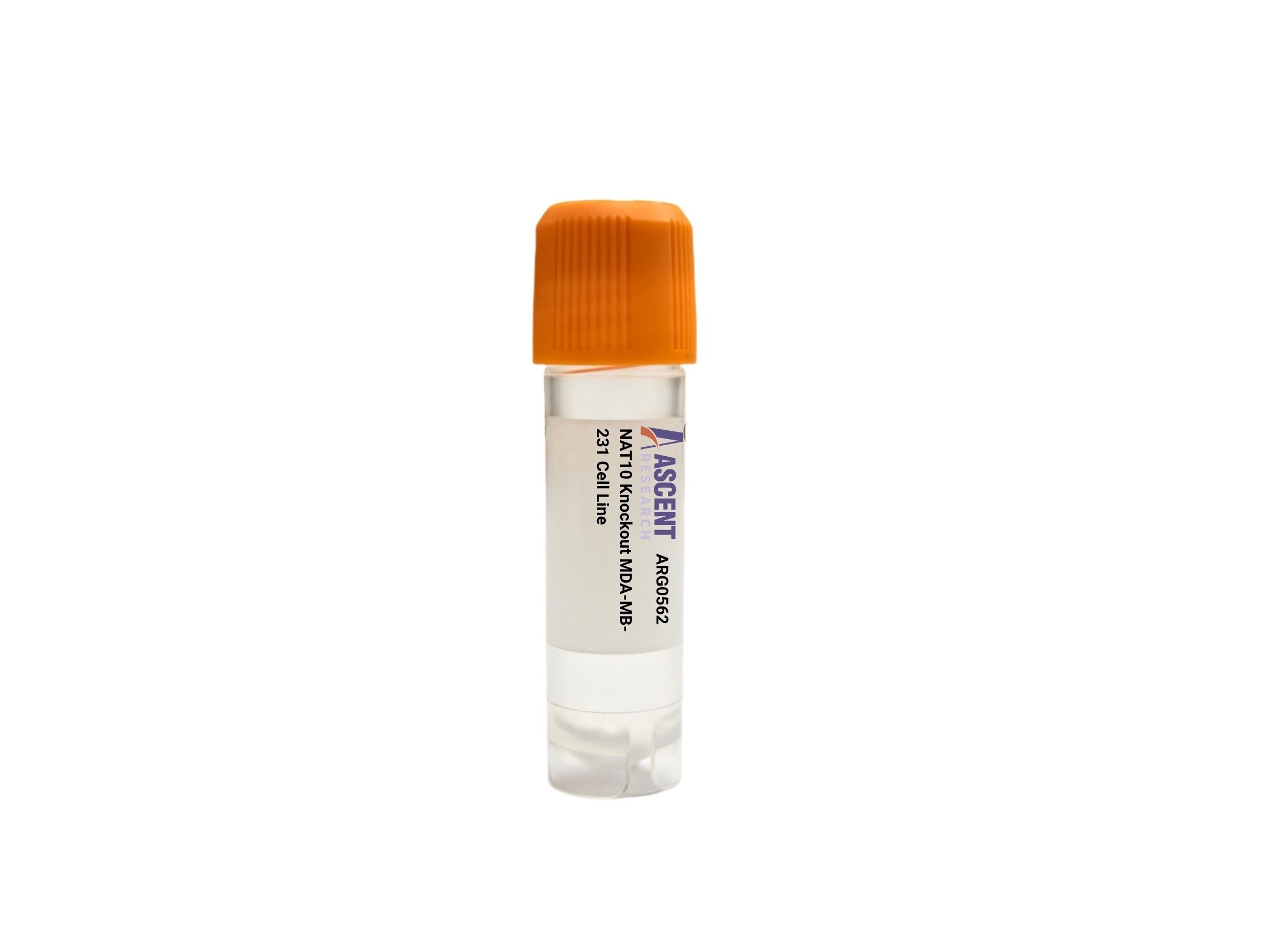
The NAT10 Knockout MDA-MB-231 Cell Line is a CRISPR/Cas9-edited knockout cell model derived from the triple-negative breast cancer line MDA-MB-231. It enables study of NAT10, an N-acetyltransferase involved in ac4C RNA modification, histone acetylation, and microtubule acetylation, with key roles in ribosome biogenesis and cell cycle progression, regulated by MYC, mTOR, and HIF1A. This loss-of-function cell line is instrumental for exploring NAT10-mediated regulation of proliferation and metastasis via mTOR and p53 signaling, and for therapeutic target studies in aggressive breast cancer. Applications include western blotting for acetylated targets, migration assays, and transcriptome-wide ac4C profiling.
 PEX5 Knockout A2780 Polyclonal Cells
Cat. No. ARG18563
COMMD2 Knockout A549 Polyclonal Cells
Cat. No. ARG10788
MPST Knockout A549 Polyclonal Cells
Cat. No. ARG10663
AEBP2 Knockout jurkat Polyclonal Cells
Cat. No. ARG33756
EDC3 Knockout AGS Polyclonal Cells
Cat. No. ARG40428
CRYZ Knockout AGS Polyclonal Cells
Cat. No. ARG2861
PEX5 Knockout A2780 Polyclonal Cells
Cat. No. ARG18563
COMMD2 Knockout A549 Polyclonal Cells
Cat. No. ARG10788
MPST Knockout A549 Polyclonal Cells
Cat. No. ARG10663
AEBP2 Knockout jurkat Polyclonal Cells
Cat. No. ARG33756
EDC3 Knockout AGS Polyclonal Cells
Cat. No. ARG40428
CRYZ Knockout AGS Polyclonal Cells
Cat. No. ARG2861
The NAT10 Knockout MDA-MB-231 Cell Line is a CRISPR/Cas9-edited knockout cell model derived from the triple-negative breast cancer line MDA-MB-231, in which the NAT10 gene encoding N-acetyltransferase 10 has been disrupted. This stable loss-of-function cell line enables sustained investigation of NAT10-dependent molecular mechanisms without the limitations of transient knockdown approaches, providing a defined genetic background for functional studies.
MDA-MB-231 is an epithelial breast adenocarcinoma cell line originally isolated from the pleural effusion of a 51-year-old female with metastatic breast adenocarcinoma. The cells are estrogen receptor-negative, progesterone receptor-negative, and HER2-negative (triple-negative), and harbor a mutant TP53 tumor suppressor. This line is highly invasive and widely used as a model for triple-negative breast cancer and metastatic progression, reflecting the aggressive nature of this disease subtype.
NAT10 is an N-acetyltransferase that catalyzes N4-acetylcytidine (ac4C) modification on RNA, acetylates histones, and acetylates microtubules, thereby promoting ribosome biogenesis, RNA processing, and cell cycle progression. Upstream, NAT10 is regulated by MYC, mTOR, and HIF1A. Downstream targets include acetylated histone H4, acetylated ??-tubulin, rRNA ac4C modification, CCND1, CDK4, and p53. Interacting partners include THUMPD1, MCRS1, UTP14A, and UTP3. Through these interactions, NAT10 integrates signals from the mTOR-RPS6KB1 axis and influences p53-mediated responses, positioning it at the intersection of growth factor signaling, protein synthesis, and stress adaptation.
In MDA-MB-231 cells, NAT10-dependent acetylation stabilizes target mRNAs and proteins critical for proliferation and motility. Knockout of NAT10 reduces ac4C modifications, leading to diminished ribosome biogenesis, impaired microtubule acetylation, and attenuated cell cycle entry. This compromises the high-rate protein synthesis and cytoskeletal dynamics required for the invasive phenotype of triple-negative breast cancer cells, thereby uncovering potential therapeutic vulnerabilities.
This cell line is suitable for dissecting the role of ac4C RNA modification in breast cancer, evaluating NAT10 as a therapeutic target in triple-negative disease, and elucidating regulatory networks controlling metastasis and proliferation. Representative experimental approaches include western blotting for acetylated ??-tubulin or ac4C, RT-qPCR for NAT10 target gene expression, RNA immunoprecipitation for ac4C, cell proliferation assays (MTT or BrdU), transwell migration/invasion assays, flow cytometry for cell cycle analysis, and transcriptome-wide ac4C profiling via RNA-seq. For further technical information or custom requests, please contact Ascent Research.