Genome-edited Cells
Kidney
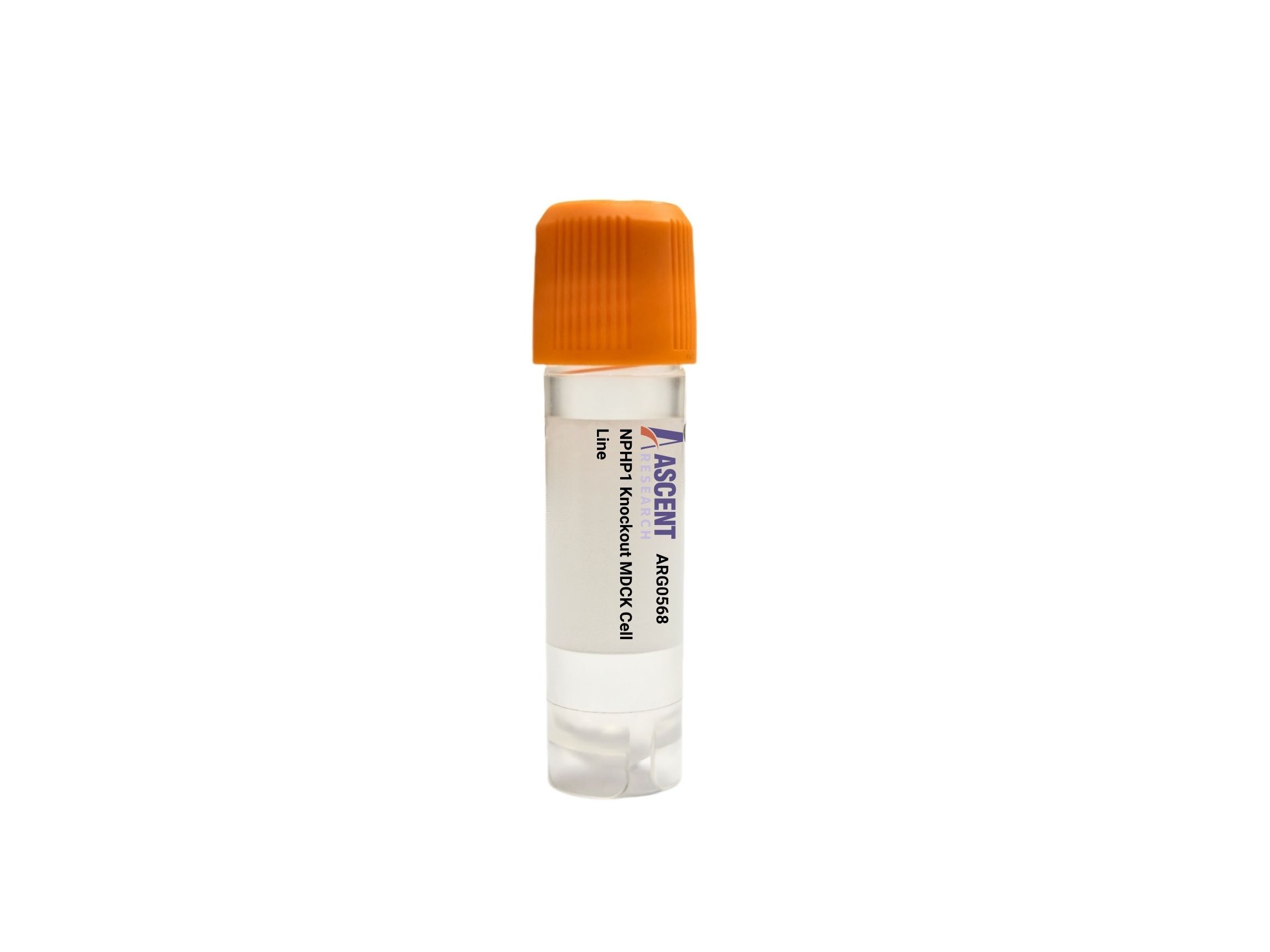
The NPHP1 Knockout MDCK Cell Line is a CRISPR/Cas9-edited canine kidney epithelial model with targeted disruption of NPHP1, which encodes nephrocystin-1??a ciliary transition zone protein that functions in a complex with NPHP4 and INVS. Derived from MDCK cells, this line offers a polarized epithelial system for investigating ciliopathy mechanisms. Nephrocystin-1 loss impairs primary cilium formation and disrupts Wnt/??-catenin and Shh/Gli signaling, affecting downstream ??-catenin transcriptional targets and Gli transcription factors. This model supports renal disease research, epithelial barrier studies, and drug screening for nephronophthisis and related syndromes.
 HECTD3 Knockout K562 Polyclonal Cells
Cat. No. ARG20542
CEP164 Knockout A2780 Polyclonal Cells
Cat. No. ARG19093
ADAMTS2 Knockout HAP1 Polyclonal Cells
Cat. No. ARG21644
KCNJ2 Knockout AGS Polyclonal Cells
Cat. No. ARG35823
EGF Knockout HAP1 Polyclonal Cells
Cat. No. ARG40716
MYO19 Knockout HEK293T Polyclonal Cells
Cat. No. ARG3248
HECTD3 Knockout K562 Polyclonal Cells
Cat. No. ARG20542
CEP164 Knockout A2780 Polyclonal Cells
Cat. No. ARG19093
ADAMTS2 Knockout HAP1 Polyclonal Cells
Cat. No. ARG21644
KCNJ2 Knockout AGS Polyclonal Cells
Cat. No. ARG35823
EGF Knockout HAP1 Polyclonal Cells
Cat. No. ARG40716
MYO19 Knockout HEK293T Polyclonal Cells
Cat. No. ARG3248
The NPHP1 Knockout MDCK Cell Line is a genetically modified canine kidney epithelial cell product in which the NPHP1 gene has been disrupted using CRISPR/Cas9-mediated genome editing. This knockout model provides a stable loss-of-function platform for investigating the cellular and molecular consequences of nephrocystin-1 deficiency.
The parental MDCK (Madin-Darby Canine Kidney) cell line is a widely used, non-tumorigenic epithelial model derived from normal canine kidney. MDCK cells form highly polarized monolayers with tight junctions and exhibit vectorial ion transport, making them ideal for studying epithelial barrier function and cell polarity. The cells maintain ciliogenesis capability under appropriate culture conditions, providing a relevant context for examining ciliary protein function.
NPHP1 encodes nephrocystin-1, a critical component of the ciliary transition zone that functions as a gatekeeper for protein entry and exit from the primary cilium. Within the transition zone, nephrocystin-1 forms complexes with NPHP4, INVS, and RPGRIP1L, and directly interacts with ??-catenin and P-cadherin to coordinate ciliary signaling with cell?Ccell adhesion. It operates downstream of HNF1B and is activated by Wnt and Shh ligands, while mediating signaling to downstream effectors including ??-catenin-driven transcriptional programs, Gli transcription factors, and RhoA-dependent cytoskeletal remodeling. Consequently, NPHP1 integrates ciliary gate regulation with key developmental pathways such as Wnt/??-catenin and Sonic hedgehog cascades.
Disruption of NPHP1 in MDCK cells impairs primary cilium formation and compromises the establishment of polarized epithelial architecture. Without functional nephrocystin-1, the transition zone loses its selective barrier, leading to aberrant ciliary trafficking, diminished hedgehog signaling, and destabilized junctional complexes. These defects are manifest as altered ??-catenin distribution, reduced transepithelial electrical resistance, and disorganized actin cytoskeleton ?C features that recapitulate aspects of renal ciliopathy phenotypes. Thus, this knockout cell line serves as a powerful in vitro surrogate for studying nephronophthisis type 1 and related syndromes in a kidney epithelial setting.
Researchers can employ this knockout line to dissect ciliary signaling mechanisms using immunofluorescence for ciliary markers such as acetylated ??-tubulin or Arl13b, and to quantify barrier integrity via transepithelial electrical resistance measurements. It is well suited for drug testing screens targeting nephronophthisis, functional analysis of Wnt/Shh crosstalk through RT-qPCR of target genes such as AXIN2 and GLI1, and co-immunoprecipitation studies to map nephrocystin-1 interaction networks. Additional applications include evaluating wound healing dynamics, assessing ??-catenin localization by flow cytometry, and investigating the role of NPHP1 in polarity establishment. For further details or custom inquiries, please contact Ascent Research.