Genome-edited Cells
Embryo
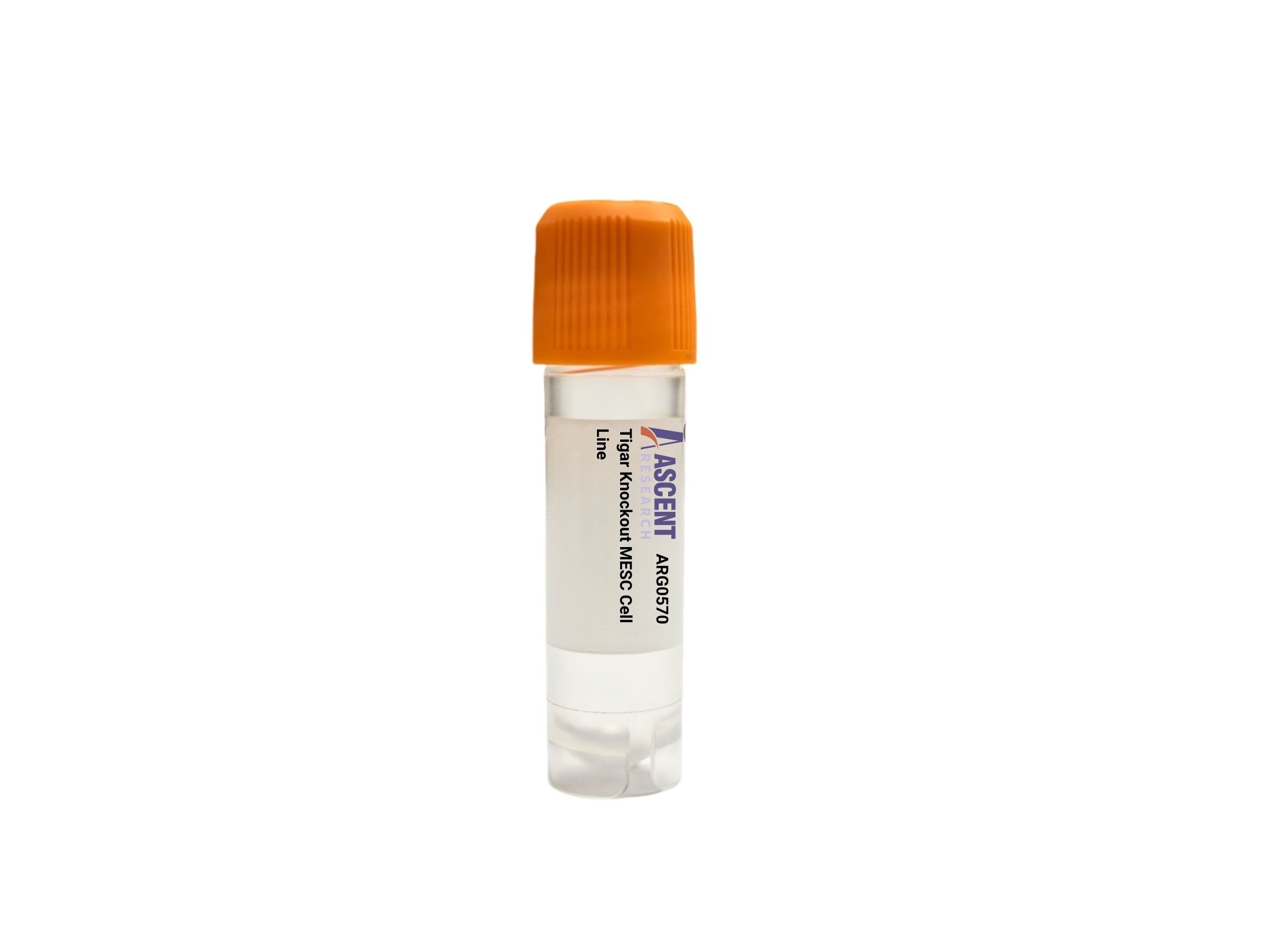
The Tigar Knockout MESC Cell Line is a CRISPR/Cas9-edited mouse embryonic stem cell model with loss of Tigar, a fructose-2,6-bisphosphatase that inhibits glycolysis and promotes the pentose phosphate pathway. This knockout line enables investigation of Tigar??s role in redox homeostasis, oxidative stress protection, and metabolic regulation downstream of p53. In pluripotent MESC, Tigar deficiency may disrupt ROS balance and metabolic shifts, impacting differentiation and self-renewal. Applications include studies of p53-mediated metabolic control, cancer metabolism, and screening for glycolysis modulators. Key molecular factors: p53, PFK-1, NADPH, GSH. Contact Ascent Research for details.
 PHF14 Knockout Hela Polyclonal Cells
Cat. No. ARG9045
ATG13 Knockout Raji Polyclonal Cells
Cat. No. ARG21294
GPR84 Knockout HAP1 Polyclonal Cells
Cat. No. ARG22358
EIF3L Knockout Hela Polyclonal Cells
Cat. No. ARG41022
EFHD1 Knockout HAP1 Polyclonal Cells
Cat. No. ARG40648
FBLN1 Knockout Raji Polyclonal Cells
Cat. No. ARG1935
PHF14 Knockout Hela Polyclonal Cells
Cat. No. ARG9045
ATG13 Knockout Raji Polyclonal Cells
Cat. No. ARG21294
GPR84 Knockout HAP1 Polyclonal Cells
Cat. No. ARG22358
EIF3L Knockout Hela Polyclonal Cells
Cat. No. ARG41022
EFHD1 Knockout HAP1 Polyclonal Cells
Cat. No. ARG40648
FBLN1 Knockout Raji Polyclonal Cells
Cat. No. ARG1935
The Tigar Knockout MESC Cell Line is a CRISPR/Cas9-edited mouse embryonic stem cell (MESC) line with targeted disruption of the Tigar gene, establishing a loss-of-function model for investigating fructose-2,6-bisphosphatase function. This stable knockout line enables reproducible studies of Tigar-dependent metabolic regulation, redox balancing, and cell survival mechanisms within a pluripotent cellular context, compatible with diverse biochemical and functional assays.
MESC are isolated from 129 or C57BL/6 mouse strains and remain undifferentiated when cultured with leukemia inhibitory factor (LIF) and serum, or in defined 2i inhibitor conditions. Their pluripotency allows differentiation into all three germ layers, providing a physiologically relevant system to examine how metabolic pathways intersect with stem cell maintenance, lineage commitment, and stress adaptation. The Tigar knockout line retains these pluripotent characteristics, facilitating direct assessment of gene function.
Tigar functions as a fructose-2,6-bisphosphatase that lowers fructose-2,6-bisphosphate levels, thereby inhibiting PFK-1 and reducing glycolytic flux. This metabolic rerouting enhances glucose entry into the pentose phosphate pathway, driving NADPH production and sustaining reduced glutathione (GSH) pools, which lowers reactive oxygen species (ROS) and protects against oxidative stress-induced apoptosis. Tigar expression is primarily regulated by p53 (TP53) and also responds to HIF1A, nutrient deprivation, and DNA damage. In signaling networks, Tigar interacts with hexokinase 2 (HK2) and autophagy component Beclin-1, while its downstream effects modulate mTOR signaling and autophagic processes, positioning it as a key integrator of glycolysis, redox control, and cell fate decisions.
In the MESC background, Tigar knockout offers a unique platform to dissect metabolic determinants of pluripotency. As ROS levels influence epigenetic marks and differentiation propensity, loss of Tigar may shift redox equilibrium, affecting self-renewal and lineage specification. This model helps unravel how stem cells balance glycolytic and oxidative metabolism during developmental transitions, with relevance to developmental biology and disease modeling.
Research applications span mechanistic studies of p53-dependent metabolic reprogramming, oxidative stress responses in pluripotent cells, and cancer metabolism research. Typical assays include Western blotting for Tigar and p53, RT-qPCR, Seahorse glycolysis stress tests, ROS detection with DCFDA, Annexin V apoptosis assays, and differentiation protocols coupled with metabolomic profiling. The line is also suitable for screening modulators of glycolysis or apoptosis. For comprehensive product information, please contact Ascent Research.