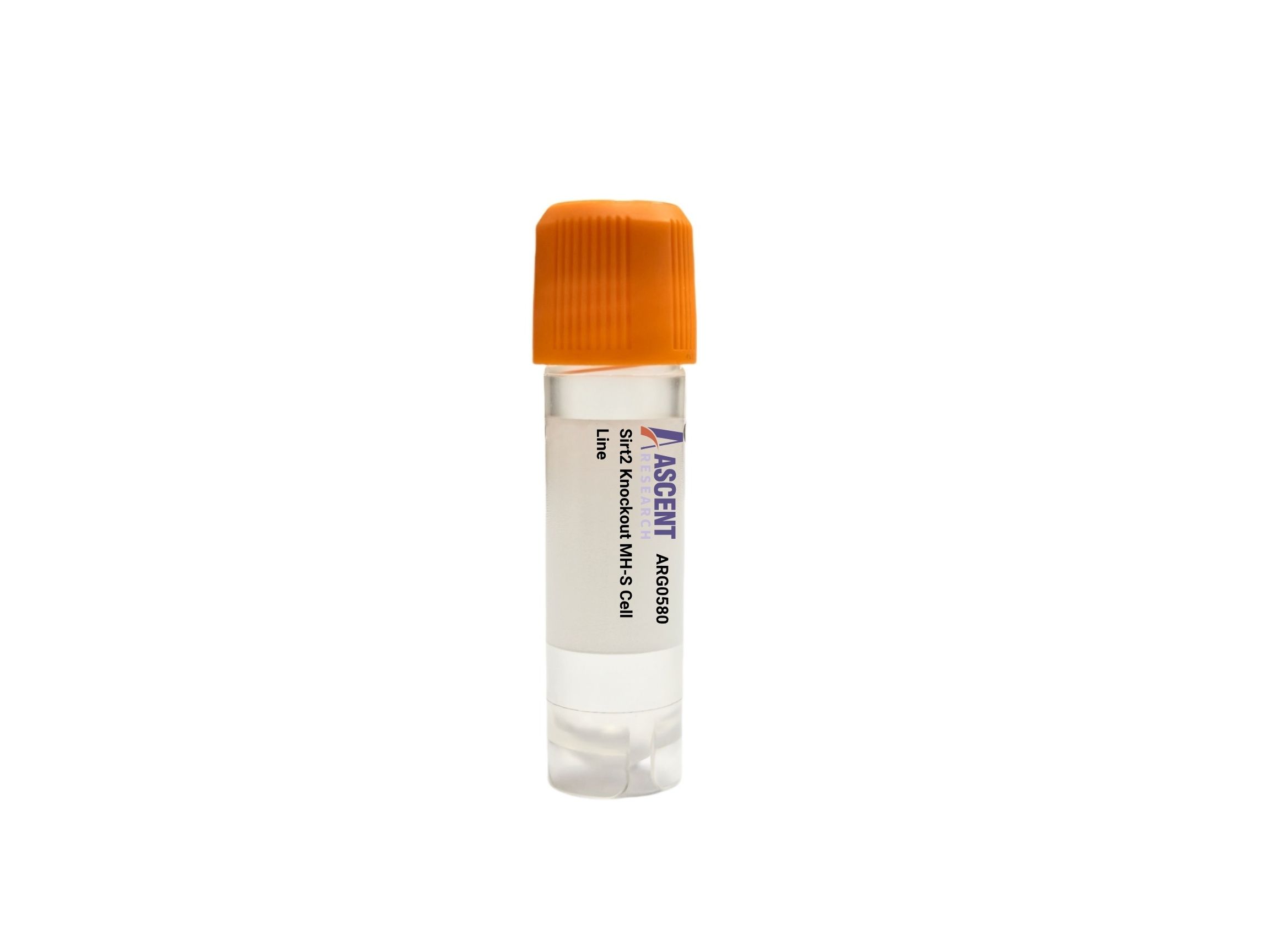
Genome-edited Cells
The Sirt2 Knockout MH-S Cell Line is a CRISPR/Cas9-edited murine alveolar macrophage cell line with targeted disruption of the Sirt2 gene. Sirt2 is an NAD+-dependent lysine deacetylase that regulates inflammation, metabolism, and cell cycle by deacetylating substrates such as ??-tubulin, p53, histone H4, and the NF-??B p65 subunit. Loss of Sirt2 in macrophages results in enhanced NF-??B acetylation and heightened proinflammatory cytokine production. This knockout model enables detailed investigation of Sirt2-mediated signaling in innate immunity, drug screening for Sirt2 inhibitors, and studies of aging-related immune dysfunction. Researchers can employ Western blotting for acetylated proteins, RT-qPCR for cytokine genes, NF-??B reporter assays, and NAD+/NADH ratio measurements to dissect Sirt2-dependent pathways.
 NENF Knockout A2780 Polyclonal Cells
Cat. No. ARG19067
LAMB1 Knockout NCI-H1975 Polyclonal Cells
Cat. No. ARG17226
CDKN1A Knockout Lovo Polyclonal Cells
Cat. No. ARG11728
ALDH1A2 Knockout NCI-H1299 Polyclonal Cells
Cat. No. ARG30299
BMP2 Knockout CAL27 Polyclonal Cells
Cat. No. ARG35353
DUSP10 Knockout HEK293T Polyclonal Cells
Cat. No. ARG40031
NENF Knockout A2780 Polyclonal Cells
Cat. No. ARG19067
LAMB1 Knockout NCI-H1975 Polyclonal Cells
Cat. No. ARG17226
CDKN1A Knockout Lovo Polyclonal Cells
Cat. No. ARG11728
ALDH1A2 Knockout NCI-H1299 Polyclonal Cells
Cat. No. ARG30299
BMP2 Knockout CAL27 Polyclonal Cells
Cat. No. ARG35353
DUSP10 Knockout HEK293T Polyclonal Cells
Cat. No. ARG40031
The Sirt2 Knockout MH-S Cell Line is a CRISPR/Cas9-edited murine macrophage cell line engineered for disruption of the Sirt2 gene. This knockout cell line serves as a stable loss-of-function model, enabling investigation of Sirt2-dependent regulatory mechanisms in an alveolar macrophage context. Derived from the MH-S cell line, the knockout is designed to ablate Sirt2 expression, providing a consistent genetic background for functional studies.
The host MH-S cell line originates from BALB/c mouse alveolar macrophages, a well-characterized model for studying innate immune responses. These cells exhibit hallmark macrophage activities, including phagocytosis, antigen presentation, and cytokine production. As resident alveolar macrophages, MH-S cells are particularly relevant for pulmonary immunity and host defense research. Their stable growth and phenotypic stability make them suitable for genetic manipulation and downstream functional assays.
Sirt2 encodes an NAD+-dependent lysine deacetylase that regulates diverse cellular processes by removing acetyl groups from key substrates. Sirt2 deacetylates ??-tubulin, histone H4, p53, and the NF-??B p65 subunit, thereby modulating microtubule dynamics, chromatin structure, apoptosis, and inflammatory signaling. Its activity is influenced by NAD+ availability and upstream regulators such as AMPK and oxidative stress. Downstream, Sirt2 impacts FOXO3a and PGC-1??, linking metabolism to stress responses. Through these interactions, Sirt2 integrates signals from nutrient status and cellular energy into cell cycle control, autophagy, and inflammatory pathway modulation.
In MH-S macrophages, Sirt2 disruption is predicted to enhance NF-??B acetylation and transcriptional activity, leading to heightened proinflammatory cytokine production. This model provides a platform to study how loss of Sirt2-mediated deacetylation alters innate immune effector functions, including phagocytosis and antigen presentation. Elevated acetylated p65 drives increased TNF-??, IL-6, and IL-1?? expression, while altered tubulin acetylation may affect cytoskeletal dynamics and vesicle trafficking. By perturbing Sirt2 activity, researchers can dissect the molecular basis of inflammation and metabolic reprogramming in macrophages.
The Sirt2 Knockout MH-S Cell Line is suitable for a range of mechanistic and applied studies. Key applications include investigating Sirt2’s role in NF-??B-mediated inflammation, screening for Sirt2 inhibitors, modeling aging-related immune dysfunction, and exploring metabolic regulation in macrophages. Representative assays that can be performed with this line include Western blotting for acetylated NF-??B p65, p53, and ??-tubulin; RT-qPCR for cytokine genes; flow cytometric analysis of surface markers; immunofluorescence for tubulin acetylation; NF-??B luciferase reporter assays; phagocytosis quantification; and measurement of cellular NAD+/NADH ratios. These tools enable detailed characterization of Sirt2-dependent signaling. For further details, please contact Ascent Research.