Genome-edited Cells
Pancreas (islets of Langerhans)
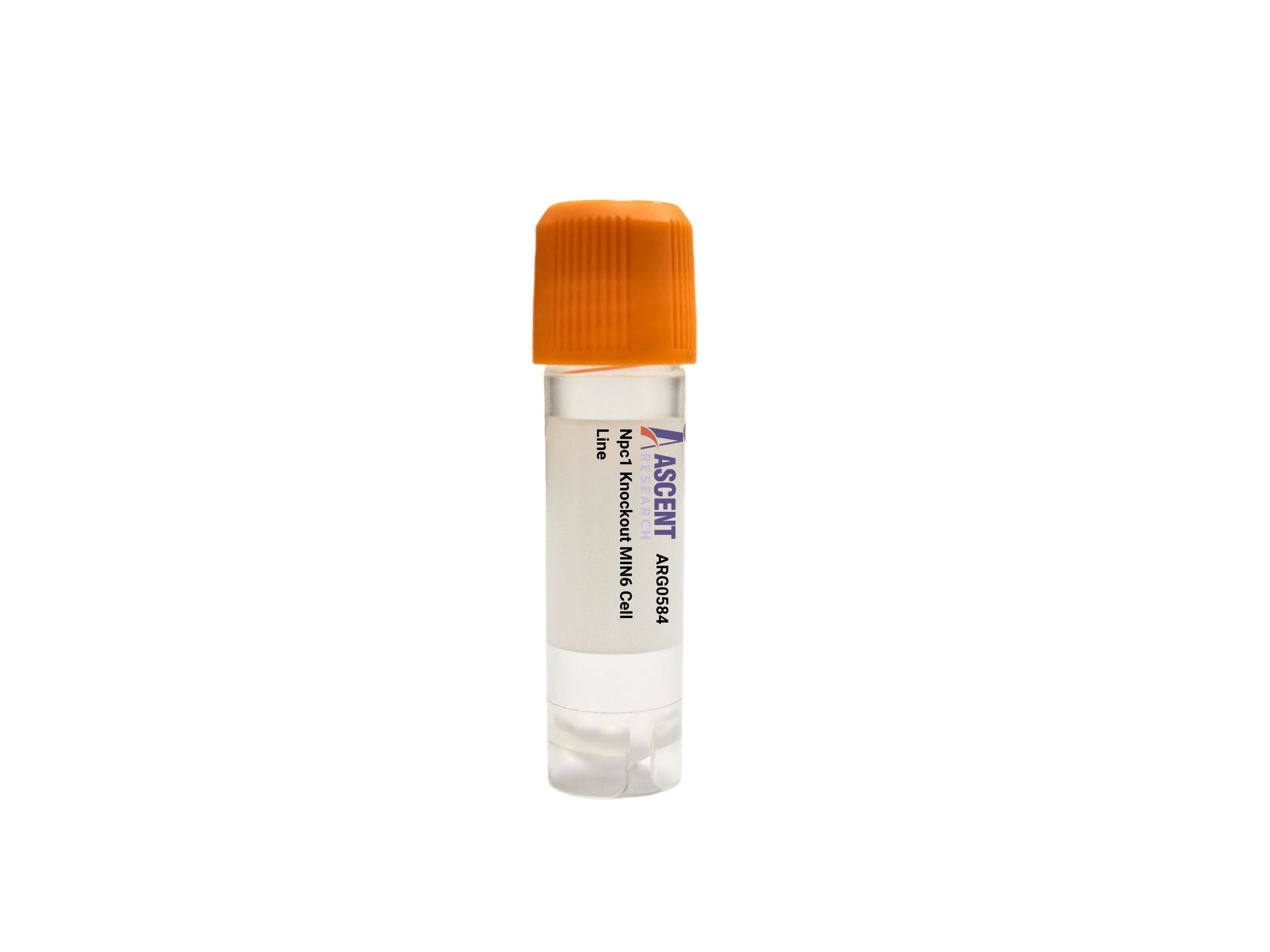
The Npc1 Knockout MIN6 Cell Line is a CRISPR/Cas9-engineered loss-of-function model in glucose-responsive mouse pancreatic beta cells, designed to study NPC1-mediated lysosomal cholesterol transport. NPC1 cooperates with NPC2, and interacts with Rab7, Rab9, and ORP1L, to regulate LDL-derived cholesterol egress, SREBP processing, and ABCA1-mediated efflux. Its disruption causes lysosomal lipid accumulation, making it ideal for investigations of Niemann-Pick disease type C, lysosomal storage disorders, and beta-cell cholesterol homeostasis. Applications include cholesterol filipin staining, LDL uptake assays, glucose-stimulated insulin secretion (GSIS), and calcium imaging. Validated assays confirm target disruption, and the model supports pharmacological screening and mechanistic studies linking lipid dysregulation to insulin secretion defects.
 GATA6 Knockout NCI-H1299 Polyclonal Cells
Cat. No. ARG17930
CHCHD6 Knockout A549 Polyclonal Cells
Cat. No. ARG10323
IQGAP1 Knockout HEK293T Polyclonal Cells
Cat. No. ARG26146
KHNYN Knockout NCI-H1975 Polyclonal Cells
Cat. No. ARG31833
MICAL3 Knockout A549 Polyclonal Cells
Cat. No. ARG9949
GATA6 Knockout NCI-H1299 Polyclonal Cells
Cat. No. ARG17930
CHCHD6 Knockout A549 Polyclonal Cells
Cat. No. ARG10323
IQGAP1 Knockout HEK293T Polyclonal Cells
Cat. No. ARG26146
KHNYN Knockout NCI-H1975 Polyclonal Cells
Cat. No. ARG31833
MICAL3 Knockout A549 Polyclonal Cells
Cat. No. ARG9949
 Rabbit Prostate Basal Cells
Cat. No. ARP0750
Rabbit Prostate Basal Cells
Cat. No. ARP0750
The Npc1 Knockout MIN6 Cell Line is a CRISPR/Cas9-mediated gene-disrupted cell line derived from the MIN6 mouse insulinoma line, designed for loss-of-function studies of the Npc1 gene. This cell line provides a stable and tractable model for investigating NPC1-dependent intracellular cholesterol transport and lysosomal function within a physiologically relevant pancreatic beta-cell environment.
MIN6 cells are a glucose-responsive mouse insulinoma line, originally established from an SV40 T-antigen-induced tumor, that faithfully recapitulates key features of primary pancreatic beta cells, including robust glucose-stimulated insulin secretion and expression of beta-cell-specific transcription factors. Their well-characterized secretory pathway and metabolic responsiveness make them a preferred host line for studying insulin secretion, nutrient sensing, and beta-cell dysfunction.
NPC1 is a large polytopic membrane protein residing in the limiting membrane of late endosomes/lysosomes, where it functions in concert with the soluble cholesterol-binding protein NPC2 to mediate the egress of unesterified cholesterol derived from LDL particles. This transport process is regulated by upstream elements including the LDL receptor (LDLR) and cellular cholesterol levels, and it involves direct physical and functional interactions with the endosomal Rab GTPases Rab7 and Rab9, as well as the oxysterol-binding protein ORP1L. Downstream, NPC1-dependent cholesterol delivery to the endoplasmic reticulum is essential for the feedback regulation of sterol regulatory element-binding proteins (SREBPs) through the SCAP-Insig complex, and it supports ABCA1-mediated cholesterol efflux and lysosomal calcium release. Consequently, disruption of Npc1 leads to massive intra-lysosomal cholesterol accumulation, aberrant sphingolipid storage, and secondary defects in vesicular trafficking and autophagic flow.
Cholesterol homeostasis is critically important in pancreatic beta cells for the proper organization of membrane microdomains, insulin granule docking, and ion channel function. By eliminating NPC1 in the MIN6 background, this knockout cell line enables precise investigation of how lysosomal cholesterol accumulation impinges on insulin secretion, glucose sensing, and cellular lipid metabolism. It serves as a unique model for mechanistic studies of Niemann-Pick disease type C, a devastating lysosomal storage disorder, and for probing the broader contributions of lipid dysregulation to beta-cell failure observed in metabolic syndrome and type 2 diabetes.
Researchers can employ this cell line for a range of assays: cholesterol filipin staining, fluorescent LDL uptake and trafficking measurements, immunofluorescence microscopy for lysosomal cholesterol accumulation, and western blotting or RT-qPCR for validation of Npc1 disruption. Functional assessments such as glucose-stimulated insulin secretion (GSIS), calcium imaging of lysosomal Ca2? release, and lipidomic profiling can dissect the metabolic consequences of NPC1 loss. Transcriptomic analyses via RNA-seq may reveal collateral changes in cholesterol biosynthetic genes and inflammatory pathways. This model is also suited for high-content screening of pharmacological chaperones, lysosomal acidification modulators, or genetic interactors that alleviate lipid storage. For comprehensive technical support or to explore customized applications, please contact Ascent Research.