Genome-edited Cells
Stomach
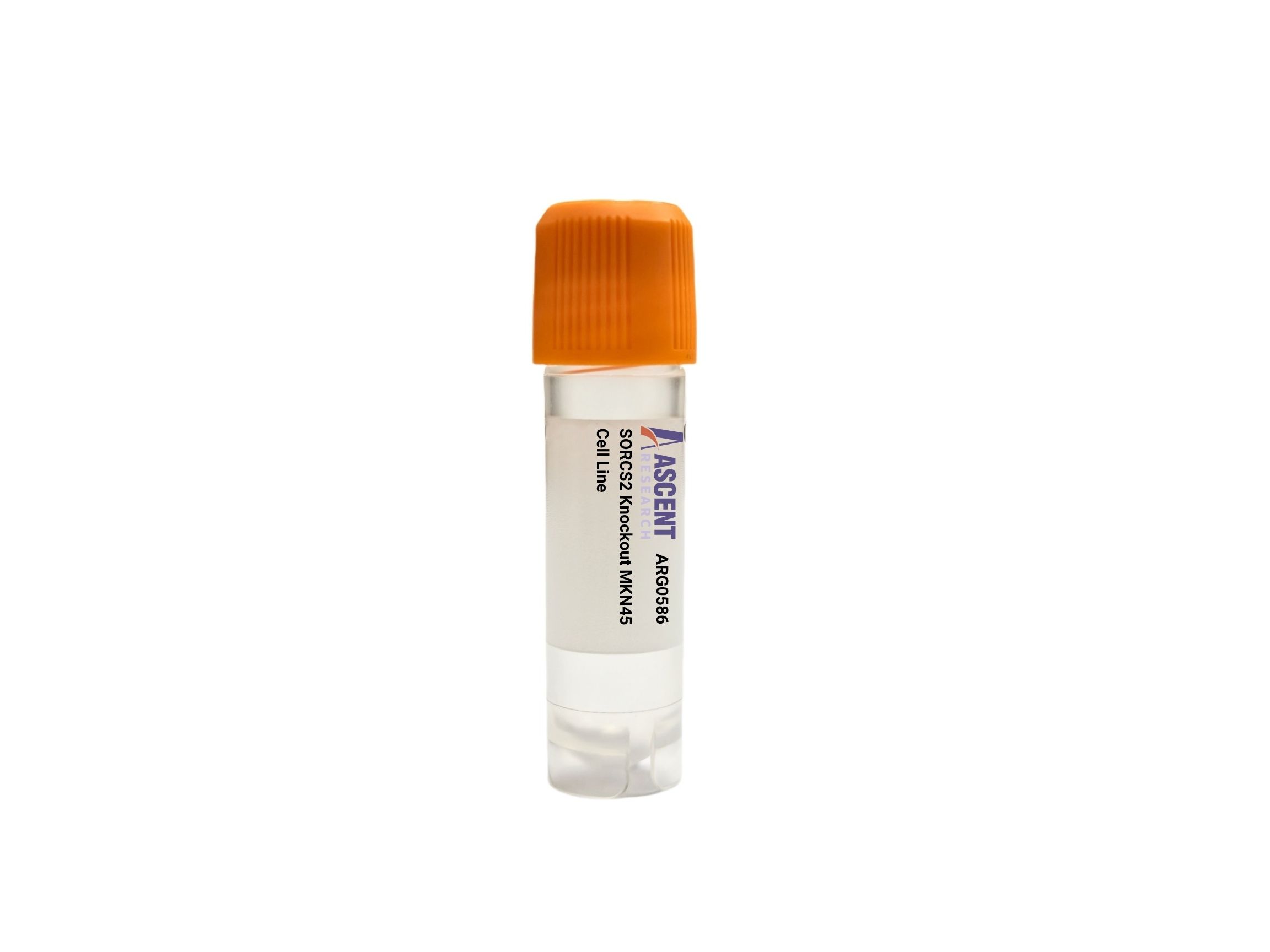
The SORCS2 Knockout MKN45 cell line is a CRISPR/Cas9-edited knockout cell line derived from the human gastric adenocarcinoma epithelial cell line MKN45. SORCS2 is a sorting receptor and tumor suppressor that inhibits epithelial-mesenchymal transition (EMT) by modulating TGF-beta/Smad and neurotrophin signaling pathways; its disruption abolishes negative regulation of downstream effectors such as Akt, ERK1/2, and E-cadherin. This knockout model is a powerful tool for studying gastric cancer progression, EMT mechanisms, and SORCS2-mediated signaling networks. Researchers can utilize Western blotting, transwell migration assays, and RT-qPCR to investigate neurotrophin and TGF-beta pathway components, making it suitable for functional genomics and drug target validation studies.
 MACF1 Knockout jurkat Polyclonal Cells
Cat. No. ARG13392
ISOC1 Knockout HEK293T Polyclonal Cells
Cat. No. ARG26156
ALPP Knockout huh-7 Polyclonal Cells
Cat. No. ARG27879
ASB6 Knockout NCI-H1975 Polyclonal Cells
Cat. No. ARG31258
HERC4 Knockout HAP1 Polyclonal Cells
Cat. No. ARG27546
MAP4K2 Knockout HCT116 Polyclonal Cells
Cat. No. ARG6996
MACF1 Knockout jurkat Polyclonal Cells
Cat. No. ARG13392
ISOC1 Knockout HEK293T Polyclonal Cells
Cat. No. ARG26156
ALPP Knockout huh-7 Polyclonal Cells
Cat. No. ARG27879
ASB6 Knockout NCI-H1975 Polyclonal Cells
Cat. No. ARG31258
HERC4 Knockout HAP1 Polyclonal Cells
Cat. No. ARG27546
MAP4K2 Knockout HCT116 Polyclonal Cells
Cat. No. ARG6996
The SORCS2 Knockout MKN45 Cell Line is a CRISPR/Cas9-edited knockout cell line designed for loss-of-function studies of the SORCS2 gene in a human gastric cancer model. Using CRISPR/Cas9-mediated gene disruption, this product provides a genetically defined system in which SORCS2 function is ablated, enabling investigation of its tumor-suppressive roles. The knockout cell line is derived from the well-characterized MKN45 gastric adenocarcinoma epithelial cell line, offering a consistent and reproducible platform for functional genomics, signaling pathway analysis, and drug target validation in gastric cancer research.
The MKN45 host cell line is a poorly differentiated gastric adenocarcinoma epithelial cell line originally derived from the lymph node metastasis of a 62-year-old female patient. MKN45 cells are widely used as an in vitro model for gastric cancer, particularly for studying metastatic progression and poorly differentiated adenocarcinoma biology. The cell line retains key features of advanced gastric malignancy, including activated oncogenic signaling and invasive properties, making it an appropriate context for dissecting the molecular mechanisms of SORCS2-mediated tumor suppression and epithelial-mesenchymal transition (EMT).
SORCS2 encodes a type I transmembrane sorting receptor that functions as a tumor suppressor in gastric cancer. The protein interacts with pro-neurotrophins (proNGF and proBDNF), sortilin, and GGA adaptor proteins, and participates in retromer-dependent endocytic trafficking. Mechanistically, SORCS2 suppresses epithelial-mesenchymal transition (EMT) by attenuating TGF-beta/Smad signaling; it reduces Smad2/3 phosphorylation and transcriptional activity, thereby preserving E-cadherin expression while inhibiting vimentin upregulation. Furthermore, SORCS2 modulates neurotrophin-responsive pathways by regulating signaling downstream of p75NTR and Trk receptors, leading to the regulation of Akt and ERK1/2 kinases. Epigenetic silencing via promoter hypermethylation is a common upstream mechanism that inactivates SORCS2 in gastric cancer, and its genetic knockout recapitulates this loss-of-function state.
In the MKN45 gastric adenocarcinoma background, knockout of SORCS2 removes a critical brake on EMT and cell migration. Loss of SORCS2 function is predicted to enhance TGF-beta/Smad-driven transcriptional programs and neurotrophin-mediated signaling, resulting in increased cellular motility and an invasive phenotype. This model recapitulates the epigenetic silencing of SORCS2 frequently observed in gastric tumors, providing a tractable system for examining how SORCS2 deficiency cooperates with other oncogenic alterations present in MKN45 cells. Consequently, the knockout line is an invaluable tool for dissecting the molecular interplay between sorting receptor dysfunction and gastric adenocarcinoma progression.
The SORCS2 Knockout MKN45 Cell Line supports a broad range of applications. Western blotting and immunofluorescence can quantify changes in EMT markers (E-cadherin, vimentin) and active signaling components (phospho-Smad2/3, phospho-Akt, phospho-ERK1/2). Transwell migration and wound healing assays assess migratory and invasive capacity. RT-qPCR and RNA-seq enable transcriptome-wide analyses to identify downstream gene networks. Co-immunoprecipitation probes altered interactions with SORCS2 partners such as sortilin and pro-neurotrophins. The knockout line is suited for drug target validation studies aimed at restoring SORCS2 function or inhibiting downstream pathways in gastric cancer. For further information, contact Ascent Research.