Genome-edited Cells
Lung
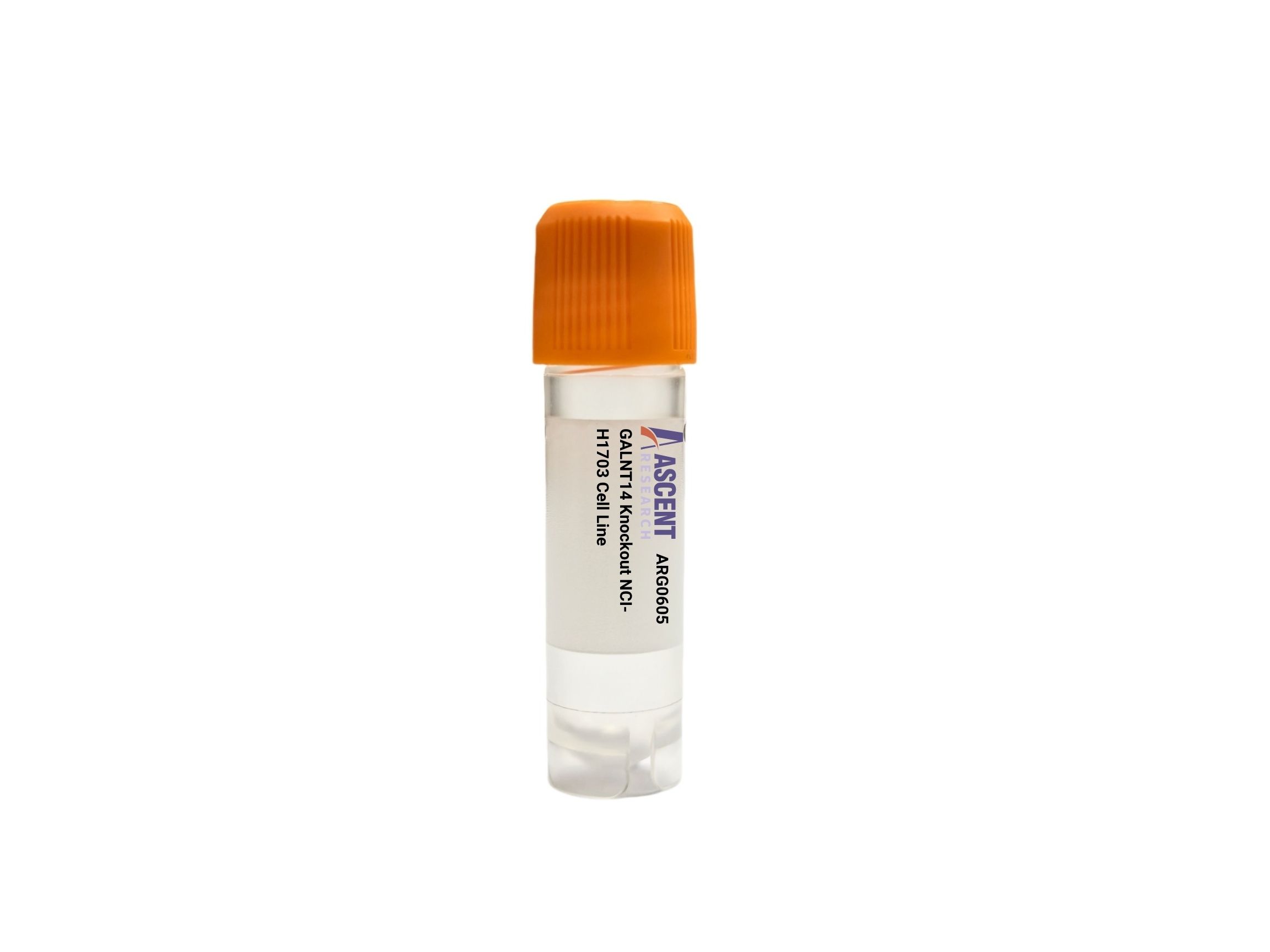
The GALNT14 Knockout NCI-H1703 Cell Line is a CRISPR/Cas9-edited human lung squamous cell carcinoma model with loss-of-function disruption of the GALNT14 gene. GALNT14 encodes a glycosyltransferase that initiates mucin-type O-linked glycosylation and modifies death receptors DR4 and DR5, thereby suppressing TRAIL-induced apoptosis. This knockout cell line enables dissection of glycosylation-dependent apoptosis regulation, TRAIL resistance mechanisms, and cell migration in a non-small cell lung cancer background. Applications include glycosylation analysis, apoptosis assays, drug sensitivity studies, and glycoproteomic investigations.
 MCUR1 Knockout SK-HEP-1 Polyclonal Cells
Cat. No. ARG16264
ITPRIP Knockout Hela Polyclonal Cells
Cat. No. ARG26307
GPRC5A Knockout HGC-27 Polyclonal Cells
Cat. No. ARG29856
H1-2 Knockout Hela Polyclonal Cells
Cat. No. ARG37632
CRYZL1 Knockout MES-OV Polyclonal Cells
Cat. No. ARG5809
FUNDC2 Knockout HEK293T Polyclonal Cells
Cat. No. ARG3712
MCUR1 Knockout SK-HEP-1 Polyclonal Cells
Cat. No. ARG16264
ITPRIP Knockout Hela Polyclonal Cells
Cat. No. ARG26307
GPRC5A Knockout HGC-27 Polyclonal Cells
Cat. No. ARG29856
H1-2 Knockout Hela Polyclonal Cells
Cat. No. ARG37632
CRYZL1 Knockout MES-OV Polyclonal Cells
Cat. No. ARG5809
FUNDC2 Knockout HEK293T Polyclonal Cells
Cat. No. ARG3712
The GALNT14 Knockout NCI-H1703 Cell Line is a CRISPR/Cas9-edited human cell line featuring a loss-of-function disruption of the GALNT14 gene. This knockout cell line, derived from the NCI-H1703 lung squamous cell carcinoma background, serves as a defined genetic tool for investigating the impact of mucin-type O-linked glycosylation on death receptor signaling and tumor cell biology. The targeted disruption abrogates GALNT14 enzymatic function, enabling dissection of glycosylation-dependent mechanisms in an epithelial cancer model.
The parental NCI-H1703 cell line was established from a primary lung squamous cell carcinoma of a 54-year-old male smoker and grows as an adherent monolayer with epithelial morphology. This line retains key features of non-small cell lung cancer, including functional TRAIL death receptor pathways, and is extensively used for apoptosis, drug resistance, and migration studies. Its robust in vitro characteristics make it well-suited for genetic manipulation and downstream phenotypic analyses.
GALNT14 encodes a polypeptide N-acetylgalactosaminyltransferase that catalyzes the initial step of O-linked glycosylation by transferring N-acetylgalactosamine to serine and threonine residues of substrate proteins. Prominent substrates include the death receptors DR4 (TRAIL-R1) and DR5 (TRAIL-R2). GALNT14-mediated glycosylation reduces receptor sensitivity to TRAIL by hindering ligand-induced clustering and assembly of the death-inducing signaling complex (DISC), which comprises FADD and caspases. GALNT14 is subject to transcriptional regulation and responds to cellular stress signals, and its activity generates O-glycosylated substrates that interact with lectins, thereby modulating cell adhesion and migration. In summary, GALNT14 sits at a nexus between glycosylation and extrinsic apoptosis, influencing TRAIL-DR4/DR5-FADD-caspase signaling.
In the NCI-H1703 context, GALNT14 disruption offers a powerful model to investigate apoptosis resistance in lung squamous cell carcinoma. Aberrant GALNT14 expression has been associated with reduced TRAIL sensitivity and chemoresistance in non-small cell lung cancer, contributing to tumor immune evasion. Knockout of GALNT14 may restore death receptor clustering and enhance apoptotic signaling, providing a system to dissect the molecular basis of glycosylation-dependent survival. This model also supports glycoproteomic comparisons to identify novel O-glycosylated targets driving malignant behaviors such as migration and invasion.
This GALNT14 knockout cell line enables a range of experimental applications. Western blotting can assess DR4 and DR5 glycosylation status, while TRAIL-induced apoptosis assays with Annexin V/PI staining yield quantitative apoptotic readouts. Caspase activity measurements (e.g., caspase-8, caspase-3) delineate downstream signaling. Migration and invasion assays, O-glycomic profiling, and co-immunoprecipitation of death receptor complexes further expand the utility. These assays support research on TRAIL resistance, glycosylation-mediated apoptosis regulation, lung cancer drug sensitivity, and cell motility. For technical inquiries, contact Ascent Research.