Genome-edited Cells
Lung
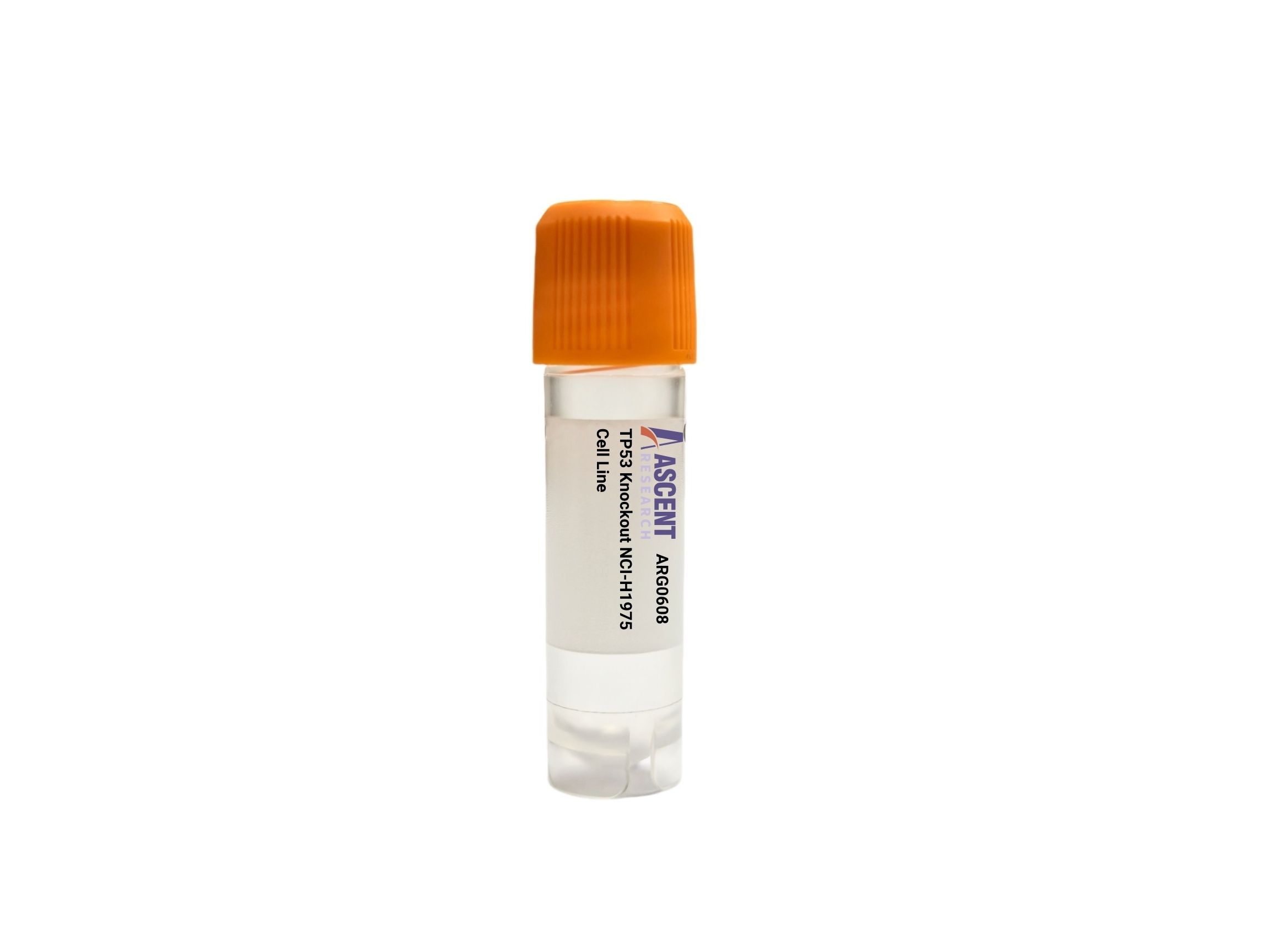
The TP53 Knockout NCI-H1975 Cell Line is a CRISPR/Cas9-edited human lung adenocarcinoma cell line featuring disruption of the TP53 tumor suppressor gene. Carrying endogenous EGFR L858R/T790M mutations, this model enables dissection of p53 function in the context of EGFR-targeted therapy resistance, with key focus on the p53?CMDM2 axis and downstream targets like p21 and BAX. Applications include synthetic lethality screening, drug resistance studies, and investigation of p53 reactivation strategies. The knockout line provides a stable platform for pathway analysis using Western blotting, flow cytometry, and chemosensitivity assays with cisplatin or EGFR inhibitors.
The TP53 Knockout NCI-H1975 Cell Line is a CRISPR/Cas9-edited knockout cell line engineered to disrupt the TP53 gene in NCI-H1975 cells. This loss-of-function model provides stable TP53 disruption, enabling robust investigation of p53 tumor suppressor functions in a defined genetic background. Suitable for in vitro applications, the cell line supports studies of p53-dependent signaling, cell cycle control, and apoptosis, offering consistent performance across passages for screening and mechanism-of-action research.
The NCI-H1975 host cell line is derived from human non-small cell lung adenocarcinoma and carries activating EGFR mutations (L858R and T790M), which confer sensitivity and acquired resistance to EGFR tyrosine kinase inhibitors. The parental line retains wild-type TP53, making it an isogenic background for assessing the impact of p53 loss in EGFR-mutant lung cancer. This mimics clinically relevant scenarios where concurrent TP53 mutations are associated with poorer responses to targeted therapies.
TP53 encodes the transcription factor p53, which is stabilized by ATM/ATR-mediated phosphorylation following DNA damage or oncogenic stress, thereby relieving MDM2-dependent proteasomal degradation. Active p53 transcriptionally regulates downstream effectors: CDKN1A/p21 mediates cell cycle arrest, BAX and BBC3/PUMA promote apoptosis, and GADD45A participates in DNA repair, while MDM2 induction creates a negative feedback loop. Interacting factors including MDMX, p14ARF, and ASPP proteins modulate p53 activity and promoter selectivity, positioning it as a central coordinator of stress-induced cell fate decisions.
In NCI-H1975 cells, TP53 knockout reveals the role of p53 in EGFR inhibitor response and resistance. Wild-type p53 can enforce apoptosis or senescence upon EGFR inhibition, and its loss may permit survival of drug-tolerant cells. Furthermore, p53 status alters the response to DNA-damaging agents such as cisplatin. This knockout line enables direct comparisons with wild-type controls to dissect p53-dependent and independent mechanisms in cytotoxicity, checkpoint activation, and DNA repair.
This model supports synthetic lethality screens, apoptosis signaling studies, and evaluation of p53 reactivation strategies. Typical assays include Western blotting for p53 and p21, Annexin V flow cytometry, propidium iodide cell cycle analysis, ??-H2AX immunofluorescence for DNA double-strand breaks, and chemosensitivity testing via MTT or colony formation with cisplatin or EGFR inhibitors. RT-qPCR profiling of p53 target genes (BAX, PUMA, GADD45A) confirms pathway modulation. For further details, please contact Ascent Research.