Genome-edited Cells
Lung
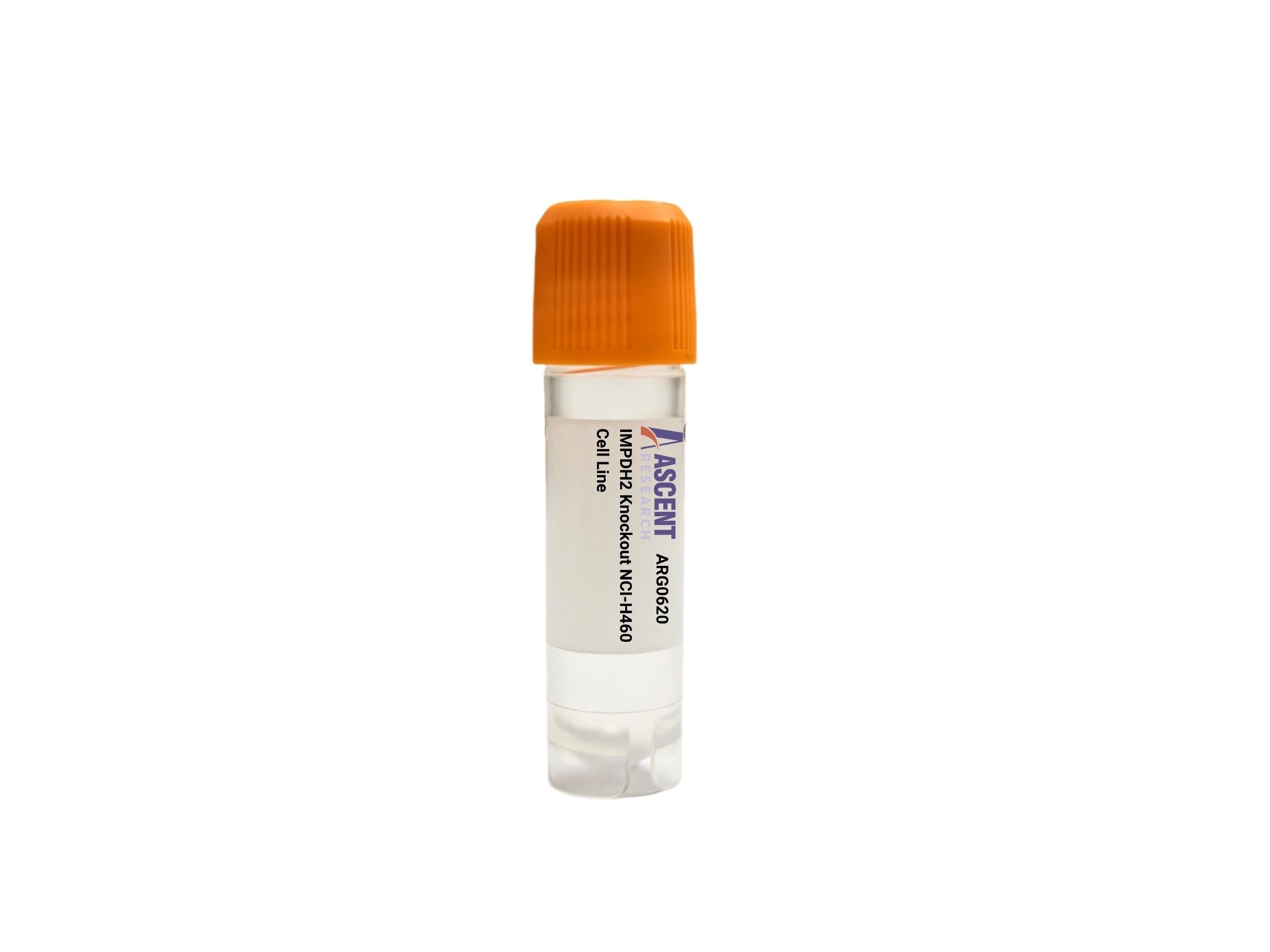
The IMPDH2 Knockout NCI-H460 Cell Line is a CRISPR/Cas9-edited human lung carcinoma model with disrupted IMPDH2, the rate-limiting enzyme of de novo guanine nucleotide biosynthesis. Upregulated by MYC and mTORC1, IMPDH2 generates GTP and dGTP essential for RAS GTPases and nucleic acid synthesis, linking growth signaling to proliferation. In the NCI-H460 NSCLC background, IMPDH2 knockout depletes guanine nucleotides, inhibiting tumor cell proliferation and supporting studies in purine metabolism, IMPDH inhibitor validation, and antimetabolite screening. Key applications include viability assays, HPLC nucleotide quantification, flow cytometry, and RNA-seq.
 EVL Knockout Raji Polyclonal Cells
Cat. No. ARG0963
MYO1D Knockout HT29 Polyclonal Cells
Cat. No. ARG14014
FADS3 Knockout Hela Polyclonal Cells
Cat. No. ARG7489
KDELR1 Knockout A549 Polyclonal Cells
Cat. No. ARG34460
ESPN Knockout AGS Polyclonal Cells
Cat. No. ARG2176
EVL Knockout Raji Polyclonal Cells
Cat. No. ARG0963
MYO1D Knockout HT29 Polyclonal Cells
Cat. No. ARG14014
FADS3 Knockout Hela Polyclonal Cells
Cat. No. ARG7489
KDELR1 Knockout A549 Polyclonal Cells
Cat. No. ARG34460
ESPN Knockout AGS Polyclonal Cells
Cat. No. ARG2176
 Immortalized Human Endometrial Stromal Cell
Cat. No. ARI0137
Immortalized Human Endometrial Stromal Cell
Cat. No. ARI0137
The IMPDH2 Knockout NCI-H460 Cell Line is a CRISPR/Cas9-edited human cell line designed for targeted disruption of the IMPDH2 gene, which encodes inosine-5′-monophosphate dehydrogenase 2. This live cell line, established from the NCI-H460 lung carcinoma parent, provides a precise loss-of-function model for dissecting the role of de novo guanine nucleotide biosynthesis in cancer cell biology. By eliminating IMPDH2 enzymatic activity, the line permits systematic analysis of purine metabolism, GTP-dependent signaling, and proliferation control in the context of non-small cell lung cancer (NSCLC) research.
The NCI-H460 parent cell line was established from the pleural effusion of a patient with large cell lung carcinoma and is a widely used epithelial model for NSCLC. It recapitulates key features of aggressive lung cancer, including rapid proliferation and characteristic pathway alterations, making it a robust platform for oncology drug screening and signal transduction studies. The CRISPR-edited knockout derivative maintains this well-characterized genetic and phenotypic background, enabling direct, controlled comparisons with wild-type controls in functional assays. Its consistent growth properties and compatibility with high-throughput formats further enhance its value for reproducible experimental workflows.
IMPDH2 catalyzes the NAD+-dependent oxidation of IMP to XMP, the rate-limiting step in de novo guanine nucleotide synthesis. Transcriptional regulation by MYC, mTORC1, and E2F1 links its activity to nutrient-sensing and proliferative signaling. The GTP and dGTP produced are essential for RAS superfamily GTPases, RNA polymerases, and DNA polymerases. IMPDH2 cooperates with CTPS and IMPDH1 in filamentous structures modulated by polyamines, feeding XMP to GMPS. In knockout cells, depletion of guanine nucleotides disrupts nucleic acid synthesis, GTPase-mediated signaling, and cell cycle progression, inducing metabolic stress.
In the NCI-H460 NSCLC background, IMPDH2 knockout generates a profound deficit in intracellular guanine nucleotide pools, directly blunting GTP-dependent oncogenic signaling driven by mTORC1 and MYC. Salvage pathways alone cannot sustain the high nucleotide demand of rapidly dividing lung cancer cells, resulting in markedly reduced proliferation and viability. This metabolic vulnerability positions the line as a powerful system for evaluating IMPDH inhibitors such as mycophenolic acid, which capitalize on nucleotide addiction in cancer. Furthermore, purine imbalance may compromise mitochondrial function and trigger apoptosis, providing a model to study metabolic crisis and therapeutic resistance mechanisms in lung tumors.
The IMPDH2 knockout cell line supports tumor metabolism studies, including dissection of the mTORC1/MYC/nucleotide synthesis axis, and serves as a platform for drug target validation of novel IMPDH inhibitors. Researchers routinely employ this model in cell viability (MTT), guanine nucleotide HPLC quantification, flow cytometry for cell cycle and apoptosis (Annexin V), and RNA-seq-based transcriptional profiling. Mycophenolic acid sensitivity assays further enable screening of antimetabolite strategies. For additional technical support or collaboration inquiries, contact Ascent Research.