Genome-edited Cells
Pancreas
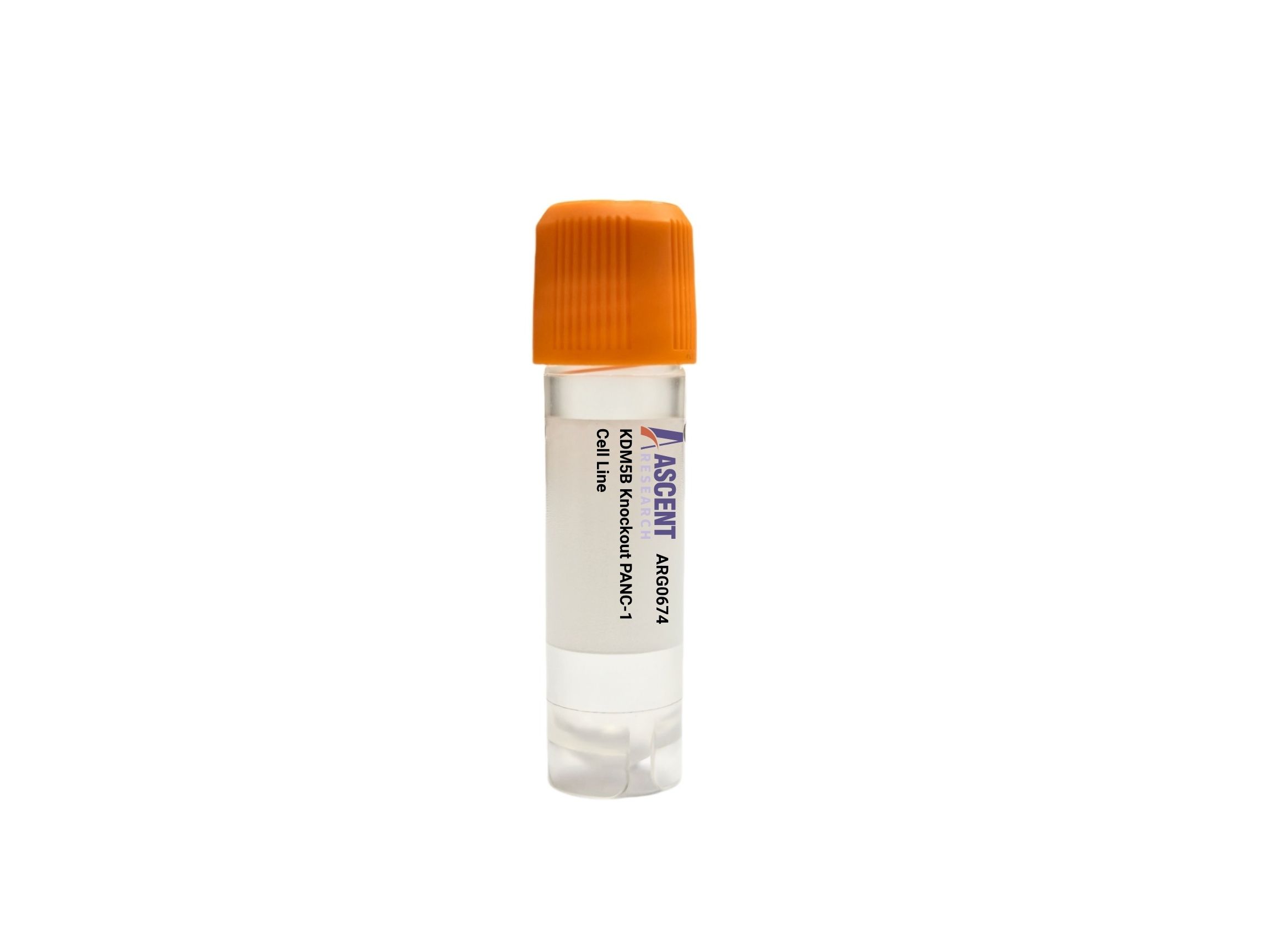
The KDM5B Knockout PANC-1 Cell Line is a CRISPR/Cas9-edited knockout model derived from the PANC-1 pancreatic ductal adenocarcinoma cell line. KDM5B, a histone demethylase that removes H3K4me2/3 marks, acts as a transcriptional repressor of tumor suppressors including p21/CDKN1A and p16/CDKN2A. It is regulated by MYC and TGF-??, interacts with HDACs and PRC2, and is implicated in cell proliferation and stem cell maintenance. This knockout line is valuable for investigating epigenetic mechanisms in pancreatic cancer, including chromatin remodeling, drug resistance, and metastasis. Researchers can employ it for inhibitor screening, RT-qPCR, ChIP-qPCR, proliferation assays, and transcriptomic analyses.
 Human Oral Mucosal Epithelial Cells
Cat. No. ARP1205
Human Oral Mucosal Epithelial Cells
Cat. No. ARP1205
 BNC1 Knockout HAP1 Polyclonal Cells
Cat. No. ARG22111
GLO1 Knockout A549 Polyclonal Cells
Cat. No. ARG10687
GORASP2 Knockout NCI-H1299 Polyclonal Cells
Cat. No. ARG30645
HOXB5 Knockout Hela Polyclonal Cells
Cat. No. ARG37598
DPYSL2 Knockout HEK293T Polyclonal Cells
Cat. No. ARG39730
BNC1 Knockout HAP1 Polyclonal Cells
Cat. No. ARG22111
GLO1 Knockout A549 Polyclonal Cells
Cat. No. ARG10687
GORASP2 Knockout NCI-H1299 Polyclonal Cells
Cat. No. ARG30645
HOXB5 Knockout Hela Polyclonal Cells
Cat. No. ARG37598
DPYSL2 Knockout HEK293T Polyclonal Cells
Cat. No. ARG39730
The KDM5B Knockout PANC-1 Cell Line is a CRISPR/Cas9-edited knockout cell line designed to disrupt the expression of the KDM5B gene in the background of the PANC-1 pancreatic ductal adenocarcinoma cell line. This loss-of-function model provides a robust system for investigating the functional role of the histone demethylase KDM5B in transcriptional regulation, chromatin dynamics, and oncogenic signaling. Targeted gene disruption was achieved through CRISPR/Cas9-mediated genome editing, generating a stable cell line suitable for a wide range of biochemical, genomic, and pharmacological assays.
PANC-1 is a well-characterized human pancreatic cancer cell line originally isolated from a primary tumor of a 56-year-old male patient. It harbors oncogenic mutations in KRAS and TP53, closely mirroring the genetic landscape of pancreatic ductal adenocarcinoma. PANC-1 cells are widely employed as an in vitro model to study pancreatic cancer biology, including mechanisms of proliferation, metastasis, and resistance to chemotherapeutic agents. Their epithelial origin and adherent growth properties facilitate reproducible experimental manipulation, making them a preferred choice for epigenetic and signaling studies.
KDM5B acts as a histone demethylase that specifically erases di- and trimethyl marks from lysine 4 of histone H3 (H3K4me2/3), thereby functioning as a transcriptional repressor. Its activity is induced by upstream signals from MYC, E2F transcription factors, HIF-1??, and TGF-??. At molecular level, KDM5B demethylates H3K4me2/3 at promoters of critical tumor suppressors such as CDKN1A (p21) and CDKN2A (p16), relieving their inhibition on cell cycle progression. The protein forms inhibitory complexes with histone deacetylases (HDACs) and Polycomb repressive complex 2 components EZH2 and SUZ12, reinforcing a repressive chromatin state. Moreover, KDM5B regulates NOTCH1 and HOX gene transcription, and interfaces with the retinoblastoma protein (RB) and E2F1, underscoring its role in proliferation and stem cell maintenance.
In the context of PANC-1 cells, KDM5B overexpression contributes to the aggressive tumor phenotype, driving unchecked proliferation and metastatic potential. The KDM5B Knockout PANC-1 Cell Line thus serves as a critical tool to dissect the epigenetic mechanisms underpinning pancreatic cancer pathogenesis. By eliminating KDM5B function, researchers can evaluate its impact on the malignant traits of PANC-1 cells, including anchorage-independent growth, migration, and invasiveness. This model also provides a platform to investigate the crosstalk between KDM5B-mediated chromatin remodeling and established oncogenic drivers such as mutant KRAS and TP53, shedding light on combinatorial therapeutic vulnerabilities.
Research applications for this knockout cell line encompass epigenetic regulation studies, chromatin remodeling analyses, and the screening of histone demethylase inhibitors. Typical assays include Western blotting for KDM5B and global H3K4me3 levels, RT-qPCR for downstream targets, ChIP-qPCR for H3K4me3 enrichment at specific promoters, cell proliferation (MTS/MTT), colony formation, migration/invasion assays, RNA-seq for transcriptomic changes, and drug sensitivity testing with demethylase inhibitors. For further technical support, please contact Ascent Research.