Genome-edited Cells
Kidney
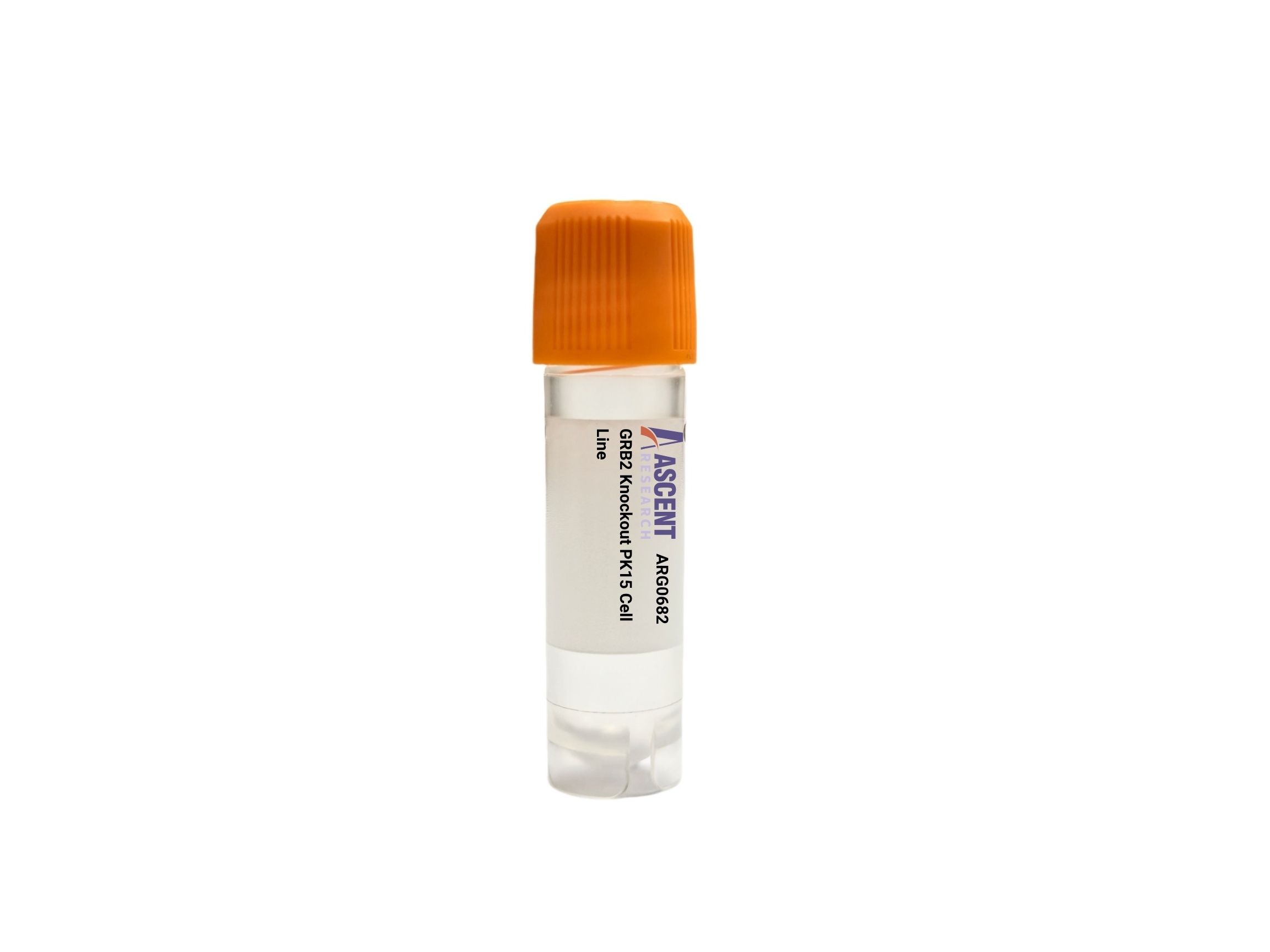
CRISPR/Cas9-edited GRB2 knockout PK-15 cell line. This porcine kidney epithelial model lacks the adaptor protein GRB2, which couples activated receptor tyrosine kinases (e.g., EGFR, FGFR) to SOS1, Ras, and downstream MAPK and PI3K-Akt cascades, driving proliferation and survival. The knockout permits dissection of growth factor signaling, kinase inhibitor responses, and compensatory networks. Applications include cancer signaling studies, drug target validation, immune receptor research, and functional genomics. Compatible with phospho-ERK ELISA, co-immunoprecipitation, proliferation assays, and apoptosis analysis. For more information, visit Ascent Research.
 AGBL2 Knockout HAP1 Polyclonal Cells
Cat. No. ARG21728
L2HGDH Knockout huh-7 Polyclonal Cells
Cat. No. ARG28511
BRD3 Knockout HGC-27 Polyclonal Cells
Cat. No. ARG29744
IP6K1 Knockout A549 Polyclonal Cells
Cat. No. ARG34139
FGD5 Knockout KYSE30 Polyclonal Cells
Cat. No. ARG9687
AGBL2 Knockout HAP1 Polyclonal Cells
Cat. No. ARG21728
L2HGDH Knockout huh-7 Polyclonal Cells
Cat. No. ARG28511
BRD3 Knockout HGC-27 Polyclonal Cells
Cat. No. ARG29744
IP6K1 Knockout A549 Polyclonal Cells
Cat. No. ARG34139
FGD5 Knockout KYSE30 Polyclonal Cells
Cat. No. ARG9687
 THLE-2
Cat. No. ARI0112
THLE-2
Cat. No. ARI0112
The GRB2 Knockout PK15 Cell Line is a CRISPR/Cas9-edited knockout cell line derived from porcine kidney epithelial PK-15 cells, engineered to disrupt the GRB2 gene. This model enables loss-of-function studies of GRB2-mediated signaling networks.
PK-15 is a widely used porcine kidney epithelial cell line suitable for virology, genetic modification, and toxicology assays. Its epithelial properties and robust growth support investigations into signal transduction associated with renal physiology and growth factor responses.
GRB2 acts as an essential adaptor linking activated receptor tyrosine kinases (RTKs), including EGFR, FGFR, PDGFR, and the insulin receptor, to multiple downstream signaling modules. Upon receptor activation, GRB2’s SH2 domain docks to phosphorylated tyrosine residues on the receptor itself or on scaffolding proteins such as SHC1, GAB1, and GAB2. Simultaneously, its two SH3 domains bind polyproline motifs within the guanine nucleotide exchange factor SOS1, catalyzing Ras activation. The resulting signal propagates through the Raf-MEK-ERK cascade, involving HRAS, BRAF, MAP2K1 (MEK), and MAPK1/3 (ERK), and also bifurcates to the PI3K-AKT and JAK-STAT pathways. Additionally, GRB2 forms complexes with VAV1, CBL, LAT, and PLCgamma1 in immune cell signaling, highlighting its broad role in coupling extracellular stimuli to cellular responses.
Within PK-15 cells, GRB2 ablation removes a central node for EGF, FGF, and PDGF signal integration, making this knockout line an ideal platform for studying growth factor?Cdependent proliferation, migration, and survival in a renal epithelial context. The porcine origin of the cell line adds value for comparative and translational studies, as the pig??s signaling machinery shares extensive homology with human systems, particularly in genes associated with cancer, development, and immune regulation.
This knockout cell line is suited for kinase inhibitor screening, drug sensitivity profiling, and dissection of EGFR and FGFR downstream signaling. Researchers can employ phospho-ERK ELISA to measure MAPK pathway activity, co-immunoprecipitation to verify interactions with SOS1 or SHC1, and xCELLigence assays to track proliferation. Flow cytometry, RT-qPCR, and apoptosis assays allow multidimensional phenotypic analysis. Loss of GRB2 enables the identification of alternative signaling routes and the assessment of targeted therapeutics. For further technical details, please contact Ascent Research.