Genome-edited Cells
Bone
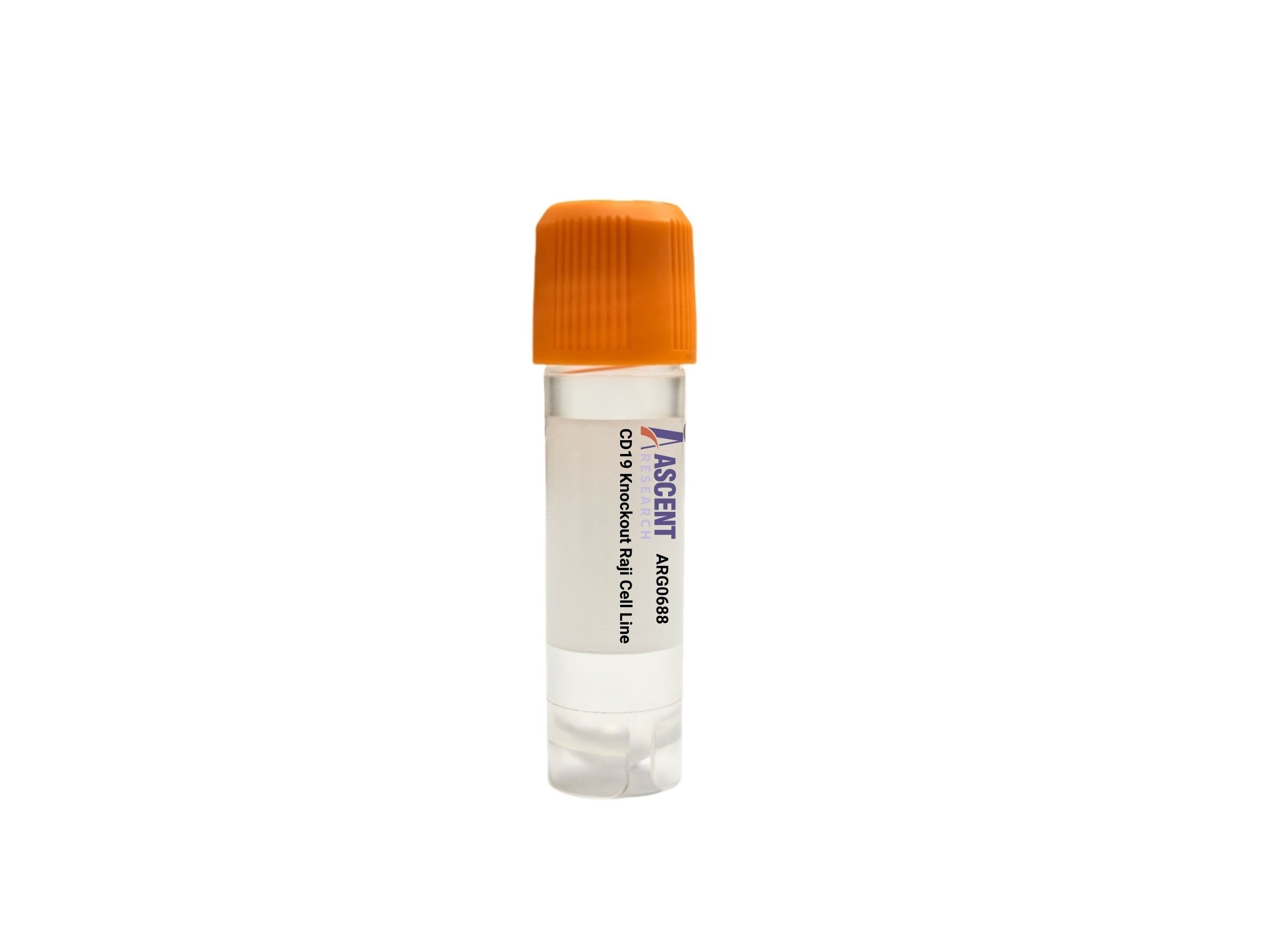
The CD19 Knockout Raji Cell Line is a CRISPR/Cas9-edited knockout cell line derived from the Raji B lymphocyte model. Disruption of CD19, a co-receptor that collaborates with CD21 and CD81, abrogates B cell receptor signal amplification, providing a loss-of-function tool for studying PI3K/Akt and NF-kappa B pathways downstream of Lyn kinase. This product is suitable for B-cell lymphoma research, immunotherapeutic target validation, and autoimmune disease modeling. Standard characterization assays include flow cytometry, western blotting, and calcium flux analysis following BCR stimulation.
 COL15A1 Knockout NCI-H1299 Polyclonal Cells
Cat. No. ARG17436
ADAMTS18 Knockout HAP1 Polyclonal Cells
Cat. No. ARG21642
DSG2 Knockout HEK293T Polyclonal Cells
Cat. No. ARG39827
NAAA Knockout HCT116 Polyclonal Cells
Cat. No. ARG7097
CHD3 Knockout AGS Polyclonal Cells
Cat. No. ARG2308
COL15A1 Knockout NCI-H1299 Polyclonal Cells
Cat. No. ARG17436
ADAMTS18 Knockout HAP1 Polyclonal Cells
Cat. No. ARG21642
DSG2 Knockout HEK293T Polyclonal Cells
Cat. No. ARG39827
NAAA Knockout HCT116 Polyclonal Cells
Cat. No. ARG7097
CHD3 Knockout AGS Polyclonal Cells
Cat. No. ARG2308
 HER2 Overexpression HEK293 Stable Cell Line
Cat. No. ARG0404
HER2 Overexpression HEK293 Stable Cell Line
Cat. No. ARG0404
The CD19 Knockout Raji Cell Line is a CRISPR/Cas9-edited knockout cell line engineered to disrupt the CD19 gene in the Raji B lymphocyte background. This loss-of-function model enables precise investigation of CD19-dependent signaling mechanisms without the confounding influence of endogenous CD19 expression. The cell line provides a defined genetic tool for researchers studying B cell receptor (BCR) signal transduction and its role in lymphomagenesis.
Raji is an EBV-positive Burkitt lymphoma-derived B cell line widely employed as a model for mature B cell biology and B-cell malignancies. These cells retain hallmark features of activated B lymphocytes, including surface immunoglobulin expression and functional BCR signaling machinery, making them a physiologically relevant platform for dissecting antigen receptor-mediated pathways. Their tumor origin also positions Raji cells as a valuable system for exploring oncogenic mechanisms in aggressive lymphomas.
CD19 functions as a B cell co-receptor that forms a complex with CD21 and CD81 to lower the activation threshold of the BCR. Upon BCR engagement, CD19 is phosphorylated by Src family kinases such as Lyn, leading to recruitment of phosphoinositide 3-kinase (PI3K). This event triggers downstream effectors including Akt, Vav, and phospholipase C gamma 2 (PLC??2), which subsequently activate mitogen-activated protein kinase (MAPK) cascades and nuclear factor kappa-light-chain-enhancer of activated B cells (NF-kappa B) signaling. Through these pathways, CD19 promotes cell survival, proliferation, and immune responses. The CD19/CD21/CD81 complex thus serves as a critical signal amplifier at the B cell surface.
Disruption of CD19 in Raji cells impairs BCR signal transduction, providing a system to study the resultant defects in calcium mobilization, cytoskeletal reorganization, and transcriptional reprogramming. This knockout model is particularly informative for investigating B-cell lymphomas, where aberrant CD19 expression or signaling may contribute to pathogenesis. Additionally, it offers a platform for evaluating the role of CD19 in autoimmune diseases and acute lymphoblastic leukemia, and for validating CD19 as an immunotherapeutic target, including in chimeric antigen receptor (CAR) T cell development.
Typical research applications include flow cytometric analysis of surface marker expression, western blotting for signaling protein assessment, and functional assays such as BCR stimulation with calcium flux measurement to gauge proximal signaling fidelity. Proliferation and apoptosis assays enable studies of growth and survival phenotypes, while co-immunoprecipitation and RNA sequencing permit interactome and transcriptome profiling. Phospho-signaling analysis further delineates pathway perturbations. These applications support B cell signaling studies, lymphoma research, and immunotherapy target validation. For further technical information, please contact Ascent Research.