Genome-edited Cells
Ascites
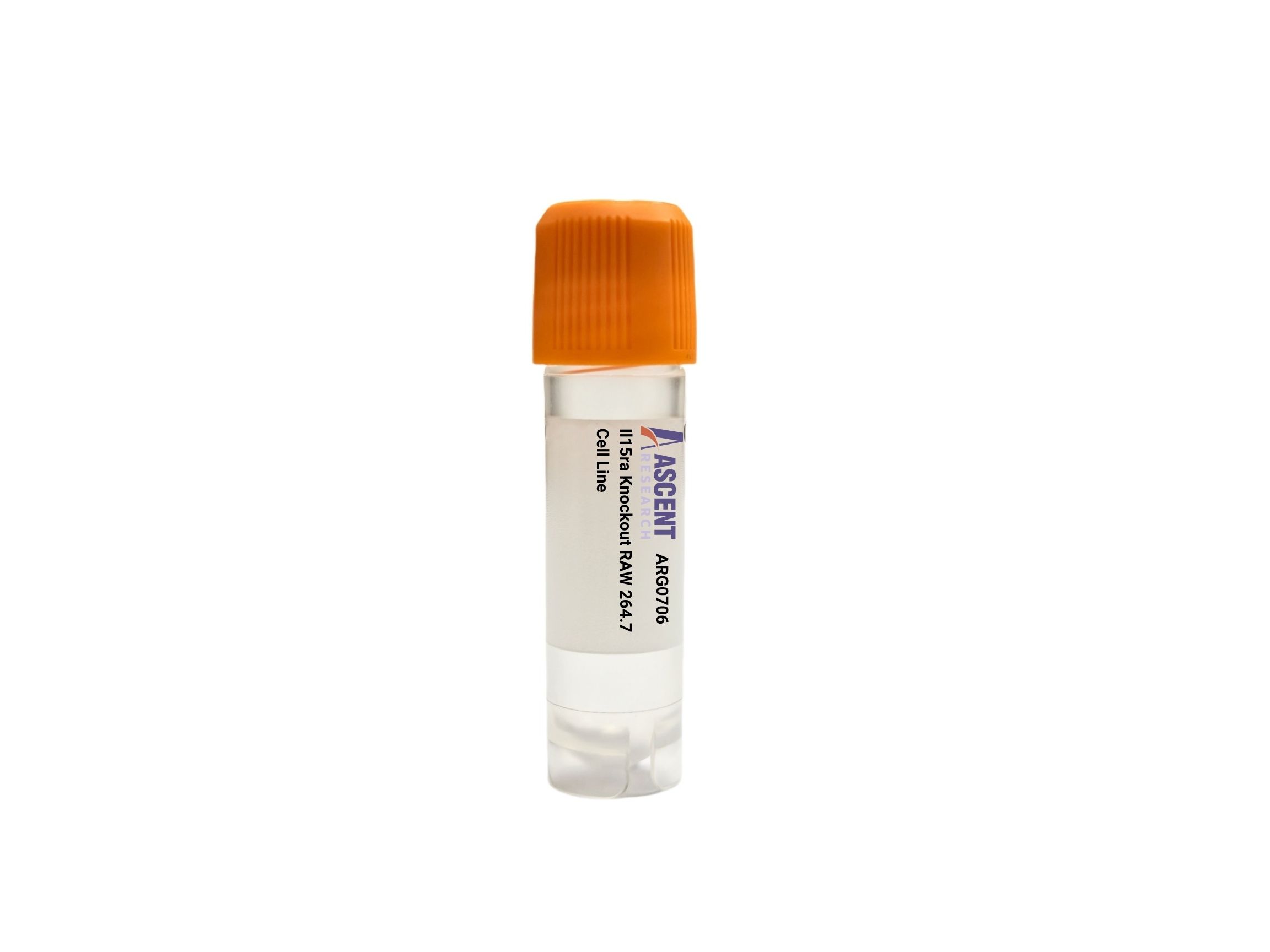
The Il15ra Knockout RAW 264.7 Cell Line is a CRISPR/Cas9-edited knockout cell line from mouse RAW 264.7 macrophages, with targeted disruption of Il15ra. This model abolishes IL-15RA function, blocking high-affinity IL-15 binding and trans-presentation that normally activates JAK/STAT5 and PI3K/AKT pathways, impairing survival signals via Bcl-2, Myc, and cyclin D1. It serves as a crucial tool for studying IL-15 signaling in macrophage inflammatory responses, tumor microenvironments, and autoimmune diseases, supporting assays such as phospho-STAT5 western blotting, flow cytometry, ELISA, and co-culture systems for drug screening and mechanistic insights.
 GLCE Knockout NCI-H1299 Polyclonal Cells
Cat. No. ARG17972
HMGN1 Knockout HEK293T Polyclonal Cells
Cat. No. ARG38075
AP3B1 Knockout HEK293T Polyclonal Cells
Cat. No. ARG38167
FBXO45 Knockout Hela Polyclonal Cells
Cat. No. ARG7831
PCDH7 Knockout 786-O Polyclonal Cells
Cat. No. ARG4871
GLCE Knockout NCI-H1299 Polyclonal Cells
Cat. No. ARG17972
HMGN1 Knockout HEK293T Polyclonal Cells
Cat. No. ARG38075
AP3B1 Knockout HEK293T Polyclonal Cells
Cat. No. ARG38167
FBXO45 Knockout Hela Polyclonal Cells
Cat. No. ARG7831
PCDH7 Knockout 786-O Polyclonal Cells
Cat. No. ARG4871
 NTAN1 Knockout HEK293T Cell Line
Cat. No. ARG0316
NTAN1 Knockout HEK293T Cell Line
Cat. No. ARG0316
The Il15ra Knockout RAW 264.7 Cell Line is a CRISPR/Cas9-edited knockout cell line manufactured from the mouse macrophage cell line RAW 264.7, featuring targeted disruption of the Il15ra gene. This loss-of-function model enables precise dissection of IL-15 receptor alpha-dependent signaling in a well-characterized macrophage background. The knockout eliminates functional IL-15RA expression, providing a defined system for studying IL-15-mediated responses without the need for pharmacological inhibitors or RNA interference.
The host cell line, RAW 264.7, is an extensively used murine macrophage model derived from a BALB/c mouse and transformed with Abelson murine leukemia virus. These cells exhibit key macrophage functions including phagocytosis, cytokine production, and antigen presentation, making them suitable for investigating innate immunity, inflammation, and host-pathogen interactions. Their robust growth and well-documented signaling pathways further enhance their utility for genetic manipulation studies.
The Il15ra gene encodes the high-affinity alpha subunit of the IL-15 receptor, which binds IL-15 and presents it in trans to cells expressing the IL-2RB/IL-2RG heterodimer, initiating signaling cascades. Upon IL-15 engagement, JAK1 and JAK3 phosphorylate STAT5, which translocates to the nucleus to drive expression of Bcl-2, Bcl-xL, Myc, and cyclin D1. Additionally, IL-15RA trans-presentation activates PI3K-AKT and MAPK pathways, promoting cell survival, proliferation, and immune activation. Upstream regulators include interferon-gamma and NF-kB, while downstream effectors such as STAT5 and Bcl-2 mediate anti-apoptotic and proliferative responses.
In RAW 264.7 macrophages, ablation of Il15ra disrupts IL-15 responsiveness, impairing the JAK/STAT, PI3K/AKT, and MAPK signaling cascades that underpin macrophage effector functions. This knockout cell line is a valuable tool for dissecting the role of IL-15 trans-presentation in macrophage biology, including its contributions to inflammatory cytokine secretion, phagocytic activity, and crosstalk with T cells and NK cells within immune microenvironments.
Researchers can employ this knockout model in diverse settings, such as quantifying phospho-STAT5 by western blotting, measuring proliferation and survival via flow cytometry, and assessing Bcl-2 and Myc transcription by RT-qPCR. Additional assays include ELISA-based cytokine profiling, phagocytosis assays, and co-culture systems. This cell line is ideally suited for studying IL-15 signaling in inflammation, tumor microenvironments, and autoimmune diseases, as well as for drug screening targeting the IL-15 pathway. For further details, please contact Ascent Research.