Genome-edited Cells
Ascites
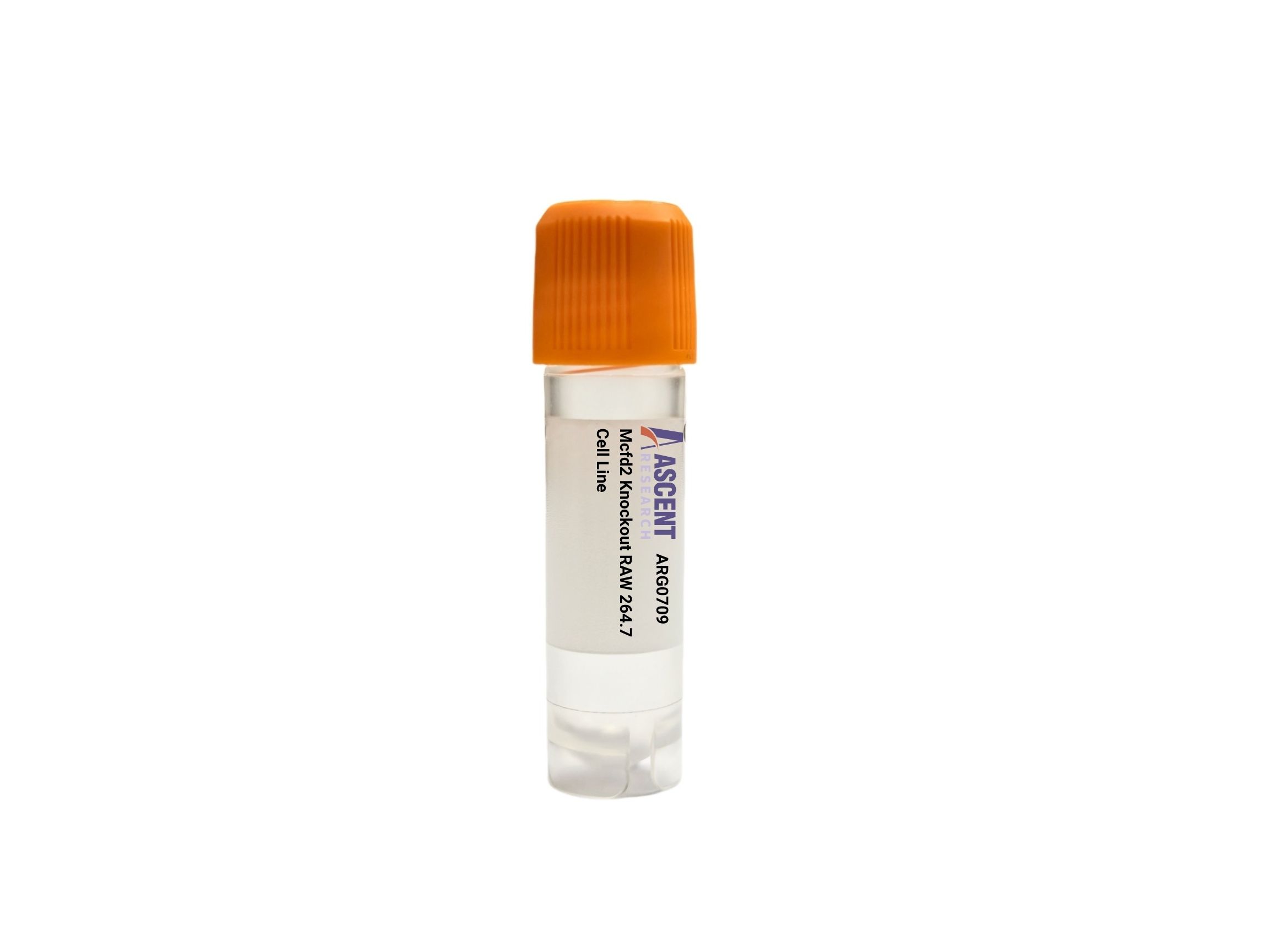
CRISPR/Cas9-edited Mcfd2 Knockout RAW 264.7 Cell Line disrupts the gene encoding MCFD2, a cargo receptor essential for ER-to-Golgi transport of coagulation factors V and VIII and other glycoproteins. Derived from mouse macrophages, this model mimics combined factor V and VIII deficiency and enables dissection of glycoprotein trafficking and secretory pathway regulation. Disruption of the LMAN1-MCFD2 complex impairs secretion of coagulation factors, providing a tool for coagulation disorder research, macrophage secretory pathway analysis, UPR studies, and related assays such as western blotting, immunofluorescence, and coagulation activity measurements.
 MSH3 Knockout SK-HEP-1 Polyclonal Cells
Cat. No. ARG15944
GTF2IRD1 Knockout MES-OV Polyclonal Cells
Cat. No. ARG24489
BAIAP2L1 Knockout MES-OV Polyclonal Cells
Cat. No. ARG24308
DPP7 Knockout HGC-27 Polyclonal Cells
Cat. No. ARG39676
NUDCD2 Knockout MES-OV Polyclonal Cells
Cat. No. ARG5994
LRRC20 Knockout 786-O Polyclonal Cells
Cat. No. ARG4838
MSH3 Knockout SK-HEP-1 Polyclonal Cells
Cat. No. ARG15944
GTF2IRD1 Knockout MES-OV Polyclonal Cells
Cat. No. ARG24489
BAIAP2L1 Knockout MES-OV Polyclonal Cells
Cat. No. ARG24308
DPP7 Knockout HGC-27 Polyclonal Cells
Cat. No. ARG39676
NUDCD2 Knockout MES-OV Polyclonal Cells
Cat. No. ARG5994
LRRC20 Knockout 786-O Polyclonal Cells
Cat. No. ARG4838
The Mcfd2 Knockout RAW 264.7 Cell Line is a CRISPR/Cas9-edited knockout cell line that disrupts the Mcfd2 gene, encoding the ER-to-Golgi cargo receptor MCFD2, in the Mus musculus macrophage cell line RAW 264.7. This targeted gene disruption generates a loss-of-function model for investigating the cellular trafficking and secretion of coagulation factors and other glycoproteins.
RAW 264.7 cells are a well-established BALB/c mouse-derived macrophage line transformed by the Abelson leukemia virus. They retain key functional characteristics of professional phagocytes, including robust phagocytic activity, cytokine secretion, and responsiveness to innate immune stimuli. This cellular background is extensively used to dissect macrophage biology, inflammation, and host-pathogen interactions.
MCFD2 functions as a critical component of the LMAN1-MCFD2 cargo receptor complex that facilitates COPII-dependent ER-to-Golgi transport of coagulation factors V and VIII and other glycoproteins. This process is regulated by endoplasmic reticulum (ER) stress and the unfolded protein response (UPR). Disruption of MCFD2 impairs the secretion of its downstream targets, most notably coagulation factors V and VIII, thereby mimicking the molecular defect underlying combined factor V and VIII deficiency. The LMAN1-MCFD2 complex interacts with glycoprotein cargo and cycles between the ER, ERGIC, and Golgi apparatus to ensure proper secretory trafficking.
In the context of RAW 264.7 macrophages, Mcfd2 knockout provides a unique cell model to examine the intersection of the macrophage secretory pathway with innate immune function. Beyond coagulation factor secretion, macrophages secrete a wide array of glycoproteins, including cytokines and other immunomodulatory factors, which may depend on MCFD2-mediated transport. This cell line therefore enables the study of how ER-to-Golgi trafficking governs macrophage effector responses and the cellular handling of secretory cargo under basal and ER-stressed conditions.
Researchers can use this knockout cell line for coagulation disorder modeling, glycoprotein trafficking studies, macrophage secretory pathway analysis, and UPR research. Representative assays include western blotting for coagulation factors V and VIII, immunoprecipitation of LMAN1, immunofluorescence of ERGIC, coagulation factor activity assays, phagocytosis assay, and cytokine ELISA. For further information, contact Ascent Research.