Genome-edited Cells
Liver
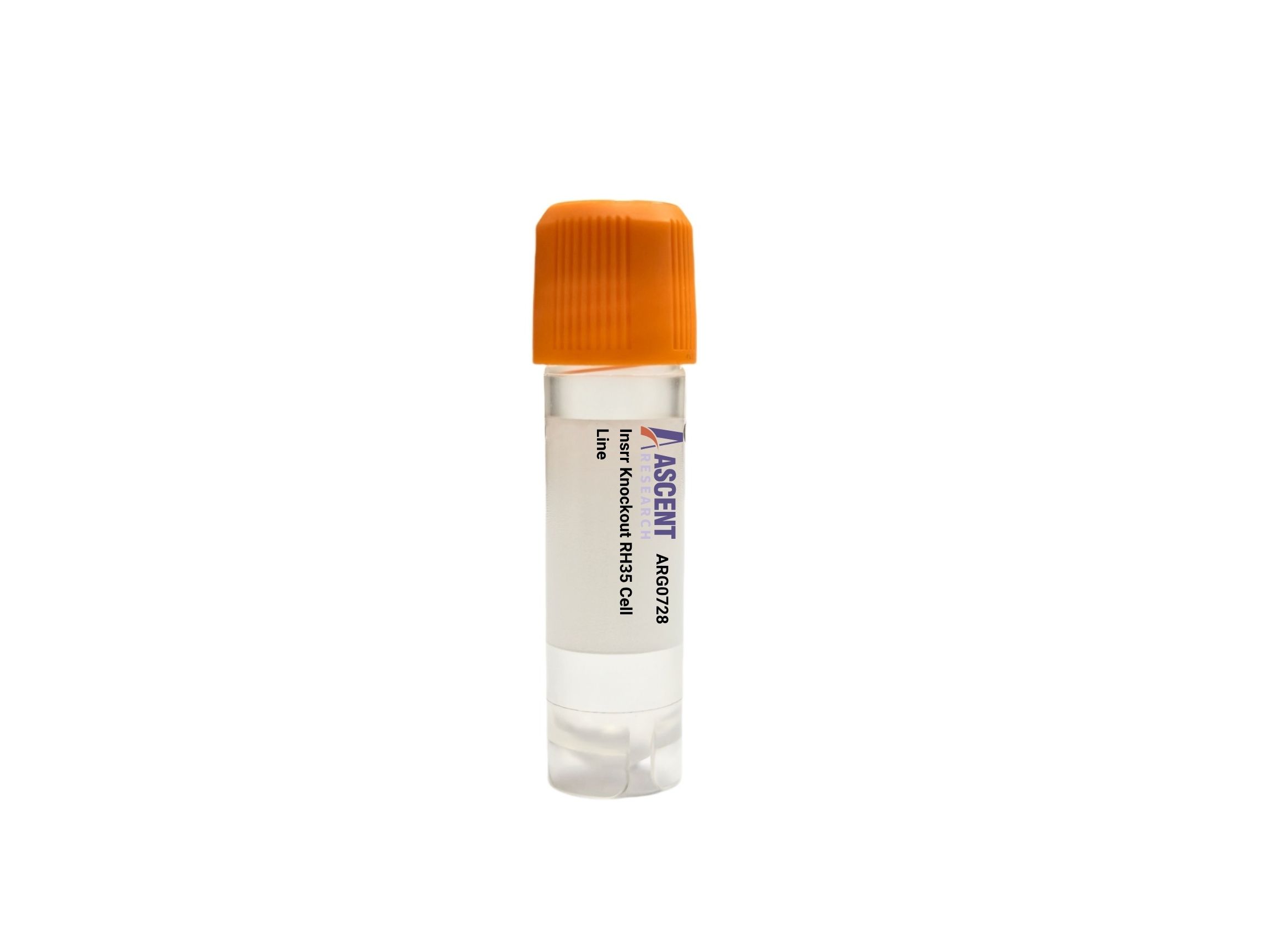
The Insrr Knockout RH35 Cell Line is a CRISPR/Cas9-edited rat hepatoma cell model with disruption of the Insrr gene, which encodes the insulin receptor-related receptor (IRR). IRR is an orphan receptor tyrosine kinase activated by alkaline pH, and this cell line provides a physiologically relevant host for studying IRR function in liver epithelial cells. Downstream of Insrr, IRS1, IRS2, and SHC1 recruit signaling complexes that activate AKT and ERK1/2 pathways. Researchers can use this model for pH-dependent activation assays, phospho-protein analysis, and proliferation studies, with applications in hepatocellular carcinoma and metabolic disease research.
 ATG16L1 Knockout 786-O Polyclonal Cells
Cat. No. ARG25020
ABHD14B Knockout NCI-H1299 Polyclonal Cells
Cat. No. ARG30179
BAZ2B Knockout A549 Polyclonal Cells
Cat. No. ARG31919
CD36 Knockout 786-O Polyclonal Cells
Cat. No. ARG43532
GLUL Knockout 786-O Polyclonal Cells
Cat. No. ARG5241
ATG16L1 Knockout 786-O Polyclonal Cells
Cat. No. ARG25020
ABHD14B Knockout NCI-H1299 Polyclonal Cells
Cat. No. ARG30179
BAZ2B Knockout A549 Polyclonal Cells
Cat. No. ARG31919
CD36 Knockout 786-O Polyclonal Cells
Cat. No. ARG43532
GLUL Knockout 786-O Polyclonal Cells
Cat. No. ARG5241
 ITGB4 Knockout A-549 Cell Line
Cat. No. ARG0109
ITGB4 Knockout A-549 Cell Line
Cat. No. ARG0109
The Insrr Knockout RH35 Cell Line is a genetically modified rat hepatoma cell line in which the Insrr gene has been disrupted using CRISPR/Cas9-mediated genome editing. This stable knockout model enables functional studies of the insulin receptor-related receptor (IRR), an orphan receptor tyrosine kinase implicated in alkaline pH sensing and insulin receptor-like signaling. By ablating Insrr expression, researchers can dissect IRR-dependent pathways in a hepatic cell context.
The parental RH35 cell line is a well-established rat hepatocellular carcinoma line derived from a liver hepatoma. As a cancer-derived liver epithelial cell model, RH35 retains key features of hepatocyte signaling and metabolism, making it suitable for investigating oncogenic and metabolic pathways. This host background provides a relevant system for examining the role of Insrr in liver cell biology, particularly in the context of hepatocellular carcinoma and metabolic dysregulation.
Insrr encodes an orphan receptor tyrosine kinase that is uniquely activated by alkaline extracellular pH, triggering downstream signaling through insulin receptor substrate (IRS) proteins and SHC1 adaptor. Upon activation, Insrr recruits IRS1, IRS2, and SHC1, which in turn engage GRB2?CSOS complexes, leading to RAS?CRAF1?CMAPK1/3 (ERK1/2) cascade activation, and also stimulate the PI3K?CAKT pathway via PIK3CA and AKT1. Thus, Insrr integrates pH cues with proliferative and survival signals through both the MAPK and PI3K?CAKT axes.
Given its expression in hepatocytes, Insrr may play a role in the adaptive responses of liver cells to local pH changes, such as those occurring in tumor microenvironments or during metabolic stress. In the RH35 hepatocellular carcinoma background, disruption of Insrr allows for the interrogation of IRR-dependent contributions to cancer cell proliferation, survival, and metabolic adaptation. This model is particularly valuable for studying how alkaline pH sensing interfaces with insulin receptor family signaling in a cancerous hepatocyte context.
This knockout cell line is ideally suited for a range of experiments, including pH-dependent activation assays to evaluate IRR-mediated signaling, western blotting and ELISA for phospho-AKT and phospho-ERK1/2, and cell proliferation assays to assess functional outcomes. Additional applications encompass RT-qPCR analysis of Insrr transcript levels and investigation of crosstalk with insulin receptor signaling. Researchers can employ this model to explore pH-sensing mechanisms, metabolic regulation, and hepatocellular carcinoma biology. For further technical details, please contact Ascent Research.