Genome-edited Cells
Large intestine (colon)
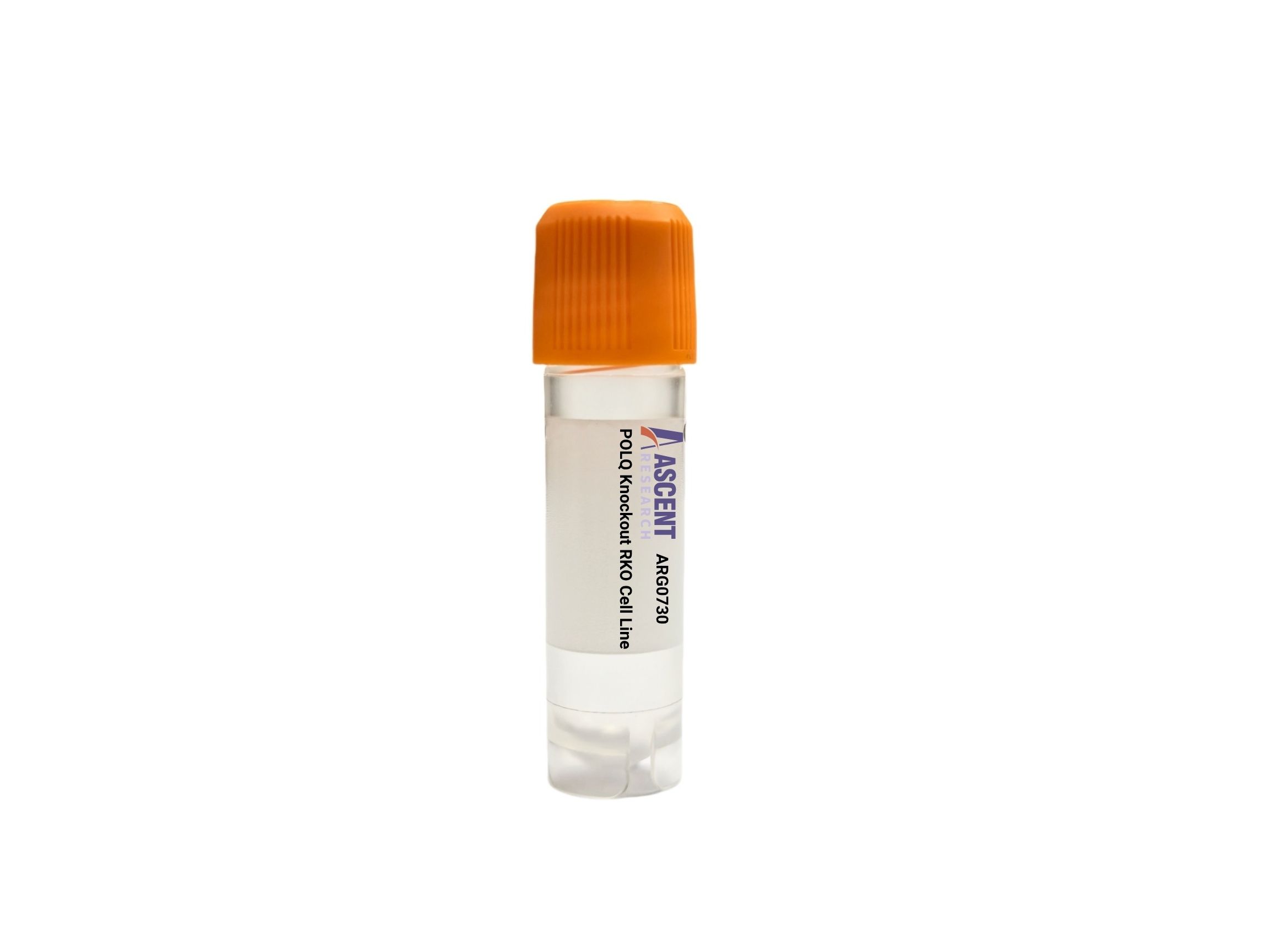
The POLQ Knockout RKO Cell Line is a CRISPR/Cas9-edited knockout cell line derived from human colorectal carcinoma RKO cells, with disrupted DNA polymerase theta (POLQ) expression. POLQ is a key enzyme in microhomology-mediated end joining (MMEJ), interacting with RAD51 and PARP1, and functioning downstream of ATM/ATR signaling. This knockout model shifts DNA double-strand break repair away from TMEJ, sensitizing cells to DNA-damaging agents and enabling studies on alternative end-joining, synthetic lethality, and POLQ inhibitor efficacy in an MSI-H colorectal cancer background. Applications include DNA repair assays and cancer therapeutic development.
The POLQ Knockout RKO Cell Line is a CRISPR/Cas9-edited knockout cell line derived from the human RKO colorectal carcinoma line, designed to disrupt the expression of DNA polymerase theta (POLQ). This stable knockout model provides a valuable tool for investigating the role of POLQ-mediated microhomology-mediated end-joining (MMEJ) in DNA double-strand break repair, in an epithelial cancer background.
The host RKO cell line is a widely used model of human colorectal adenocarcinoma, characterized by microsatellite instability (MSI-H) and harboring a BRAF V600E mutation with wild-type p53 status. These features render RKO cells particularly relevant for studying DNA repair dynamics in a mismatch repair-deficient context while retaining functional homologous recombination capacity.
POLQ encodes DNA polymerase theta, a key enzyme in alternative end-joining, known as theta-mediated end joining (TMEJ) or MMEJ. Activated by DNA damage through ATM/ATR signaling and regulated transcriptionally by E2F factors, POLQ promotes error-prone repair by annealing microhomologies at DNA breaks. It interacts with repair proteins including RAD51, PCNA, and PARP1, and operates within a network involving XRCC1 and DNA ligase III. POLQ-mediated repair maintains genome stability, particularly in cells with compromised homologous recombination (HR), and its disruption forces reliance on HR or non-homologous end joining (NHEJ) for double-strand break repair.
Disruption of POLQ in the RKO background eliminates TMEJ, shifting double-strand break repair toward HR and NHEJ. This sensitizes cells to DNA-damaging agents such as cisplatin and PARP inhibitors, and may induce synthetic lethality in HR-deficient contexts. As RKO cells are HR-proficient, the knockout line is ideal for studying compensatory repair mechanisms and screening for inhibitors that target residual TMEJ activity, providing insights into alternative end-joining in colorectal cancer.
This knockout cell line enables a range of DNA repair studies, including synthetic lethality screening, evaluation of POLQ inhibitor efficacy, and mechanistic dissection of repair pathway choice. Representative assays include Western blotting for POLQ, MMEJ activity via EJ2-GFP reporter, ??H2AX immunofluorescence, clonogenic survival after DNA damage, and RAD51 focus formation. Additionally, it suits drug sensitivity assays with PARP inhibitors or cisplatin, cell cycle analysis, and COMET assays. For further details, contact Ascent Research.