Genome-edited Cells
Testis
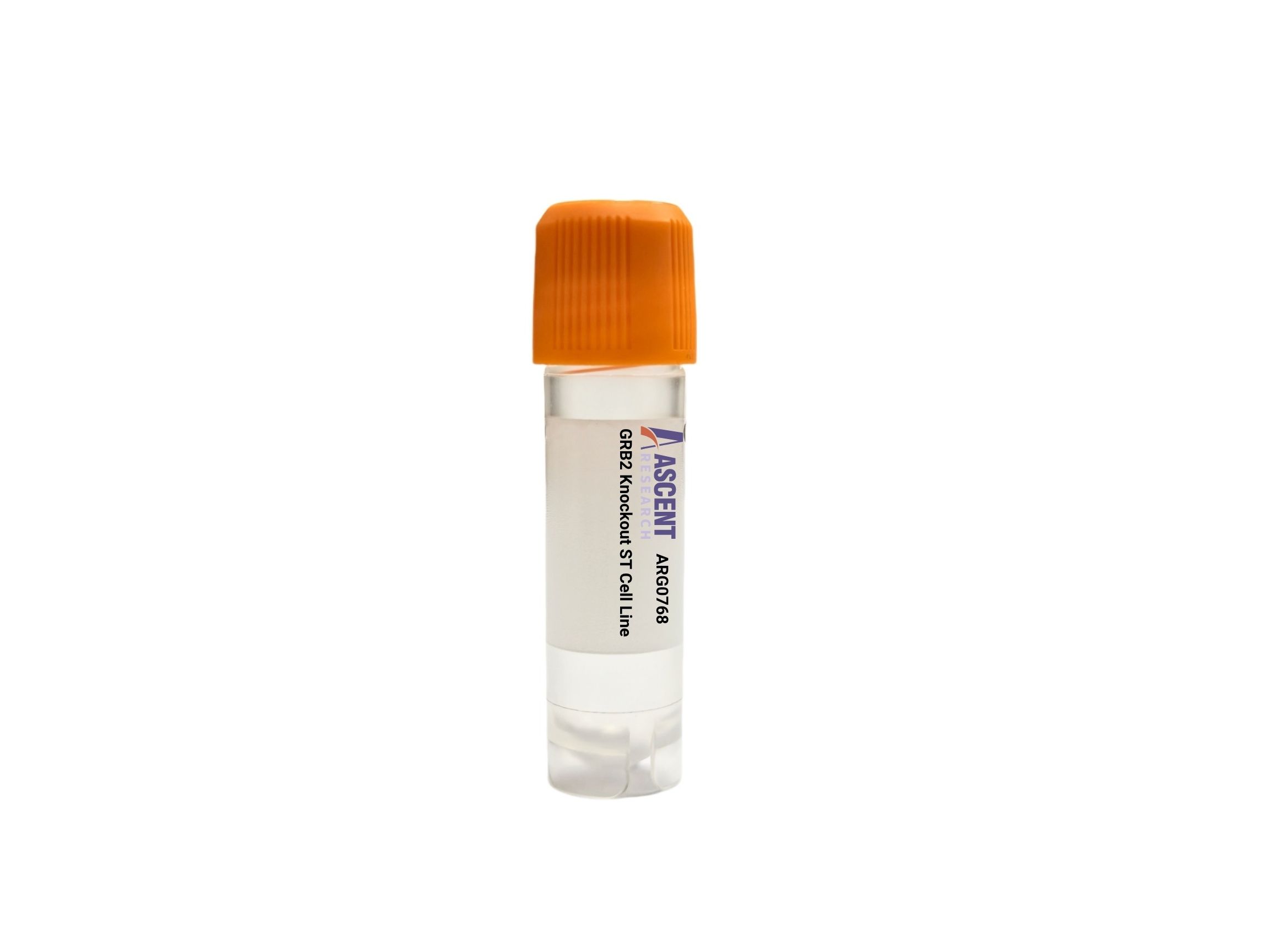
The GRB2 Knockout ST Cell Line is a CRISPR/Cas9-edited mouse embryonic fibroblast line (ST) with targeted disruption of Grb2, eliminating the GRB2 adapter essential for receptor tyrosine kinase (RTK) signal transduction. As a fibroblast model, it is relevant to studies of extracellular matrix biology and stem cell niche interactions. GRB2 bridges activated RTKs such as EGFR and PDGFR to the Ras-MAPK cascade via SOS1, also linking to PI3K-AKT signaling. This knockout line supports applications in cancer research, growth factor signaling, developmental biology, and adaptor protein analysis through assays including phospho-ERK western blotting, co-immunoprecipitation, and proliferation and migration studies.
 CACNA1D Knockout HAP1 Polyclonal Cells
Cat. No. ARG22214
NKIRAS2 Knockout NCI-H1975 Polyclonal Cells
Cat. No. ARG16561
FBN1 Knockout Hela Polyclonal Cells
Cat. No. ARG8025
ARFGAP3 Knockout A2780 Polyclonal Cells
Cat. No. ARG28759
APOC2 Knockout jurkat Polyclonal Cells
Cat. No. ARG33877
DENND6A Knockout Raji Polyclonal Cells
Cat. No. ARG1067
CACNA1D Knockout HAP1 Polyclonal Cells
Cat. No. ARG22214
NKIRAS2 Knockout NCI-H1975 Polyclonal Cells
Cat. No. ARG16561
FBN1 Knockout Hela Polyclonal Cells
Cat. No. ARG8025
ARFGAP3 Knockout A2780 Polyclonal Cells
Cat. No. ARG28759
APOC2 Knockout jurkat Polyclonal Cells
Cat. No. ARG33877
DENND6A Knockout Raji Polyclonal Cells
Cat. No. ARG1067
The GRB2 Knockout ST Cell Line is a CRISPR/Cas9-edited knockout cell line derived from the Mus musculus ST embryonic fibroblast line. It carries targeted disruption of the Grb2 gene, ablating expression of the growth factor receptor-bound protein 2 adapter. This loss-of-function model facilitates study of GRB2-dependent signaling processes without implying specific editing outcomes or clonality.
ST cells are immortalized mouse embryonic fibroblasts commonly utilized as feeder layers to support pluripotent stem cell culture. As fibroblasts, they are connective tissue cells responsible for synthesizing extracellular matrix components and mediating wound healing responses. Their robust in vitro growth and well-characterized biology make them a reliable host for genetic modification, particularly in research on mesenchymal signal transduction and cell-cell communication.
GRB2 encodes a ubiquitously expressed adapter protein containing an N-terminal SH3 domain, a central SH2 domain, and a C-terminal SH3 domain. Upon ligand binding, receptor tyrosine kinases such as EGFR, PDGFR, and FGFR autophosphorylate tyrosine residues that serve as docking sites for GRB2??s SH2 domain. GRB2 can also bind phosphorylated SHC, a scaffold adaptor linking RTKs to downstream pathways. The SH3 domains of GRB2 constitutively associate with proline-rich motifs in the guanine nucleotide exchange factor SOS1, bringing SOS1 into proximity with membrane-bound Ras. This catalyzes Ras GTP loading and triggers the sequential activation of RAF, MEK, and ERK mitogen-activated protein kinases (MAPKs). Additionally, GRB2 contributes to PI3K-AKT signaling through interaction with insulin receptor substrate 1 (IRS1). Thus, GRB2 acts as a key node downstream of growth factors like EGF and PDGF, and upstream of the Ras-MAPK cascade, with SOS1, RAS, RAF, MEK, and ERK as representative pathway components.
In the ST fibroblast background, loss of GRB2 is expected to attenuate RTK-driven MAPK and AKT pathway activation, thereby impairing cell proliferation, matrix remodeling, and motility. As fibroblasts are integral to wound healing and the tumor microenvironment, this knockout provides a means to investigate GRB2??s role in these contexts. Moreover, as a feeder cell line, GRB2-deficient ST cells may exhibit altered paracrine secretion, enabling dissection of niche signals that support stem cell maintenance and differentiation.
The GRB2 Knockout ST Cell Line is suitable for a spectrum of experimental approaches. Western blotting for phospho-ERK permits direct assessment of MAPK pathway activity, while co-immunoprecipitation experiments can probe GRB2 complex formation with SOS1, SHC, or EGFR. Transcriptional profiling by RT-qPCR can measure downstream effector gene expression. Functional readouts such as cell proliferation and migration assays aid in characterizing the biological consequences of GRB2 loss. This product thus supports studies in cancer biology, adaptor protein function, developmental disorders, and RTK signaling. For further information, please contact Ascent Research.