Genome-edited Cells
Large intestine (colon)
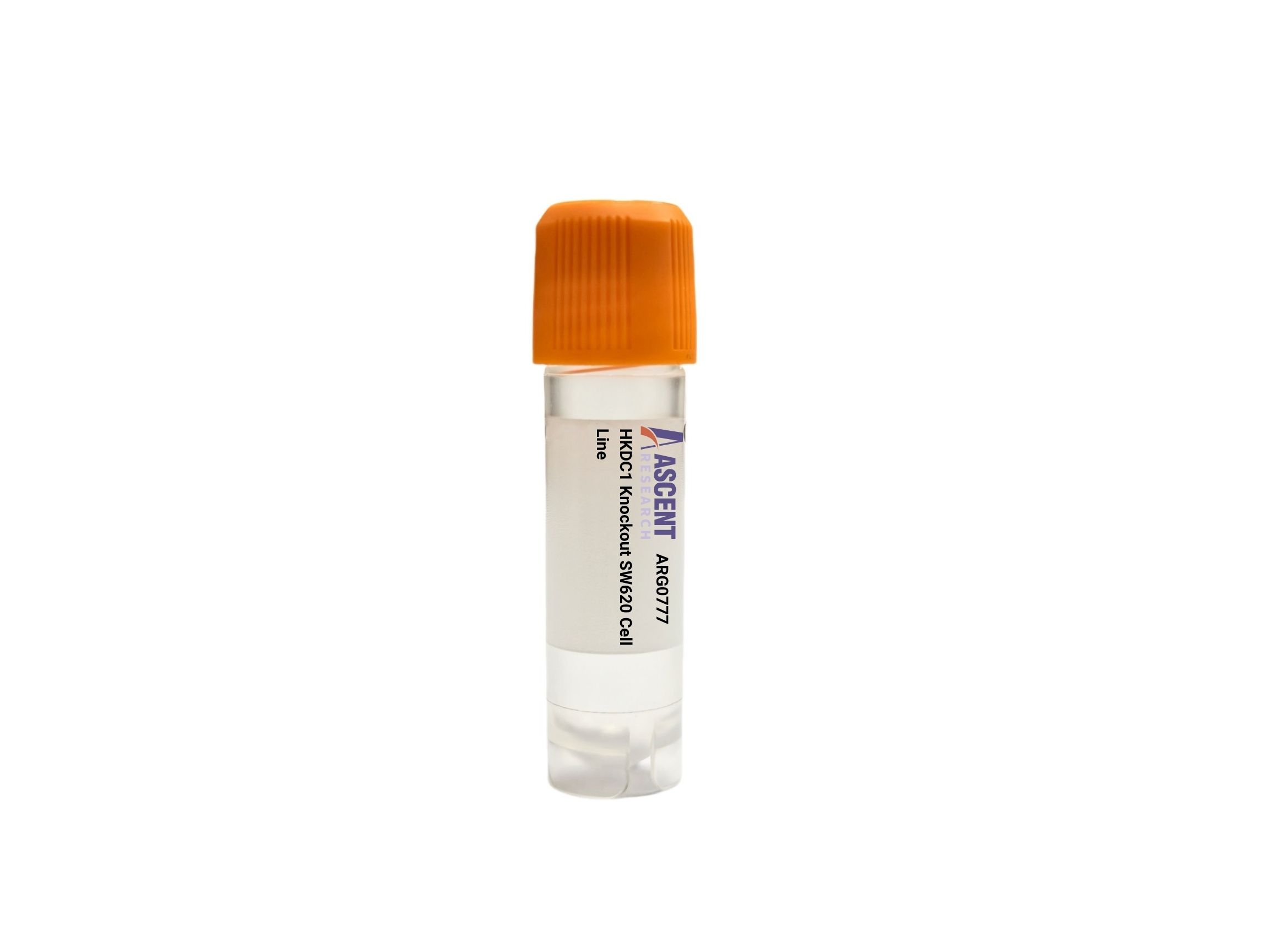
The HKDC1 Knockout SW620 Cell Line is a CRISPR/Cas9-edited knockout model in human colorectal adenocarcinoma cells, targeting the hexokinase domain-containing 1 gene. HKDC1 catalyzes the phosphorylation of glucose to glucose-6-phosphate, a key step in glycolysis, and is regulated by HIF1A and insulin signaling. This cell line enables investigation of glycolytic flux, metabolic reprogramming, and cancer cell proliferation in a metastatic colorectal cancer background. It is ideal for studying the Warburg effect, validating drug targets, and conducting functional assays such as metabolic flux analysis and cell viability assessments.
 ATP6V0A2 Knockout K562 Polyclonal Cells
Cat. No. ARG20263
MTA3 Knockout NCI-H1975 Polyclonal Cells
Cat. No. ARG17326
ING5 Knockout HT29 Polyclonal Cells
Cat. No. ARG33454
DPF1 Knockout HAP1 Polyclonal Cells
Cat. No. ARG39646
ERN1 Knockout MCF7 Polyclonal Cells
Cat. No. ARG11395
ERN1 Knockout HCT116 Polyclonal Cells
Cat. No. ARG6956
ATP6V0A2 Knockout K562 Polyclonal Cells
Cat. No. ARG20263
MTA3 Knockout NCI-H1975 Polyclonal Cells
Cat. No. ARG17326
ING5 Knockout HT29 Polyclonal Cells
Cat. No. ARG33454
DPF1 Knockout HAP1 Polyclonal Cells
Cat. No. ARG39646
ERN1 Knockout MCF7 Polyclonal Cells
Cat. No. ARG11395
ERN1 Knockout HCT116 Polyclonal Cells
Cat. No. ARG6956
The HKDC1 Knockout SW620 Cell Line is a genetically engineered human colorectal adenocarcinoma cell product featuring CRISPR/Cas9-mediated disruption of the HKDC1 gene. This knockout cell line delivers a loss-of-function model for investigating hexokinase domain-containing 1 (HKDC1) in a defined cellular background. The product is supplied as a viable, proliferating population suitable for downstream functional assays, biochemical analyses, and multi-omics profiling. It provides a robust tool for studying glycolytic regulation and metabolic reprogramming without introducing transient transfection artifacts. The knockout status is validated at the genomic and transcript levels, ensuring consistent target gene disruption across experimental replicates.
Host cell line SW620 originates from lymph node metastasis of a Dukes’ type C colorectal adenocarcinoma, representing an advanced, metastatic stage of colorectal cancer. SW620 cells retain epithelial characteristics and are widely used as a model system for tumor progression, metastatic dissemination, and therapeutic response. This background harbors well-characterized genetic alterations typical of colorectal cancer, including mutations in APC, TP53, and KRAS, which render the cells highly dependent on aerobic glycolysis for energy production and biosynthesis. Consequently, SW620 is an ideal chassis for examining metabolic vulnerabilities associated with the Warburg effect.
HKDC1 encodes a hexokinase that catalyzes the phosphorylation of glucose to glucose-6-phosphate, the committing step of glycolysis. This enzyme functions at the interface of glucose uptake and intracellular glucose utilization, linking extracellular nutrient availability to metabolic flux. HKDC1 expression is induced by glucose, insulin, and key transcription factors including HIF1A, ChREBP (MLXIPL), and SREBP1, placing it under the control of oxygen-sensing, nutrient-responsive, and lipogenic programs. The protein interacts with mitochondrial porins VDAC1 and VDAC2, and engages in complexes with other glycolytic enzymes such as HK2, PKM2, and PFKL. By generating glucose-6-phosphate, HKDC1 feeds into both energy production via glycolysis and pentose phosphate pathway-mediated nucleotide synthesis, thereby supporting cell cycle progression and proliferation. Knockout of HKDC1 disrupts these downstream processes, leading to impaired glycolytic intermediate production and reduced anabolic capacity.
In the context of SW620 colorectal adenocarcinoma cells, HKDC1 knockout impairs glycolytic flux, attenuating the supply of ATP and biosynthetic precursors that sustain rapid cell division. This metabolic constraint translates into suppressed cell proliferation, reduced colony-forming ability, and enhanced susceptibility to apoptosis under nutrient-limiting conditions. Because SW620 cells rely heavily on glycolysis for survival, the HKDC1 knockout model is particularly powerful for dissecting the interplay between glucose metabolism, oncogenic signaling, and tumor aggressiveness. Moreover, since HKDC1 is overexpressed in certain colorectal cancers and metabolic disorders, this model enables direct evaluation of HKDC1 as a potential therapeutic target, with relevance extending to type 2 diabetes and non-alcoholic fatty liver disease where hepatic hexokinase activity is dysregulated.
The HKDC1 Knockout SW620 Cell Line supports a broad range of research applications, including cancer metabolism studies, glycolytic dependency profiling, and glucose sensing characterization. Researchers can employ Western blotting and RT-qPCR for gene expression verification, Seahorse metabolic flux assays to measure oxygen consumption and extracellular acidification rates, glucose uptake and lactate production assays to quantify glycolytic output, and cell proliferation, colony formation, and apoptosis assays to assess phenotypic consequences. Further mechanistic insights can be obtained through cell cycle analysis, RNA-seq, and proteomic approaches. This tool is also well-suited for drug target validation and combination therapy testing in colorectal cancer models. For further information, please contact Ascent Research.