Genome-edited Cells
Blood (peripheral blood)
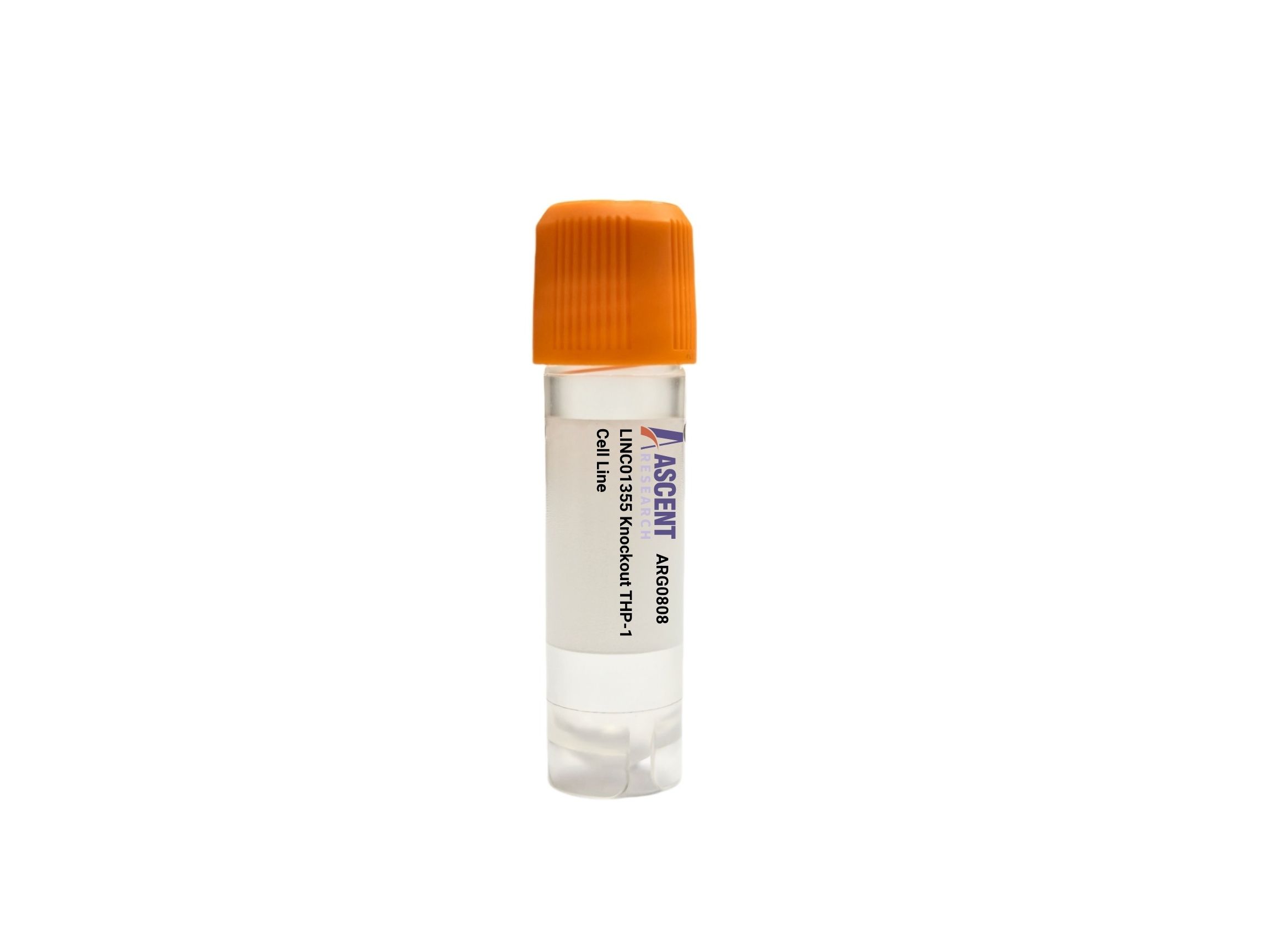
The LINC01355 Knockout THP-1 Cell Line is a CRISPR/Cas9-edited human monocytic leukemia cell line with targeted disruption of the LINC01355 long non-coding RNA gene. LINC01355 functions as a ceRNA that sponges miR-21 and miR-144-3p, modulating PI3K/AKT and MAPK/ERK signaling through effectors like AKT, mTOR, ERK, and STAT3. This knockout model enables loss-of-function studies in monocyte/macrophage biology, leukemia, and inflammation. Applications include transcriptomic profiling via RNA-seq, protein analysis by western blotting, functional assays for proliferation and apoptosis, and RNA immunoprecipitation to map lncRNA?CmiRNA interactions. The cell line is suitable for drug screening and immune cell signaling research.
 LGR4 Knockout SK-Hep-1 Polyclonal Cells
Cat. No. ARG15133
ANXA6 Knockout HGC-27 Polyclonal Cells
Cat. No. ARG29549
KRT20 Knockout A2780 Polyclonal Cells
Cat. No. ARG35252
CBR3 Knockout A2780 Polyclonal Cells
Cat. No. ARG42702
NUBPL Knockout Raji Polyclonal Cells
Cat. No. ARG1316
LGR4 Knockout SK-Hep-1 Polyclonal Cells
Cat. No. ARG15133
ANXA6 Knockout HGC-27 Polyclonal Cells
Cat. No. ARG29549
KRT20 Knockout A2780 Polyclonal Cells
Cat. No. ARG35252
CBR3 Knockout A2780 Polyclonal Cells
Cat. No. ARG42702
NUBPL Knockout Raji Polyclonal Cells
Cat. No. ARG1316
 Dog Intestinal Microvascular Endothelial Cells
Cat. No. ARP0970
Dog Intestinal Microvascular Endothelial Cells
Cat. No. ARP0970
The LINC01355 Knockout THP-1 Cell Line is a genetically modified human monocytic leukemia cell model generated via CRISPR/Cas9-mediated disruption of the LINC01355 gene. This cell line serves as a robust loss-of-function tool for investigating the biological roles of LINC01355 long non-coding RNA in hematopoietic cell contexts. It is offered as a ready-to-use knockout cell line, enabling direct functional interrogation without prior editing steps. The targeted gene disruption is achieved through CRISPR/Cas9 genome engineering, resulting in a stable knockout model suitable for diverse biomedical research applications.
The parental THP-1 cell line, originally isolated from the peripheral blood of a one-year-old male with acute monocytic leukemia, is a well-characterized model for monocyte-to-macrophage differentiation, innate immune signaling, and leukemic transformation. These suspension cells exhibit morphological and functional features of immature monocytes and can be induced to differentiate into adherent, macrophage-like cells upon treatment with phorbol esters such as PMA. This differentiation capacity makes THP-1 an invaluable system for studying macrophage biology, inflammatory responses, and the molecular mechanisms underlying acute myeloid leukemia.
LINC01355 is a long non-coding RNA that functions primarily as a competitive endogenous RNA (ceRNA) to sequester microRNAs such as miR-21 and miR-144-3p. By sponging these miRNAs, LINC01355 relieves translational repression of target mRNAs involved in critical signaling pathways, including PI3K/AKT and MAPK/ERK cascades. Consequently, LINC01355 influences the activity of downstream effectors like AKT, mTOR, GSK3??, ERK, and STAT3, as well as the stability of ??-catenin. Its expression is regulated by a network of transcription factors, epigenetic modifiers, and cellular stress signals, and it interacts with RNA-binding proteins and chromatin-modifying complexes to fine-tune gene expression programs. Through these mechanisms, LINC01355 modulates cell proliferation, apoptosis, and differentiation in a context-dependent manner.
In the THP-1 monocytic leukemia context, knockout of LINC01355 is anticipated to disrupt these regulatory networks, leading to altered monocyte/macrophage functions and potential attenuation of leukemogenic properties. Given the gene??s involvement in acute myeloid leukemia, colorectal cancer, breast cancer, and inflammatory diseases, this knockout cell line provides a physiologically relevant platform to dissect LINC01355-dependent disease mechanisms. It allows researchers to directly assess how loss of LINC01355 expression impacts THP-1 cell behavior, including differentiation potential, cytokine production, and sensitivity to chemotherapeutic agents.
This knockout cell line is applicable to a wide array of experimental techniques, including RT-qPCR and RNA-seq for transcriptomic analysis, western blotting for protein-level validation, flow cytometry for phenotypic characterization, and proliferation/apoptosis assays to measure cellular outcomes. Moreover, RNA immunoprecipitation and luciferase reporter assays enable detailed investigation of LINC01355?CmiRNA interactions, while cytokine profiling can quantify inflammatory responses. These tools support robust studies in lncRNA biology, leukemia and cancer research, drug screening, and immune cell signaling. For further information or technical support, please contact Ascent Research.