Genome-edited Cells
Blood (peripheral blood)
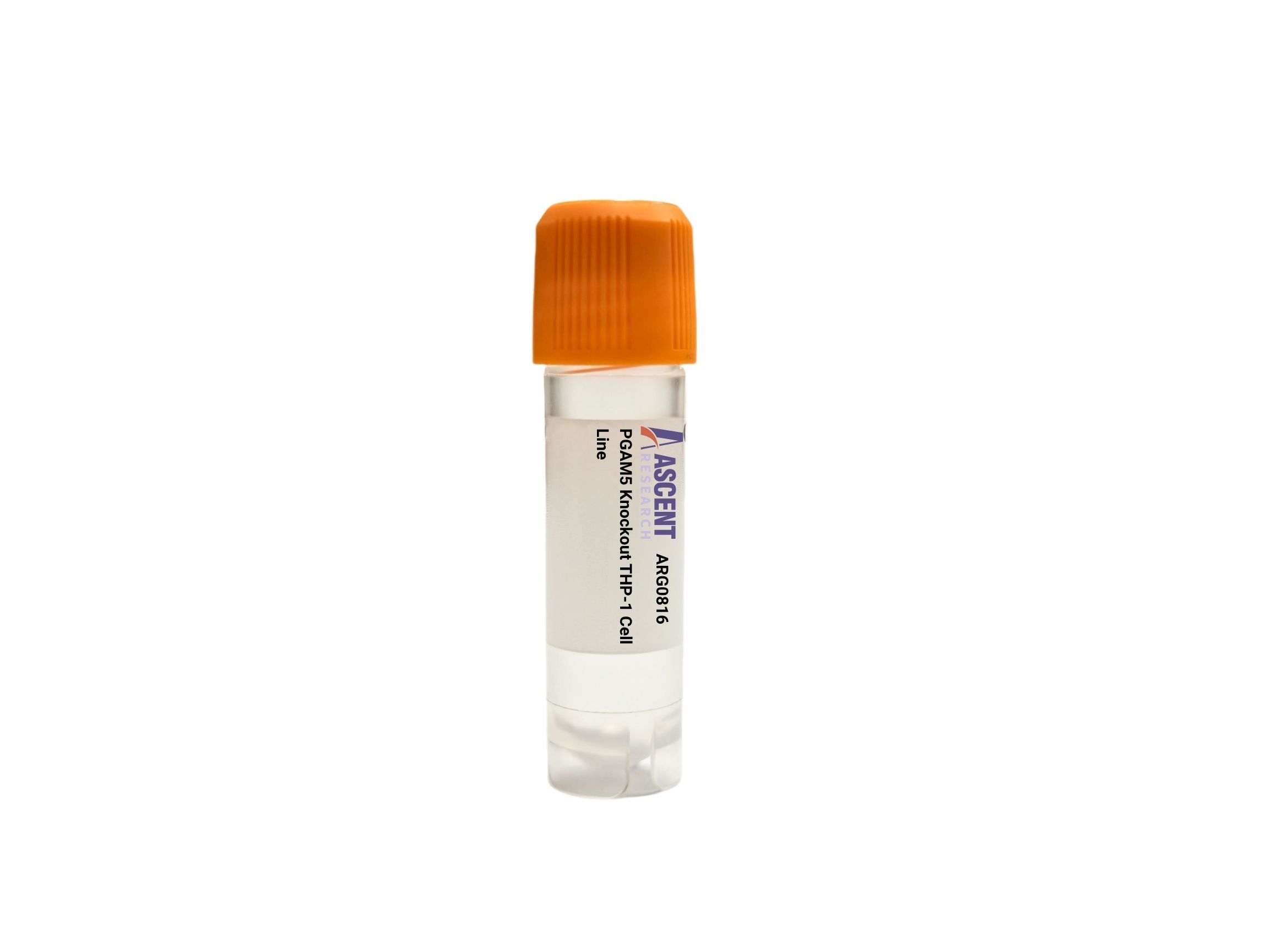
The PGAM5 Knockout THP-1 Cell Line is a CRISPR/Cas9-edited human monocytic cell line that eliminates functional PGAM5 phosphatase to dissect its roles in necroptosis, mitochondrial dynamics, and antioxidant signaling. PGAM5 acts downstream of RIPK3 and TNF-??, dephosphorylating MLKL and DRP1 while stabilizing NRF2 via KEAP1 interaction. This model is ideal for investigating immune cell death, mitophagy, and redox regulation using assays such as phospho-protein western blotting, cell death flow cytometry, and NRF2 reporter analyses. It supports research in inflammation, leukemia, and drug resistance, providing a defined genetic tool for pathway interrogation.
 TP53 Knockout Marc-145 Cell Line
Cat. No. ARG44179
LIG1 Knockout HCT 116 Cell Line
Cat. No. ARG43944
TP53 Knockout Marc-145 Cell Line
Cat. No. ARG44179
LIG1 Knockout HCT 116 Cell Line
Cat. No. ARG43944
 AKAP11 Knockout SK-HEP-1 Polyclonal Cells
Cat. No. ARG32123
Ahsa1 Knockout HMC3 Polyclonal Cells
Cat. No. ARG28417
MPND Knockout HEK293T Polyclonal Cells
Cat. No. ARG4626
LGR4 Knockout HEK293T Polyclonal Cells
Cat. No. ARG3323
AKAP11 Knockout SK-HEP-1 Polyclonal Cells
Cat. No. ARG32123
Ahsa1 Knockout HMC3 Polyclonal Cells
Cat. No. ARG28417
MPND Knockout HEK293T Polyclonal Cells
Cat. No. ARG4626
LGR4 Knockout HEK293T Polyclonal Cells
Cat. No. ARG3323
The PGAM5 Knockout THP-1 Cell Line is a targeted CRISPR/Cas9-mediated gene disruption model in the human monocytic THP-1 cell line. This product provides a genetically defined loss-of-function system for studying the mitochondrial phosphatase PGAM5. The stable knockout phenotype enables consistent experimental outcomes in a variety of downstream assays. It is intended for research applications in cell signaling, cell death, and immune function.
The parental THP-1 cell line, derived from an acute monocytic leukemia patient, is widely used to model monocyte and macrophage biology. These cells can be differentiated into adherent, macrophage-like cells with PMA, exhibiting phagocytic activity, cytokine secretion, and inflammasome responses. THP-1 cells express Toll-like receptors and are responsive to LPS and other microbial ligands, making them a robust system for studying innate immunity and inflammation.
PGAM5 encodes a mitochondrial serine/threonine phosphatase positioned at the crossroads of necroptosis, apoptosis, and antioxidant defense. It is activated downstream of TNF-??, RIPK1, and RIPK3, and it directly dephosphorylates MLKL to trigger necroptotic cell death. Concurrently, PGAM5 dephosphorylates DRP1, promoting mitochondrial fission and influencing mitophagy. Through binding KEAP1, PGAM5 stabilizes NRF2, enabling nuclear translocation and transcription of cytoprotective genes. These interactions place PGAM5 as a critical regulator of cell fate in response to oxidative stress and inflammatory cues.
In the context of THP-1 cells, PGAM5 knockout allows dissection of its roles in immune cell death decisions and macrophage effector functions. Both undifferentiated monocytes and PMA-differentiated macrophages can be studied to evaluate PGAM5 contribution to necroptosis versus apoptosis upon stimulation with TNF-?? or LPS. This model is particularly suited to investigating how PGAM5 modulates inflammasome activation, mitochondrial dynamics, and NRF2-driven antioxidant responses in a leukemic background.
Typical applications include western blotting for phospho-MLKL and phospho-DRP1, RT-qPCR analysis of NRF2 target genes, flow cytometry using Annexin V/PI for cell death, immunofluorescence to visualize mitochondrial morphology, and co-immunoprecipitation of PGAM5 with RIPK3 or KEAP1. The cell line supports research into necroptosis mechanisms, mitochondrial quality control, inflammation, cancer cell survival, and drug resistance. It is also amenable to high-throughput screening. For further information, please contact Ascent Research.