Genome-edited Cells
Blood (peripheral blood)
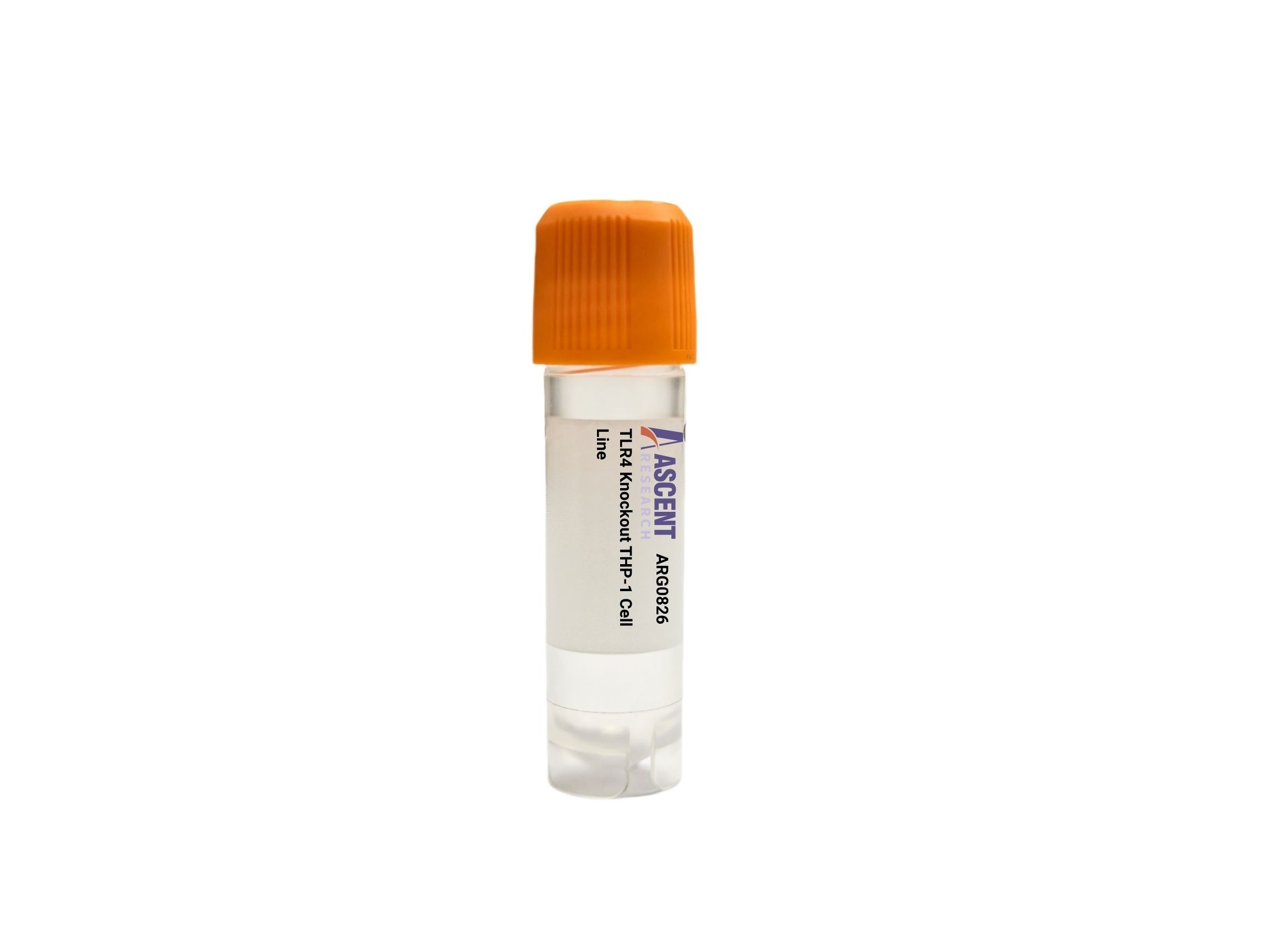
CRISPR/Cas9-edited TLR4 knockout THP-1 cell line eliminates Toll-like receptor 4 expression, the receptor for bacterial LPS. Derived from human acute monocytic leukemia THP-1 cells, this suspension line differentiates into macrophage-like cells upon PMA treatment, providing a versatile model for monocyte/macrophage innate immunity. Disruption of TLR4 blocks MyD88-dependent and TRIF-dependent signaling, preventing NF-??B and IRF3 activation and reducing production of pro-inflammatory cytokines such as TNF-?? and IL-6. This knockout line is ideal for innate immunity research, LPS signaling studies, drug screening, and host-pathogen interaction experiments.
 C1orf43 Knockout HAP1 Polyclonal Cells
Cat. No. ARG22168
Osr2 Knockout SKOV3 Polyclonal Cells
Cat. No. ARG12349
ACAA2 Knockout A549 Polyclonal Cells
Cat. No. ARG27210
ABCC1 Knockout Hela Polyclonal Cells
Cat. No. ARG37200
CALHM2 Knockout KYSE30 Polyclonal Cells
Cat. No. ARG41854
PDS5B Knockout HEK293T Polyclonal Cells
Cat. No. ARG4441
C1orf43 Knockout HAP1 Polyclonal Cells
Cat. No. ARG22168
Osr2 Knockout SKOV3 Polyclonal Cells
Cat. No. ARG12349
ACAA2 Knockout A549 Polyclonal Cells
Cat. No. ARG27210
ABCC1 Knockout Hela Polyclonal Cells
Cat. No. ARG37200
CALHM2 Knockout KYSE30 Polyclonal Cells
Cat. No. ARG41854
PDS5B Knockout HEK293T Polyclonal Cells
Cat. No. ARG4441
The TLR4 Knockout THP-1 Cell Line is a CRISPR/Cas9-edited knockout cell line in which Toll-like receptor 4 (TLR4) expression has been disrupted. This product provides a homogeneous population of THP-1 cells lacking functional TLR4, enabling loss-of-function studies of this innate immune receptor. The knockout eliminates the ability to recognize lipopolysaccharide (LPS) and other TLR4 ligands, serving as a powerful tool for dissecting TLR4-specific signaling pathways. The cell line offers a stable, ready-to-use model for acute and long-term experiments without the need for transient gene silencing.
THP-1 is a human acute monocytic leukemia-derived suspension cell line that recapitulates monocyte biology. Upon stimulation with phorbol 12-myristate 13-acetate (PMA), THP-1 cells differentiate into adherent, macrophage-like cells, making it an established model for monocyte/macrophage function, innate immunity, and leukemia. The TLR4 knockout line retains this inducible differentiation property, allowing investigation of TLR4 in both monocytic and macrophage states.
TLR4 encodes a pattern recognition receptor that senses bacterial LPS in complex with CD14 and MD-2. Ligand engagement activates MyD88-dependent and TRIF-dependent cascades. The MyD88/TIRAP pathway drives early NF-??B and MAPK signaling, while TRIF/TRAM mediates late NF-??B and IRF3 activation, leading to type I interferon production. Downstream targets include pro-inflammatory cytokines TNF-??, IL-6, and IL-1??, as well as COX-2 and iNOS. Upstream regulators comprise HMGB1, S100A8/A9, and negative regulator miR-146a. Key interacting adaptors and kinases include IRAK1, IRAK4, TRAF6, and TAK1. By eliminating TLR4, this knockout cell line uncouples the receptor from these signaling modules, blocking NF-??B and IRF3 activation in response to LPS.
In the THP-1 context, TLR4 ablation creates a unique tool for studying monocyte/macrophage innate immunity. TLR4-null cells fail to activate NF-??B or produce cytokines upon LPS stimulation, enabling discrimination between TLR4-dependent and -independent responses mediated by other pattern recognition receptors such as TLR2. The model is valuable for validating TLR4-specific drug targets, exploring host-pathogen interactions, and examining TLR4 crosstalk with inflammasome pathways. Differentiation into macrophages permits assessment of TLR4 roles in phagocytosis and antigen presentation.
Typical applications include innate immunity signaling studies, LPS response dissection, inflammation research, and sepsis modeling. The cell line supports western blotting (e.g., phospho-p65), RT-qPCR, flow cytometry, ELISA for TNF-??/IL-6, NF-??B luciferase reporters, RNA-seq, and cytokine arrays. It serves as a negative control for LPS challenge assays and a platform for TLR4 inhibitor screening. For additional information or technical support, please contact Ascent Research.