Genome-edited Cells
Pleural effusion
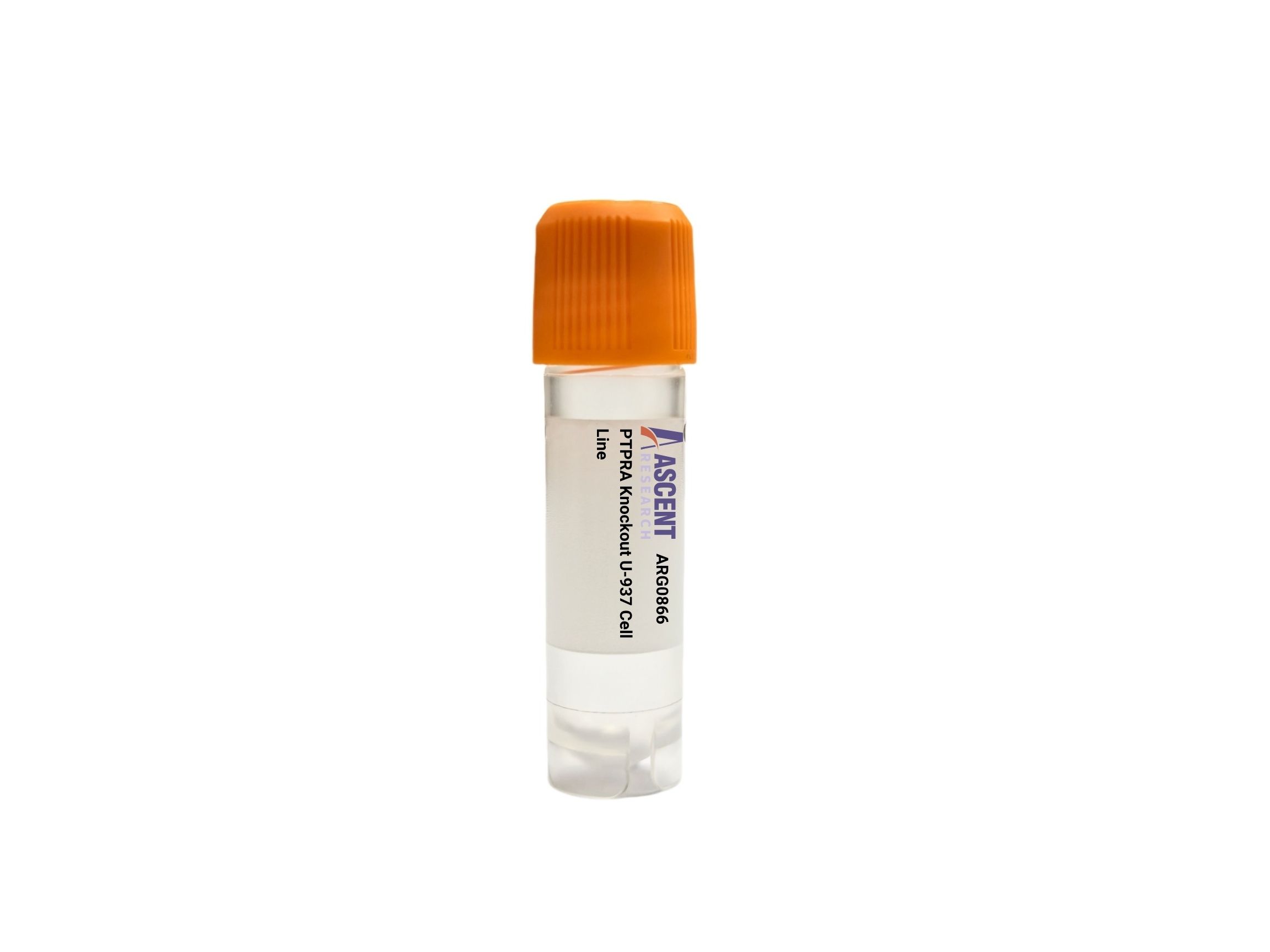
The PTPRA Knockout U-937 Cell Line is a CRISPR/Cas9-edited knockout cell line derived from the human histiocytic lymphoma U-937 cell line, engineered to disrupt the gene encoding receptor-type protein tyrosine phosphatase alpha (PTPRA). This loss-of-function model enables investigation of PTPRA's role as a key activator of Src family kinases, where it dephosphorylates the inhibitory C-terminal tyrosine upon integrin engagement or growth factor stimulation, thereby regulating cell adhesion, migration, proliferation, and survival. It is particularly suited for studying Src and ERK1/2 signaling in the context of monocyte/macrophage differentiation and tumor biology, with applications in cancer cell migration, integrin signaling, and drug target validation.
 LAMP2 Knockout A2780 Polyclonal Cells
Cat. No. ARG19213
OXNAD1 Knockout NCI-H1975 Polyclonal Cells
Cat. No. ARG16687
CHN1 Knockout SK-HEP-1 Polyclonal Cells
Cat. No. ARG15803
GNPDA2 Knockout NCI-H1299 Polyclonal Cells
Cat. No. ARG30631
CHP1 Knockout MES-OV Polyclonal Cells
Cat. No. ARG5870
NKIRAS2 Knockout AGS Polyclonal Cells
Cat. No. ARG2332
LAMP2 Knockout A2780 Polyclonal Cells
Cat. No. ARG19213
OXNAD1 Knockout NCI-H1975 Polyclonal Cells
Cat. No. ARG16687
CHN1 Knockout SK-HEP-1 Polyclonal Cells
Cat. No. ARG15803
GNPDA2 Knockout NCI-H1299 Polyclonal Cells
Cat. No. ARG30631
CHP1 Knockout MES-OV Polyclonal Cells
Cat. No. ARG5870
NKIRAS2 Knockout AGS Polyclonal Cells
Cat. No. ARG2332
The PTPRA Knockout U-937 Cell Line is a CRISPR/Cas9-edited knockout cell line engineered to disrupt the PTPRA gene in the U-937 host background. This targeted gene disruption creates a loss-of-function model that enables precise dissection of PTPRA-mediated signaling and regulatory functions. The knockout cell line is derived from the human histiocytic lymphoma U-937 cell line and provides a consistent experimental system for investigating the role of receptor-type protein tyrosine phosphatase alpha in monocyte/macrophage biology and disease-relevant pathways.
The parental U-937 cell line was established from the pleural effusion of a patient with histiocytic lymphoma and serves as a well-characterized model for monocyte/macrophage differentiation, immune response, and tumor biology. U-937 cells can be induced to differentiate into macrophage-like cells upon stimulation with phorbol esters, exhibiting adherent morphology and enhanced expression of adhesion molecules. This host background supports studies of hematological malignancy, cell adhesion, and signal transduction in a context relevant to the monocytic lineage.
PTPRA encodes a receptor-type protein tyrosine phosphatase that serves as a critical upstream activator of Src family kinases Src and Fyn. Upon stimulation by integrin engagement or growth factors including EGF and PDGF, PTPRA dephosphorylates the inhibitory C-terminal tyrosine of these kinases, leading to their activation. Activated Src then phosphorylates focal adhesion kinase (FAK) and p130Cas, which promote focal adhesion turnover and integrin-mediated cell adhesion and migration. This signaling also activates the MAPK/ERK cascade and PI3K/Akt pathway, regulating proliferation and survival. PTPRA functionally interacts with integrin ??3, Grb2, paxillin, and E-cadherin, integrating signals from the extracellular matrix and growth factor receptors.
In the U-937 cell context, PTPRA function is particularly pertinent given the reliance of monocytic cells on integrin-mediated adhesion and migration for immune surveillance and tissue infiltration. U-937 cells exhibit robust Src kinase activity, which contributes to their proliferative capacity and resistance to apoptosis. PTPRA knockout in this background enables investigation of phosphatase-dependent regulation of SFKs and downstream effector pathways, offering insights into the molecular mechanisms underlying monocyte/macrophage differentiation, as well as the aberrant signaling in histiocytic lymphoma. This model also facilitates the study of PTPRA’s role in tumor cell invasion, given the metastatic behavior of lymphoma cells.
Researchers can employ this knockout cell line in functional assays such as western blotting for Src and FAK phosphorylation, Boyden chamber migration and invasion assays, and adhesion assays. Phospho-signaling analysis of ERK1/2 and Akt, proliferation assays, and immunofluorescence of focal adhesions allow comprehensive phenotypic evaluation. The model supports studies of Src kinase regulation, cancer cell migration, integrin signaling, and phosphatase biology, and is suitable for drug target validation in cancer and neurological diseases. For further information, contact Ascent Research.