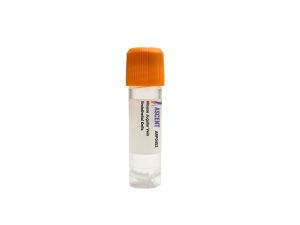
In Stock Cell Lines
Homo sapiens (Human)
Blood (peripheral blood)
Suspension
The ARPC5L Knockout THP-1 Cell Line is a CRISPR/Cas9-edited human monocytic cell line with targeted disruption of the ARPC5L gene, which encodes a critical subunit of the Arp2/3 actin-nucleating complex. This knockout abolishes functional branched actin assembly, impairing Rac1/WAVE-dependent lamellipodia formation, cell migration, and phagocytosis??processes essential for monocyte/macrophage biology. Engineered in the THP-1 background, a widely used model for immune cell studies, this line enables investigation of actin dynamics in myeloid cells. It is particularly suited for research on cancer metastasis, immunodeficiencies, and inflammatory diseases, supporting assays such as transwell migration, phagocytosis, and immunofluorescence.
 CSNK1D Knockout A2780 Polyclonal Cells
Cat. No. ARG18534
NEMF Knockout SK-HEP-1 Polyclonal Cells
Cat. No. ARG15404
HSBP1L1 Knockout HAP1 Polyclonal Cells
Cat. No. ARG22628
ALDH18A1 Knockout SK-HEP-1 Polyclonal Cells
Cat. No. ARG32138
IL1R1 Knockout HAP1 Polyclonal Cells
Cat. No. ARG35993
CNST Knockout 786-O Polyclonal Cells
Cat. No. ARG4969
CSNK1D Knockout A2780 Polyclonal Cells
Cat. No. ARG18534
NEMF Knockout SK-HEP-1 Polyclonal Cells
Cat. No. ARG15404
HSBP1L1 Knockout HAP1 Polyclonal Cells
Cat. No. ARG22628
ALDH18A1 Knockout SK-HEP-1 Polyclonal Cells
Cat. No. ARG32138
IL1R1 Knockout HAP1 Polyclonal Cells
Cat. No. ARG35993
CNST Knockout 786-O Polyclonal Cells
Cat. No. ARG4969
The ARPC5L Knockout THP-1 Cell Line is a CRISPR/Cas9-edited knockout cell line in which the ARPC5L gene has been disrupted to generate a stable loss-of-function model. This cell line serves as a valuable tool for dissecting the contributions of the Arp2/3 complex subunit ARPC5L to actin dynamics and immune cell functions, without altering the background genotype of the THP-1 host.
The THP-1 cell line is a well-characterized human acute monocytic leukemia line widely employed as a model for studying monocyte and macrophage biology. It exhibits properties of monocytes and can be differentiated into macrophage-like cells, making it suitable for investigations into differentiation, cytokine production, inflammation, and immune signaling pathways. Its human origin ensures relevance to physiological and pathological contexts.
ARPC5L encodes a subunit of the Arp2/3 complex, a critical actin nucleator responsible for generating branched actin filament networks. This complex is activated by nucleation-promoting factors such as the WAVE complex downstream of the Rho GTPases Rac1 and Cdc42. ARPC5L interacts directly with other Arp2/3 subunits (ARPC1A, ARPC2, ARPC3, ARPC4, ARPC5) and actin monomers to facilitate actin branching. Consequently, ARPC5L is essential for lamellipodial protrusion, cell migration, phagocytic cup formation, and immune synapse assembly. Its loss disrupts the Rac1?CWAVE?CArp2/3 signaling axis, impairing downstream events such as integrin-mediated adhesion and focal complex maturation.
In the THP-1 monocytic background, ARPC5L knockout profoundly affects cytoskeletal-dependent processes that are central to innate immunity. Disruption of branched actin networks in this model abrogates efficient macrophage migration, phagocytosis of opsonized particles, and the formation of stable immune synapses??key functions linked to host defense and inflammatory responses. Thus, this knockout line offers a physiologically relevant platform for studying actin-dependent mechanisms in myeloid cells and their roles in diseases such as cancer metastasis, immunodeficiencies, and chronic inflammation.
Researchers can employ this knockout cell line in a variety of assays to investigate actin dynamics and leukocyte function. Representative techniques include western blotting to confirm ARPC5L depletion, phalloidin staining to visualize F-actin architecture, transwell migration assays to quantify chemotaxis, phagocytosis assays using fluorescent beads or bacteria, flow cytometry for surface receptor expression, and RT-qPCR for transcriptional profiling. These tools enable dissection of signaling networks governing cell shape, movement, and immune interactions. For additional details or ordering information, please contact Ascent Research.