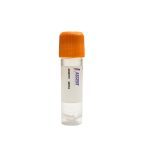
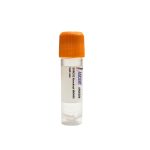
In Stock Cell Lines
Mus musculus (Mouse)
Muscle (skeletal muscle)
Adherent
The Cacng1 Knockout C2C12 Cell Line is a CRISPR/Cas9-edited knockout cell line targeting the gamma-1 auxiliary subunit of the DHPR calcium channel in mouse C2C12 myoblasts. This model enables loss-of-function studies in skeletal muscle excitation-contraction coupling and myogenesis. CACNG1 interacts with DHPR alpha1 and beta subunits and RyR1 to regulate depolarization-induced Ca2+ release, acting downstream of membrane depolarization and upstream of troponin C and myosin light chain kinase. Applications include calcium imaging, differentiation assays, and disease modeling for malignant hyperthermia and skeletal muscle channelopathies.
The Cacng1 Knockout C2C12 Cell Line is a CRISPR/Cas9-edited knockout cell line derived from the mouse C2C12 myoblast cell line. This cell-based model achieves targeted disruption of the Cacng1 gene, which encodes the gamma-1 auxiliary subunit of the L-type calcium channel (dihydropyridine receptor, DHPR) essential for skeletal muscle excitation-contraction coupling. By introducing a loss-of-function mutation in Cacng1, researchers can investigate its precise role in calcium channel function and muscle contraction.
The host C2C12 line is a subclone of the C2 mouse myoblast cell line originally established from C3H mouse muscle. These adherent skeletal myoblasts proliferate rapidly in growth medium and, upon serum withdrawal, exit the cell cycle and fuse to form multinucleated myotubes expressing contractile proteins. This well-characterized differentiation process recapitulates key aspects of myogenesis, making C2C12 cells a workhorse for muscle development and disease research. The genetic background and stable phenotype of these cells provide a reliable platform for gene-editing studies.
CACNG1 is an integral component of the skeletal muscle DHPR complex, which includes the pore-forming alpha1 subunit (CACNA1S) and the regulatory beta subunit (CACNB1). Membrane depolarization and action potentials activate DHPR, initiating conformational changes that are mechanically transmitted to the ryanodine receptor 1 (RYR1) on the sarcoplasmic reticulum. This interaction triggers calcium release, which binds to troponin C and activates myosin light chain kinase, driving actin?Cmyosin cross-bridge cycling and contraction. Protein kinase A modulates DHPR activity through phosphorylation. Calsequestrin buffers luminal calcium. The gamma-1 subunit modulates channel gating and contributes to the voltage-sensing mechanism that triggers calcium release from the sarcoplasmic reticulum.
Disruption of Cacng1 in C2C12 cells offers a physiologically relevant tool to dissect the gamma-1 subunit??s contribution to myogenic differentiation and calcium handling. During myotube formation, C2C12 cells upregulate DHPR components and RYR1, establishing functional excitation-contraction coupling. Loss of Cacng1 may perturb this developmental program, altering calcium transients, myogenic regulatory factor expression, and sarcomere assembly. This knockout line is particularly valuable for modeling skeletal muscle channelopathies and malignant hyperthermia, where DHPR dysfunction leads to uncontrolled calcium release. It also enables the study of congenital myopathies linked to calcium signaling defects.
This knockout model supports diverse assays: calcium imaging with Fluo-4 reveals cytosolic Ca2+ dynamics; immunofluorescence for troponin T and western blot for myosin heavy chain evaluate differentiation; RT-qPCR quantifies myogenic regulatory factor expression; patch clamp electrophysiology measures L-type calcium currents; and co-immunoprecipitation assesses DHPR complex integrity. Applications include disease modeling, drug screening, and functional rescue. For further information, contact Ascent Research.