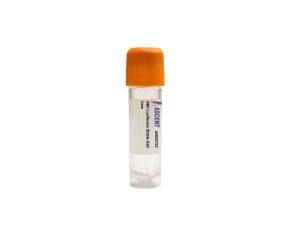
In Stock Cell Lines
Homo sapiens (Human)
Lung
Adherent
The CEBPZOS Knockout PC-9 Cell Line is a CRISPR/Cas9-edited human lung adenocarcinoma cell line with targeted disruption of the CEBPZOS gene. Derived from the EGFR exon 19 deletion-harboring PC-9 parental line, it provides a clinically relevant model for studying non-small cell lung cancer biology and drug resistance. CEBPZOS is a long non-coding RNA that modulates C/EBP transcription factors, influencing targets such as CCND1 and BCL2 to regulate proliferation and apoptosis. This knockout line enables functional dissection of C/EBP networks, EGFR signaling, and mechanisms of TKI sensitivity, with applications in RNA-seq, Western blotting, proliferation, and drug sensitivity assays.
 CALHM2 Knockout CaSki Polyclonal Cells
Cat. No. ARG35919
DHX57 Knockout A549 Polyclonal Cells
Cat. No. ARG10293
HSD17B7 Knockout HAP1 Polyclonal Cells
Cat. No. ARG22638
CD36 Knockout A2780 Polyclonal Cells
Cat. No. ARG43533
CPNE1 Knockout HEK293T Polyclonal Cells
Cat. No. ARG3306
CHDH Knockout AGS Polyclonal Cells
Cat. No. ARG3216
CALHM2 Knockout CaSki Polyclonal Cells
Cat. No. ARG35919
DHX57 Knockout A549 Polyclonal Cells
Cat. No. ARG10293
HSD17B7 Knockout HAP1 Polyclonal Cells
Cat. No. ARG22638
CD36 Knockout A2780 Polyclonal Cells
Cat. No. ARG43533
CPNE1 Knockout HEK293T Polyclonal Cells
Cat. No. ARG3306
CHDH Knockout AGS Polyclonal Cells
Cat. No. ARG3216
The CEBPZOS Knockout PC-9 Cell Line is a CRISPR/Cas9-edited knockout cell line with targeted disruption of the CEBPZOS gene in the PC-9 human lung adenocarcinoma epithelial background. This loss-of-function model enables systematic investigation of CEBPZOS function in EGFR-driven oncogenic signaling by eliminating the endogenous transcript. The knockout provides a stable genetic tool for dissecting contributions to transcriptional regulation, proliferation, and apoptosis.
The parental PC-9 cell line is a well-characterized model of non-small cell lung cancer (NSCLC) harboring an activating EGFR exon 19 deletion. This mutation confers constitutive kinase activity, driving downstream mitogenic and survival pathways, and renders cells sensitive to EGFR tyrosine kinase inhibitors (TKIs) such as gefitinib. PC-9 is extensively used to study acquired resistance mechanisms to EGFR-targeted therapy, making it a clinically relevant platform for functional genomics. The CEBPZOS knockout integration allows direct assessment of C/EBP network intersection with EGFR signaling.
CEBPZOS is a long non-coding RNA that modulates C/EBP transcription factors, influencing cell cycle and apoptosis. Upstream regulators include cytokines IL-6 and TNF-alpha, growth factor EGF, and transcription factors STAT3 and NF-kappaB. Downstream, it affects targets such as CEBPZ, CCND1, CDKN1A, BCL2, and BAX, linking to proliferation control. CEBPZOS interacts with CEBPZ and transcriptional co-regulators, operating within the C/EBP network and intersecting with MAPK and PI3K/AKT signaling pathways.
In EGFR-mutant PC-9 cells, CEBPZOS knockout allows dissection of its role in oncogenic signaling and drug response. Disruption may alter expression of cyclin D1 and p21, affecting cell cycle progression, and shift the balance of BCL2 family members, impacting apoptosis. This can influence sensitivity to EGFR TKIs, revealing resistance mechanisms through transcriptional rewiring. The model permits examination of C/EBP factor contributions to signal integration under therapeutic pressure.
The knockout cell line supports diverse applications: mapping C/EBP regulatory networks via RNA-seq and RT-qPCR, validating target expression changes by Western blotting, and phenotypic assays for proliferation, apoptosis, and migration. Drug sensitivity testing with gefitinib elucidates CEBPZOS role in therapeutic response. This tool aids identification of novel vulnerabilities and targets in EGFR-mutant lung adenocarcinoma. For further information, contact Ascent Research.