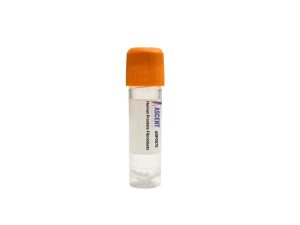
In Stock Cell Lines
Homo sapiens (Human)
Kidney
Adherent
The COL4A5 Knockout HEK293 Cell Line is a CRISPR/Cas9-edited human embryonic kidney cell model with targeted disruption of the COL4A5 gene, which encodes the alpha-5 chain of type IV collagen. This loss-of-function cell line enables investigation of extracellular matrix biology, integrin-mediated adhesion, and X-linked Alport syndrome mechanisms. Key interacting factors include integrin ??1??1 and focal adhesion kinase (FAK), with transcriptional regulation by TGF-?? and WT1. Suitable for applications in basement membrane research, cell adhesion and migration assays, and drug discovery for chronic kidney disease, this product supports advanced molecular and functional analyses.
 Immortalized Human Bronchiole Endothelial Cell
Cat. No. ARI0289
Immortalized Human Bronchiole Endothelial Cell
Cat. No. ARI0289
 SESN3 Knockout HuT 78 Cell Line
Cat. No. ARG44106
SESN3 Knockout HuT 78 Cell Line
Cat. No. ARG44106
 MCOLN1 Knockout jurkat Polyclonal Cells
Cat. No. ARG13666
AGPS Knockout A549 Polyclonal Cells
Cat. No. ARG31438
IFT88 Knockout CaSki Polyclonal Cells
Cat. No. ARG35480
HSP90B1 Knockout HAP1 Polyclonal Cells
Cat. No. ARG37088
MCOLN1 Knockout jurkat Polyclonal Cells
Cat. No. ARG13666
AGPS Knockout A549 Polyclonal Cells
Cat. No. ARG31438
IFT88 Knockout CaSki Polyclonal Cells
Cat. No. ARG35480
HSP90B1 Knockout HAP1 Polyclonal Cells
Cat. No. ARG37088
The COL4A5 Knockout HEK293 Cell Line is a CRISPR/Cas9-edited knockout cell line with targeted disruption of the COL4A5 gene. This loss-of-function model enables study of type IV collagen biology and X-linked Alport syndrome mechanisms. By eliminating the alpha-5(IV) collagen chain, it provides a reproducible system for investigating basement membrane assembly and cell-matrix adhesion in a well-characterized host background.
The HEK293 cell line is derived from human embryonic kidney cells transformed with adenovirus type 5 DNA. These cells exhibit epithelial morphology and high transfection efficiency, making them a workhorse for recombinant protein expression and virus production. They provide a robust and genetically tractable platform for creating knockout derivatives.
COL4A5 encodes the alpha-5 chain of type IV collagen, a basement membrane protein essential for glomerular filtration. It heterotrimerizes with COL4A3 and COL4A4 and interacts with laminin, nidogen, perlecan, and fibronectin to form a stable extracellular matrix network. This network engages integrins ??1??1 and ??2??1 and discoidin domain receptor 1 (DDR1) to activate intracellular signaling through focal adhesion kinase (FAK), Src, and Rho GTPases. COL4A5 transcription is regulated by TGF-??, Sp1, AP-1, WT1, and EGF, integrating cues for matrix remodeling. Knockout of COL4A5 disrupts the collagen IV network, impairing cell adhesion and triggering aberrant signaling. Downstream consequences include altered integrin-mediated adhesion, dysregulated FAK phosphorylation, and abnormal cytoskeletal dynamics. The loss also destabilizes interactions with basement membrane components and perturbs focal adhesion complexes containing talin, vinculin, and paxillin.
Although HEK293 cells are not podocytes, they possess epithelial characteristics and express key extracellular matrix and adhesion molecules, making them suitable for studying fundamental COL4A5 functions. This knockout cell line enables detailed analysis of how loss of alpha-5(IV) collagen affects integrin-mediated adhesion, focal adhesion dynamics, and downstream signaling events. The model also facilitates mapping of collagen IV protein?Cprotein interaction networks through biochemical techniques such as co-immunoprecipitation and mass spectrometry. Furthermore, the high transfectability of HEK293 allows for rapid complementation studies to evaluate the functional impact of disease-associated COL4A5 mutations.
This product is ideal for modeling X-linked Alport syndrome, exploring basement membrane biology, and screening therapeutics for chronic kidney disease. Representative assays include western blotting and immunofluorescence for protein expression analysis, cell adhesion and migration assays for functional studies, co-immunoprecipitation for interaction mapping, mass spectrometry for extracellular matrix profiling, and RNA-sequencing for transcriptomic analysis. For additional information or technical assistance, please contact Ascent Research.