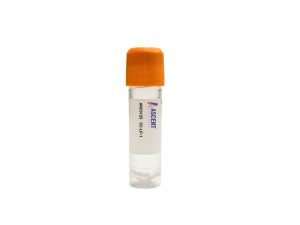
In Stock Cell Lines
Homo sapiens (Human)
Uterus (cervix)
Adherent
The G3BP1 Knockout HeLa Cell Line is a CRISPR/Cas9-edited human cell line with targeted disruption of the stress granule assembly factor G3BP1. Hosted in HPV18-positive HeLa cervical adenocarcinoma cells, this model enables investigation of G3BP1??s roles in RAS-MAPK and NF-??B signaling, mRNA stability, and antiviral responses. Loss of G3BP1 impairs stress granule formation and dysregulates downstream targets such as p53 and NF-??B. Suitable for studies in cancer signaling, viral infection, and stress biology, key applications include immunofluorescence for TIA-1 and Caprin-1, Western blotting, and migration assays.
 IFT74 Knockout K562 Polyclonal Cells
Cat. No. ARG20644
COQ7 Knockout A549 Polyclonal Cells
Cat. No. ARG10224
GPAT3 Knockout Raji Polyclonal Cells
Cat. No. ARG23608
CAB39L Knockout K562 Polyclonal Cells
Cat. No. ARG41713
IFT74 Knockout K562 Polyclonal Cells
Cat. No. ARG20644
COQ7 Knockout A549 Polyclonal Cells
Cat. No. ARG10224
GPAT3 Knockout Raji Polyclonal Cells
Cat. No. ARG23608
CAB39L Knockout K562 Polyclonal Cells
Cat. No. ARG41713
 Rabbit Vertebral Endplate Chondrocyte Medium
Cat. No. ARM0816
Rabbit Vertebral Endplate Chondrocyte Medium
Cat. No. ARM0816
 Rat Endothelial Progenitor Cell Medium
Cat. No. ARM0349
Rat Endothelial Progenitor Cell Medium
Cat. No. ARM0349
The G3BP1 Knockout HeLa Cell Line is a CRISPR/Cas9-edited cell line with targeted disruption of the G3BP1 gene. This loss-of-function model enables stable and reproducible studies of G3BP1 biology in a human cervical adenocarcinoma background. G3BP1 is a stress granule assembly factor and RNA-binding protein that links RAS-MAPK and NF-??B signaling pathways, making this cell line valuable for signal transduction and disease research.
The host HeLa cell line is HPV18-positive, aneuploid, and adherent, with a hyper-triploid karyotype. Derived from cervical adenocarcinoma, HeLa cells are widely used in cell biology and virology due to their robust growth and immortalized nature. Expression of HPV oncoproteins E6 and E7 alters p53 and Rb function, offering a unique genomic context for examining stress responses and oncogenic signaling upon G3BP1 ablation.
G3BP1 nucleates stress granule formation in response to stimuli such as oxidative stress and heat shock, acting downstream of PKR, Akt, and RAS. It binds Caprin-1, USP10, TIA-1, and eIF4G to regulate mRNA fate, and interfaces with RasGAP and IKK?? to modulate RAS-MAPK and NF-??B cascades. Downstream, G3BP1 influences p53 and c-Myc mRNA stability, cyclin D1 expression, NF-??B activation, and pro-inflammatory cytokines (IL-6, TNF??). In the integrated stress response, G3BP1 coordinates with PKR, eIF2??, ATF4, and CHOP, while its interactions with viral proteins like HCV NS3 and NS5A highlight its role in antiviral immunity.
In the HeLa context, G3BP1 loss disrupts stress granule dynamics and translational reprogramming, offering insights into how cancer cells cope with proteotoxic stress. The presence of HPV oncoproteins may reveal synthetic vulnerabilities linked to p53 and NF-??B dysregulation. This model thus aids in studying tumor cell adaptation and identifying dependencies on G3BP1-mediated signaling for survival.
Applications include stress granule biology, viral replication, oncogenic signaling, and mRNA metabolism. Key assays are immunofluorescence for TIA-1/Caprin-1 after stress induction, Western blotting for G3BP1 and phospho-eIF2??, RT-qPCR of target mRNAs, flow cytometry for apoptosis, luciferase reporters for NF-??B and p53, and migration/invasion studies. This cell line supports drug screening and functional genomics. For inquiries, contact Ascent Research.