In Stock Cell Lines
Mus musculus (Mouse)
Ascites
Adherent
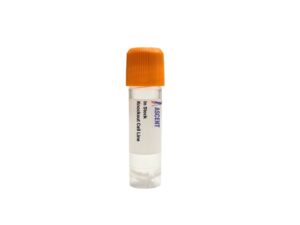
The Gas5 Knockout RAW 264.7 Cell Line is a CRISPR/Cas9-edited macrophage knockout model targeting the tumor-suppressive lncRNA Gas5. Gas5 acts as a glucocorticoid receptor decoy and microRNA sponge, regulating apoptosis and inflammation via targets such as miR-21 and Bcl-2. This model is ideal for studying lncRNA-mediated gene regulation, glucocorticoid resistance, and macrophage inflammatory responses in cancer, autoimmune disease, and atherosclerosis research. Applications include RT-qPCR, RNA immunoprecipitation, apoptosis assays, and cytokine profiling.
 BCKDHB Knockout HAP1 Polyclonal Cells
Cat. No. ARG22061
MED12 Knockout 143B Polyclonal Cells
Cat. No. ARG11780
PDCD10 Knockout Hela Polyclonal Cells
Cat. No. ARG8909
CD320 Knockout NCI-H1299 Polyclonal Cells
Cat. No. ARG43514
DTX2 Knockout HAP1 Polyclonal Cells
Cat. No. ARG39948
BCKDHB Knockout HAP1 Polyclonal Cells
Cat. No. ARG22061
MED12 Knockout 143B Polyclonal Cells
Cat. No. ARG11780
PDCD10 Knockout Hela Polyclonal Cells
Cat. No. ARG8909
CD320 Knockout NCI-H1299 Polyclonal Cells
Cat. No. ARG43514
DTX2 Knockout HAP1 Polyclonal Cells
Cat. No. ARG39948
 Caov-3
Cat. No. ARC0116
Caov-3
Cat. No. ARC0116
The Gas5 Knockout RAW 264.7 Cell Line is a CRISPR/Cas9-edited knockout cell line offering a targeted disruption of the mouse Gas5 gene in the RAW 264.7 macrophage background. Gas5 encodes a long non-coding RNA that functions as a tumor suppressor and glucocorticoid receptor decoy, modulating cellular responses to stress and hormonal signals. This engineered cell line serves as a defined loss-of-function platform for dissecting Gas5-mediated molecular mechanisms, including its roles in microRNA sequestration and transcriptional regulation. The knockout model enables precise experimental control over Gas5 expression, facilitating studies of its function in innate immune signaling and cancer biology.
The parental RAW 264.7 cell line is a well-established mouse macrophage model derived from a BALB/c mouse and transformed with the Abelson murine leukemia virus. These cells exhibit characteristic macrophage properties, including robust phagocytic activity, responsiveness to inflammatory stimuli such as lipopolysaccharide (LPS), and the ability to present antigens via MHC molecules. RAW 264.7 macrophages are widely employed to study Toll-like receptor signaling, cytokine production, and the molecular basis of inflammation. The Gas5 knockout derivative retains the essential macrophage phenotype while allowing researchers to explore the contribution of this lncRNA to macrophage effector functions, such as cytokine secretion and apoptotic regulation.
Gas5 functions as a multifaceted regulatory lncRNA. It acts as a decoy by binding the glucocorticoid receptor (GR) and preventing its transcriptional activation of target genes, thereby influencing glucocorticoid sensitivity. Additionally, Gas5 serves as a microRNA sponge, sequestering miRNAs including miR-21, miR-222, and miR-196a, which in turn derepresses their mRNA targets involved in apoptosis and proliferation, such as Bcl-2 and Bax. Gas5 expression is regulated by upstream signals including glucocorticoids, mTORC1, and the tumor suppressor p53. It integrates into central pathways like mTOR signaling, where components such as mTORC1, S6K, and 4E-BP1 are modulated, and the p53 pathway, where it influences downstream effectors like p21 and Bax. Gas5 also interacts with Argonaute proteins and other RNA-binding proteins, mediating its post-transcriptional regulatory functions. Through these interactions, Gas5 exerts tumor-suppressive effects by promoting apoptosis and inhibiting cell cycle progression, while also dampening NF-??B-driven inflammatory responses.
In the RAW 264.7 macrophage system, Gas5 knockout provides a powerful tool to investigate the lncRNA’s role in innate immunity and inflammation. The knockout cells can be used to dissect how Gas5 modulates macrophage responses to glucocorticoids, which are key anti-inflammatory hormones, and to bacterial endotoxins like LPS. Loss of Gas5 is expected to alter the expression of downstream targets such as Bcl-2 family members and cytokines, impacting apoptotic sensitivity and inflammatory mediator release. This model is particularly relevant for studying glucocorticoid resistance in inflammatory diseases, as Gas5 sequestration of the GR can blunt hormone efficacy. Moreover, the knockout enables analysis of Gas5-dependent crosstalk between the mTOR and p53 pathways in a phagocytic cell type, offering insights into metabolic and stress signaling in macrophages.
This knockout cell line is suitable for a wide array of experimental approaches, including RT-qPCR and RNA-seq to assess global transcriptomic changes, Western blotting to evaluate protein-level effects on apoptosis regulators and signaling kinases, and luciferase reporter assays to probe miRNA interactions or GR activity. RNA immunoprecipitation can be employed to validate Gas5 binding to its interaction partners, while functional assays such as annexin V staining and MTT proliferation assays quantify apoptotic and proliferative responses. Additionally, macrophage activation can be monitored via cytokine ELISA following stimulation with LPS or other TLR agonists. These applications support research into lncRNA biology, glucocorticoid signaling, cancer, autoimmune disorders, and atherosclerosis. For further information or to inquire about this model, please contact Ascent Research.