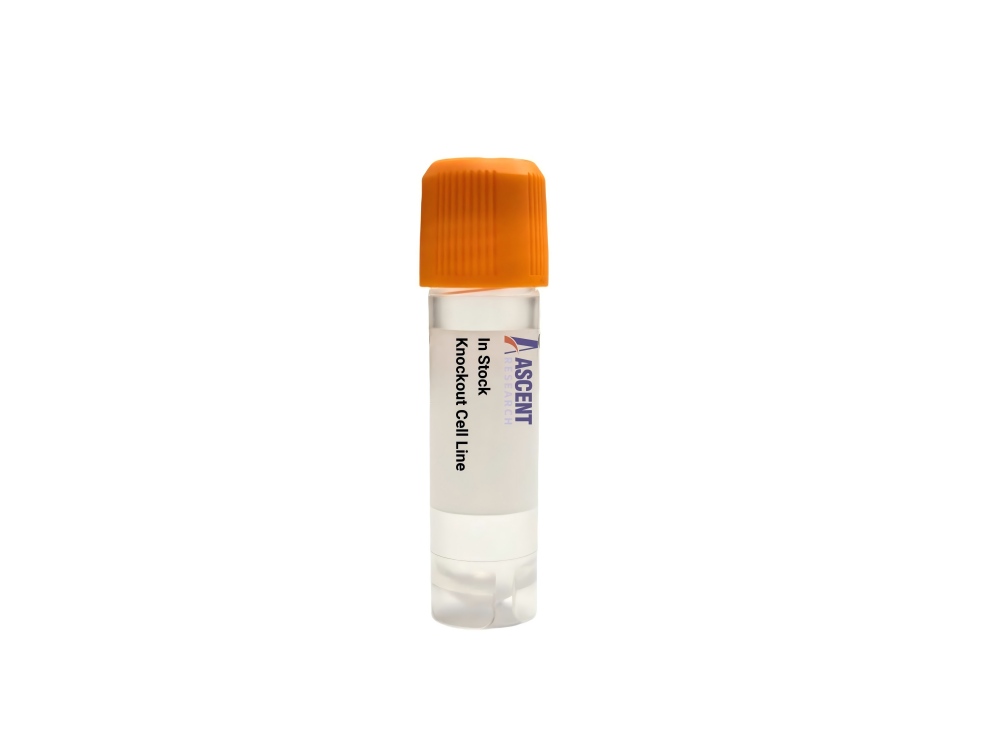
In Stock Cell Lines
Mus musculus (Mouse)
Lung
Adherent and suspension
The Gpbar1 Knockout MH-S Cell Line is a CRISPR/Cas9-edited murine alveolar macrophage model with targeted disruption of the TGR5 bile acid receptor gene. Derived from the SV40-transformed MH-S line, these cells provide a defined platform for investigating bile acid signaling in immune cells, particularly the modulation of inflammation via cAMP-PKA-CREB and MAPK cascades. This loss-of-function system is ideal for studies on metabolic syndrome, non-alcoholic fatty liver disease, and anti-inflammatory drug discovery, enabling assays such as cytokine profiling, phagocytosis measurement, and cAMP/CREB reporter analysis to elucidate TGR5-dependent mechanisms in macrophage biology.
 AIMP1 Knockout Hela Polyclonal Cells
Cat. No. ARG20574
CHMP7 Knockout 143B Polyclonal Cells
Cat. No. ARG11832
HLA-E Knockout MES-OV Polyclonal Cells
Cat. No. ARG24541
C17orf80 Knockout MES-OV Polyclonal Cells
Cat. No. ARG24376
APOE Knockout jurkat Polyclonal Cells
Cat. No. ARG33879
CALCB Knockout HAP1 Polyclonal Cells
Cat. No. ARG41800
AIMP1 Knockout Hela Polyclonal Cells
Cat. No. ARG20574
CHMP7 Knockout 143B Polyclonal Cells
Cat. No. ARG11832
HLA-E Knockout MES-OV Polyclonal Cells
Cat. No. ARG24541
C17orf80 Knockout MES-OV Polyclonal Cells
Cat. No. ARG24376
APOE Knockout jurkat Polyclonal Cells
Cat. No. ARG33879
CALCB Knockout HAP1 Polyclonal Cells
Cat. No. ARG41800
The Gpbar1 Knockout MH-S Cell Line is a CRISPR/Cas9-edited knockout cell line designed to disrupt the murine Gpbar1 gene in the MH-S alveolar macrophage background. This cell-based model provides a genetically defined system for studying the functional roles of the TGR5 bile acid receptor in macrophage biology, without generating clonal variants or claiming specific allelic edits. Disruption of the target gene is achieved through CRISPR/Cas9-mediated genomic modification, yielding a stable loss-of-function model suitable for comparative studies alongside wild-type MH-S cells. Researchers can employ this cell line to dissect bile acid signaling pathways and their impact on macrophage-mediated inflammation and metabolism.
The host cell line, MH-S, is a well-characterized mouse alveolar macrophage line derived from BALB/c mice and immortalized via SV40 transformation. These cells retain key macrophage functions, including phagocytosis, cytokine production, antigen presentation, and immune surveillance, making them a relevant in vitro proxy for pulmonary and systemic macrophage responses. The SV40-driven transformation ensures sustained proliferation while preserving essential macrophage phenotypic markers, enabling reproducible experiments in signaling and functional assays. MH-S cells are widely used in studies of respiratory inflammation, host defense, and metabolic interactions with microbial products.
Gpbar1 encodes TGR5, a G protein-coupled receptor (GPCR) that serves as a major sensor for bile acids such as lithocholic acid and deoxycholic acid, as well as synthetic agonists like INT-777. Upon ligand binding, TGR5 primarily couples to the G??s subunit, stimulating adenylate cyclase to elevate intracellular cAMP levels. This leads to protein kinase A (PKA) activation and subsequent phosphorylation of the transcription factor CREB, driving the expression of genes involved in energy homeostasis and anti-inflammatory responses. Additionally, TGR5 can signal through ??-arrestin-2, engaging MAPK/ERK cascades, while concurrently inhibiting NF-??B-mediated transcription of pro-inflammatory cytokines such as TNF-?? and IL-6. The receptor thus integrates bile acid stimuli to modulate both metabolic and immune pathways.
In alveolar macrophages, TGR5 signaling plays a critical role in dampening inflammatory responses and promoting tissue-resident macrophage functions. By elevating cAMP and activating PKA/CREB, TGR5 suppresses the production of pro-inflammatory mediators, shifting cells toward a resolving phenotype. This regulation is particularly relevant in metabolic disorders like non-alcoholic fatty liver disease, obesity, and type 2 diabetes, where systemic bile acid levels are altered and macrophage-driven inflammation contributes to pathogenesis. The Gpbar1 knockout MH-S cell line enables researchers to directly assess the receptor??s contribution to bile acid-induced anti-inflammatory signaling in a macrophage lineage, bypassing compensatory mechanisms often present in primary cells.
This knockout cell line supports a broad range of research applications, including the dissection of bile acid receptor signaling in macrophages, modeling metabolic syndrome-associated immune dysregulation, and screening for novel anti-inflammatory agents targeting TGR5 pathways. Representative assays compatible with this model include Western blotting for TGR5 and downstream effectors, cAMP accumulation measurements, RT-qPCR profiling of inflammatory cytokines, flow cytometric analysis of macrophage surface markers, phagocytosis assays, luciferase reporter assays for CREB activity, and ELISA-based quantification of secreted cytokines. The system is well-suited for host-microbiome interaction studies, where bacterial metabolites influence macrophage function via TGR5. For further information or technical support, please contact Ascent Research.