In Stock Cell Lines
Rattus norvegicus (Rat)
Blood (peripheral blood)
Adherent
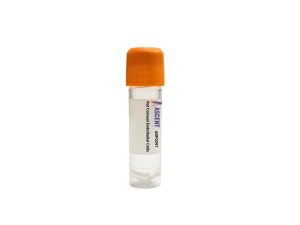
The Gucy1b1 Knockout RBL-2H3 Cell Line is a CRISPR/Cas9-edited rat basophilic leukemia cell line with targeted disruption of the Gucy1b1 gene, encoding the ??1 subunit of soluble guanylyl cyclase (sGC). This knockout model abolishes NO-sensitive cGMP production, impairing downstream PKG and VASP phosphorylation. Derived from the widely used RBL-2H3 mast cell model, this cell line enables investigation of NO-cGMP signaling in IgE-mediated degranulation, histamine release, and allergic inflammation. Applications include degranulation assays, intracellular cGMP measurement, screening of sGC modulators, and analysis of downstream PKG-dependent signaling events.
 HIP1 Knockout HAP1 Polyclonal Cells
Cat. No. ARG22524
ATXN1 Knockout HGC-27 Polyclonal Cells
Cat. No. ARG29675
DIP2A Knockout MES-OV Polyclonal Cells
Cat. No. ARG38779
CC2D1B Knockout huh-7 Polyclonal Cells
Cat. No. ARG42842
PAM Knockout Raji Polyclonal Cells
Cat. No. ARG1356
HIP1 Knockout HAP1 Polyclonal Cells
Cat. No. ARG22524
ATXN1 Knockout HGC-27 Polyclonal Cells
Cat. No. ARG29675
DIP2A Knockout MES-OV Polyclonal Cells
Cat. No. ARG38779
CC2D1B Knockout huh-7 Polyclonal Cells
Cat. No. ARG42842
PAM Knockout Raji Polyclonal Cells
Cat. No. ARG1356
 SNU-638
Cat. No. ARC0877
SNU-638
Cat. No. ARC0877
The Gucy1b1 Knockout RBL-2H3 Cell Line is a CRISPR/Cas9-edited rat basophilic leukemia cell line carrying a targeted disruption of the Gucy1b1 gene. This knockout model is provided as a stable, ready-to-use cell line for studying the role of soluble guanylyl cyclase in mast cell signaling and allergic responses. The gene disruption abolishes expression of the beta1 subunit, a critical component of the sGC heterodimer, without introducing exogeneous selection markers that may interfere with downstream readouts.
The parental RBL-2H3 cell line, derived from Rattus norvegicus basophilic leukemia, serves as a widely employed mast cell model. These cells express the high-affinity IgE receptor Fc??RI and undergo degranulation upon crosslinking, releasing histamine, ??-hexosaminidase, and other mediators. The line is extensively used to dissect IgE-dependent signaling, degranulation, and immediate hypersensitivity mechanisms. RBL-2H3 cells retain key features of mucosal mast cells and respond to calcium mobilization and PKC activation, making them a robust platform for investigating early allergic events.
Gucy1b1 encodes the ??1 subunit of soluble guanylyl cyclase, which heterodimerizes with ??1 (GUCY1A1) or ??2 (GUCY1A2) to form a heme-containing nitric oxide (NO) receptor. NO, produced by nitric oxide synthases (NOS1, NOS2, NOS3), binds the heme cofactor and activates sGC, catalyzing the conversion of GTP to cyclic GMP (cGMP). The enzyme is also activated by carbon monoxide (CO) and synthetic ligands such as YC-1, with its stability influenced by Hsp90. cGMP then activates protein kinase G (PRKG1, PRKG2), which phosphorylates multiple substrates including vasodilator-stimulated phosphoprotein (VASP) at Ser239, and modulates cyclic nucleotide-gated ion channels. The signal is terminated by phosphodiesterases (PDE5, PDE6, PDE9) that hydrolyze cGMP. In mast cells, NO-cGMP signaling modulates degranulation and histamine release, though its exact pro- or anti-inflammatory roles are context-dependent. Thus, this knockout line enables precise dissection of sGC-dependent contributions.
In mast cells, sGC-derived cGMP has been linked to both inhibitory and potentiating effects on degranulation. Disruption of Gucy1b1 eliminates the primary NO sensor, abrogating NO-induced cGMP elevation and subsequent PKG activation. This loss-of-function model helps clarify how NO signaling intersects with IgE-Fc??RI pathways, calcium flux, and mediator release. Because RBL-2H3 cells also express endothelial NOS (NOS3), autocrine NO production may influence activation thresholds; the knockout thus isolates the contribution of sGC to these processes. Researchers can use this cell line to assess whether sGC/cGMP signaling acts as a brake or accelerator on allergic secretion, and to screen pharmacological modulators of sGC in a mast cell environment. This is of particular interest for asthma, allergic rhinitis, and other IgE-mediated conditions.
The Gucy1b1 Knockout RBL-2H3 Cell Line is suited for a range of experimental applications, including ??-hexosaminidase and histamine release assays to quantify degranulation in the absence of sGC signaling. cGMP ELISA and VASP phosphorylation western blotting can verify pathway disruption, while calcium imaging and flow cytometry for Fc??RI or CD63 expression monitor mast cell activation dynamics. The line is also valuable for screening sGC activators (e.g., YC-1) or NO donors (e.g., DEA-NONOate) to identify cGMP-dependent and -independent effects. Additionally, it supports studies of cGMP in inflammatory mediator synthesis and the interplay between NO and other pathways such as carbon monoxide (CO) signaling. For further information or to discuss custom knockout projects, please contact Ascent Research.