
In Stock Cell Lines
Mus musculus (Mouse)
Ascites
Adherent
The Hcar2 Knockout RAW 264.7 Cell Line is a CRISPR/Cas9-edited macrophage knockout cell line with targeted disruption of the Hcar2 gene, which encodes the Gi/Go-coupled receptor for niacin and ??-hydroxybutyrate (HCAR2/GPR109A). Loss of HCAR2 eliminates receptor-mediated inhibition of adenylate cyclase, leading to dysregulated cAMP, NF-??B activation, and increased pro-inflammatory cytokine production. This model is applicable for mechanistic studies of anti-inflammatory signaling, drug screening for HCAR2 modulators, and investigation of metabolic-inflammatory crosstalk in diseases such as atherosclerosis, type 2 diabetes, and neuroinflammation.
 MTMR14 Knockout NCI-H1975 Polyclonal Cells
Cat. No. ARG16622
NEK2 Knockout T47D Polyclonal Cells
Cat. No. ARG12015
IL20RB Knockout HAP1 Polyclonal Cells
Cat. No. ARG22774
ITPR1 Knockout A549 Polyclonal Cells
Cat. No. ARG34302
CCDC120 Knockout jurkat Polyclonal Cells
Cat. No. ARG42904
MTMR14 Knockout NCI-H1975 Polyclonal Cells
Cat. No. ARG16622
NEK2 Knockout T47D Polyclonal Cells
Cat. No. ARG12015
IL20RB Knockout HAP1 Polyclonal Cells
Cat. No. ARG22774
ITPR1 Knockout A549 Polyclonal Cells
Cat. No. ARG34302
CCDC120 Knockout jurkat Polyclonal Cells
Cat. No. ARG42904
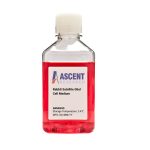 Rabbit Satellite Glial Cell Medium
Cat. No. ARM0830
Rabbit Satellite Glial Cell Medium
Cat. No. ARM0830
The Hcar2 Knockout RAW 264.7 Cell Line is a CRISPR/Cas9-edited knockout cell line featuring targeted disruption of the Hcar2 gene in the RAW 264.7 murine macrophage background. This loss-of-function model enables systematic investigation of the HCAR2 receptor in innate immune signaling and metabolic regulation.
RAW 264.7 cells are an Abelson murine leukemia virus-transformed macrophage line derived from BALB/c mice, widely employed for studies of macrophage function, phagocytosis, and inflammatory signal transduction. Their robust response to Toll-like receptor agonists and well-characterized cytokine profiles make this line a standard host for genetic modification and drug screening.
HCAR2 (also known as GPR109A or PUMA-G in mice) encodes a Gi/Go-coupled receptor activated by niacin and the ketone body ??-hydroxybutyrate. Upon ligand binding, HCAR2 inhibits adenylate cyclase via G??i subunits, reducing intracellular cAMP and downregulating PKA activity. This leads to attenuated NF-??B signaling and decreased transcription of pro-inflammatory cytokines such as TNF-?? and IL-6. Concurrently, HCAR2 stimulates AMPK and ERK1/2 pathways, contributing to anti-inflammatory and metabolic responses. ??-arrestin-1 (ARRB1) and ??-arrestin-2 (ARRB2) are recruited to the receptor, modulating G protein-independent signaling and internalization.
In macrophages, HCAR2-mediated signaling plays a critical role in dampening inflammatory responses and maintaining metabolic homeostasis. Deletion of Hcar2 eliminates this regulatory input, allowing researchers to dissect the receptor??s contribution to macrophage polarization, lipid metabolism, and cross-talk with pathways governed by PPAR-?? and LPS/TNF-??. The knockout cell line is particularly valuable for modeling diseases where HCAR2 dysfunction is implicated, including atherosclerosis, type 2 diabetes, and neuroinflammation.
Typical applications include measuring LPS-induced TNF-?? and IL-6 secretion by ELISA, profiling inflammatory gene expression by RT-qPCR, and assessing AMPK and ERK phosphorylation via Western blotting. Functional assays such as cAMP measurement, phagocytosis, and flow cytometric analysis of surface markers are readily performed. The line also supports drug dose-response studies for HCAR2 agonists or antagonists and metabolic flux analysis. For further information, please contact Ascent Research.

