In Stock Cell Lines
Homo sapiens (Human)
Skin
Adherent
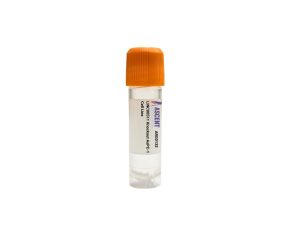
The HSPG2 Knockout HaCaT Cell Line is a CRISPR/Cas9-edited human keratinocyte cell line with targeted disruption of the HSPG2 gene, encoding perlecan, a basement membrane proteoglycan. Loss of perlecan disrupts matrix assembly and growth factor presentation, particularly affecting FGF2, VEGF, and integrin signaling, making it valuable for studying keratinocyte adhesion, migration, proliferation, and differentiation in skin biology, wound healing, and tumor microenvironment models. Derived from the HaCaT line, this non-tumorigenic knockout enables assays like scratch wound healing, ECM binding, and phospho-signaling analysis to investigate TGF-?¨Cperlecan?CSmad and FGF2?Cintegrin?CERK pathways. For details, contact Ascent Research.
 NFXL1 Knockout NCI-H1299 Polyclonal Cells
Cat. No. ARG17633
BACH1 Knockout A2780 Polyclonal Cells
Cat. No. ARG28864
GOLPH3L Knockout HGC-27 Polyclonal Cells
Cat. No. ARG29837
KDM5B Knockout A2780 Polyclonal Cells
Cat. No. ARG35786
NFXL1 Knockout NCI-H1299 Polyclonal Cells
Cat. No. ARG17633
BACH1 Knockout A2780 Polyclonal Cells
Cat. No. ARG28864
GOLPH3L Knockout HGC-27 Polyclonal Cells
Cat. No. ARG29837
KDM5B Knockout A2780 Polyclonal Cells
Cat. No. ARG35786
 HCT 15 Luciferase Stable Cell Line
Cat. No. ARG0286
HCT 15 Luciferase Stable Cell Line
Cat. No. ARG0286
 KP-4
Cat. No. ARC0410
KP-4
Cat. No. ARC0410
The HSPG2 Knockout HaCaT Cell Line is a CRISPR/Cas9-mediated gene-disrupted cell line derived from the spontaneously immortalized HaCaT human keratinocyte cell line. This product provides a defined loss-of-function model for the HSPG2 gene, which encodes perlecan, a critical heparan sulfate proteoglycan of basement membranes. The knockout cell line eliminates full-length perlecan expression, enabling researchers to dissect perlecan-dependent processes in a human keratinocyte background. This engineered cell line serves as a powerful tool for investigating extracellular matrix biology, growth factor signaling, and keratinocyte function without the confounding effects of endogenous perlecan.
The parental HaCaT cell line is a widely used, spontaneously immortalized human keratinocyte model that retains many features of normal epidermal keratinocytes, including the capacity for terminal differentiation and stratification. Originating from adult human skin, HaCaT cells are non-tumorigenic and are extensively employed in dermatological research, including studies of epidermal barrier formation, keratin production, and innate immune responses. Their well-characterized growth properties and genetic stability make them an ideal host for gene-editing approaches, allowing the generation of robust and reproducible knockout models for mechanistic and functional analyses in skin biology.
HSPG2 encodes perlecan, a large modular proteoglycan that resides in basement membranes and interacts with a diverse array of extracellular matrix components and signaling molecules. Perlecan serves as a critical scaffold, binding collagen IV, laminin, nidogen, fibronectin, and dystroglycan, and it sequesters heparin-binding growth factors such as FGF2, VEGF, and PDGF. Transcriptionally, HSPG2 is regulated by TGF-??, TNF-??, IL-1??, NF-??B, and AP-1, and is responsive to mechanical stress. In keratinocytes, perlecan modulates integrin-mediated adhesion, particularly through integrin ??2??1 and ??v??3, and facilitates growth factor signal transduction. For instance, the FGF2?Cperlecan?Cintegrin ??v??3?CFAK?CERK cascade exemplifies how perlecan bridges growth factor presentation to intracellular signaling, while TGF-?? signaling through perlecan can influence Smad-dependent pathways. Knockout of HSPG2 thus disrupts these signaling networks, impairing downstream events such as cell proliferation, migration, and differentiation.
In the context of HaCaT keratinocytes, loss of perlecan profoundly alters cellular behavior relevant to skin physiology and pathology. Perlecan deficiency compromises basement membrane integrity, akin to conditions observed in skin fragility disorders and the genetic syndromes Schwartz-Jampel syndrome and dyssegmental dysplasia. The knockout model mimics aspects of disrupted epidermal barrier function and impaired wound healing, as perlecan is essential for re-epithelialization and dermal remodeling. Moreover, because perlecan modulates tumor angiogenesis and metastasis through VEGF and integrin crosstalk, this cell line is valuable for studying the tumor microenvironment and the early steps of cancer progression in a non-tumorigenic epithelial setting.
This knockout cell line enables a broad range of experimental applications. Researchers can employ it in scratch wound healing and transwell migration assays to evaluate keratinocyte motility, or in cell adhesion and ECM binding assays to dissect integrin-dependent interactions. Proliferation assays and phospho-signaling analysis can reveal how perlecan loss impacts mitogenic pathways. Additionally, immunofluorescence, RT-qPCR, and western blotting allow detailed molecular characterization of downstream targets and pathway components. The model is also suited for co-culture experiments simulating the tumor microenvironment or for testing therapeutic agents targeting growth factor signaling. For further information, contact Ascent Research.