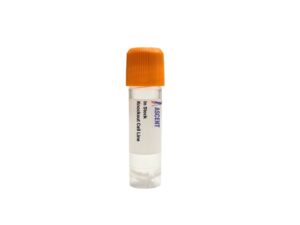
In Stock Cell Lines
Rattus norvegicus (Rat)
Pancreas
Adherent
The Metrnl Knockout INS-1 Cell Line is a CRISPR/Cas9-edited rat pancreatic beta cell model with targeted disruption of the Metrnl gene, eliminating meteorin-like protein. Metrnl is a secreted cytokine that regulates alternative macrophage activation and adaptive thermogenesis through pathways involving PGC-1??, PPAR??, STAT6, and AMPK. This knockout line in the INS-1 background enables functional studies of insulin secretion, glucose metabolism, and beta cell?Cimmune crosstalk. It is ideal for GSIS assays, metabolic flux analysis, and co-culture experiments, providing insights into obesity, type 2 diabetes, and metabolic inflammation. For inquiries, contact Ascent Research.
 C3 Knockout HGC-27 Polyclonal Cells
Cat. No. ARG29784
CTSF Knockout HT29 Polyclonal Cells
Cat. No. ARG14037
GNG11 Knockout Raji Polyclonal Cells
Cat. No. ARG23588
BLOC1S5 Knockout NCI-H1975 Polyclonal Cells
Cat. No. ARG31354
CDKN1A Knockout 786-O Polyclonal Cells
Cat. No. ARG5325
C3 Knockout HGC-27 Polyclonal Cells
Cat. No. ARG29784
CTSF Knockout HT29 Polyclonal Cells
Cat. No. ARG14037
GNG11 Knockout Raji Polyclonal Cells
Cat. No. ARG23588
BLOC1S5 Knockout NCI-H1975 Polyclonal Cells
Cat. No. ARG31354
CDKN1A Knockout 786-O Polyclonal Cells
Cat. No. ARG5325
 Sheep Epididymal Epithelial Cell Medium
Cat. No. ARM0949
Sheep Epididymal Epithelial Cell Medium
Cat. No. ARM0949
The Metrnl Knockout INS-1 Cell Line is a CRISPR/Cas9-edited rat pancreatic beta cell line featuring targeted disruption of the Metrnl gene, eliminating functional meteorin-like protein expression. This loss-of-function model provides a precisely engineered platform for dissecting the autocrine and paracrine roles of Metrnl in insulin secretion, metabolic regulation, and immune modulation within a beta cell context. The cell line is supplied as a validated live cell product suitable for downstream applications including gene expression analysis, functional assays, and co-culture studies.
INS-1 cells are an established rat pancreatic beta cell line derived from X-ray-induced insulinoma. They retain key characteristics of primary beta cells, including glucose-responsive insulin secretion, expression of beta cell-specific markers, and sensitivity to metabolic and inflammatory stimuli. This host background makes INS-1 cells a widely used model for studying pancreatic beta cell function, glucose homeostasis, and the molecular pathology of type 2 diabetes. Their robust in vitro growth and reproducible insulin secretory response facilitate high-throughput screening and mechanistic studies.
Meteorin-like protein (Metrnl) is a secreted neurotrophic and immunoregulatory cytokine that promotes alternative macrophage activation and adaptive thermogenesis. It is transcriptionally regulated by PGC-1?? and PPAR?? in response to cold exposure, exercise, and ??-adrenergic stimulation. Metrnl signaling engages downstream effectors including UCP1, AMPK, STAT6, and PPAR??, while indirectly interacting with IL-4R?? to enhance IL-4/STAT6-mediated M2 macrophage polarization and thermogenic gene programs. The protein also modulates fatty acid oxidation genes and cytokine networks involving IL-4 and IL-13, positioning Metrnl at the intersection of metabolic and immune pathways.
In the INS-1 beta cell context, Metrnl knockout eliminates local secretion of this cytokine, enabling investigation of its influence on insulin secretion dynamics, beta cell survival, and the cellular response to metabolic stress. The model addresses key questions in obesity, insulin resistance, and type 2 diabetes by uncoupling Metrnl-dependent regulatory loops that may affect PPAR??/PGC-1?? signaling, AMPK activity, and inflammatory cytokine crosstalk. Researchers can use this system to explore how Metrnl deficiency alters beta cell compensation, lipotoxicity-induced apoptosis, and the integration of immune signals with glucose metabolism.
Typical applications include glucose-stimulated insulin secretion (GSIS) assays, metabolic flux analysis, RNA-seq, co-culture with immune cells, and cytokine measurement by ELISA or multiplex immunoassays. The knockout line is also suitable for viability and apoptosis assays under diabetogenic conditions, immunofluorescence localization of key signaling molecules, and pharmacological rescue experiments with recombinant Metrnl. This versatile tool supports research into metabolic disease mechanisms, neuroprotective functions in beta cells, and the development of therapeutic strategies targeting the Metrnl-AMPK-PPAR?? axis. For further details or custom model requests, please contact Ascent Research.