In Stock Cell Lines
Homo sapiens (Human)
Lung
Adherent
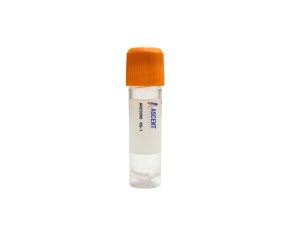
The METTL3 Knockout PC-9 Cell Line is a CRISPR/Cas9-edited human non-small cell lung adenocarcinoma cell line with targeted disruption of the METTL3 gene, which encodes the catalytic subunit of the m6A RNA methyltransferase complex. This model is derived from the PC-9 parental line, which harbors an EGFR exon 19 deletion, and serves as a tool to study epitranscriptomic dependencies in EGFR-mutant lung cancer. METTL3 partners with METTL14 and WTAP to install m6A modifications on key oncogenic transcripts including EGFR and MYC, thereby promoting tumor cell proliferation and survival. The knockout cell line is suited for RNA modification profiling, signaling pathway dissection, and pharmacological validation of METTL3 inhibitors in preclinical lung adenocarcinoma research.
 CDKN2C Knockout Hela Polyclonal Cells
Cat. No. ARG8777
ASPH Knockout MES-OV Polyclonal Cells
Cat. No. ARG24246
IPO4 Knockout AGS Polyclonal Cells
Cat. No. ARG27052
FOXO1 Knockout HCT116 Polyclonal Cells
Cat. No. ARG7056
MCU Knockout AGS Polyclonal Cells
Cat. No. ARG2474
CDKN2C Knockout Hela Polyclonal Cells
Cat. No. ARG8777
ASPH Knockout MES-OV Polyclonal Cells
Cat. No. ARG24246
IPO4 Knockout AGS Polyclonal Cells
Cat. No. ARG27052
FOXO1 Knockout HCT116 Polyclonal Cells
Cat. No. ARG7056
MCU Knockout AGS Polyclonal Cells
Cat. No. ARG2474
 MFE-296 Luciferase Stable Cell Line
Cat. No. ARG0575
MFE-296 Luciferase Stable Cell Line
Cat. No. ARG0575
The METTL3 Knockout PC-9 Cell Line is a human cell line edited by CRISPR/Cas9 to disrupt the METTL3 gene, which encodes the catalytic subunit of the RNA N6-adenosine-methyltransferase complex. This knockout model eliminates METTL3-mediated m6A modification on mRNA, enabling functional studies of epitranscriptomic regulation in an EGFR-mutant non-small cell lung adenocarcinoma (NSCLC) context.
The parental PC-9 line is a well-characterized human lung adenocarcinoma cell line harboring an EGFR exon 19 deletion (delE746-A750), a common oncogenic driver in NSCLC. It serves as a preclinical model for EGFR-mutant lung adenocarcinoma, retaining sensitivity to EGFR tyrosine kinase inhibitors and enabling studies of resistance mechanisms. The METTL3 knockout derivative thus combines this clinically relevant oncogenic background with targeted disruption of an essential m6A writer.
METTL3 is the catalytic subunit of the methyltransferase complex that includes METTL14, WTAP, VIRMA, and RBM15, depositing m6A on mRNA to regulate splicing, stability, translation, and decay via reader proteins like YTHDF1/2/3. Its activity is controlled by upstream regulators MYC, HIF1A, SP1, and SUMOylation, and it directly modifies downstream targets EGFR, SOX2, MYC, PTEN, and SOCS2, enhancing their oncogenic translation. The m6A mark is erased by ALKBH5, and METTL3 loss reduces m6A levels, thereby disrupting oncogenic signaling through pathways such as PI3K/AKT, Wnt, and p53, impairing tumor cell proliferation and survival.
In PC-9 cells, METTL3 reinforces EGFR-driven oncogenesis by stabilizing transcripts like EGFR and MYC, amplifying pro-survival signals. Its interplay with HIF1A-mediated hypoxia responses and SOX2-related stemness underscores its role in tumor maintenance. This knockout model enables dissection of m6A methylation contributions to EGFR-mutant lung adenocarcinoma biology and validation of METTL3 as a therapeutic target in a disease-relevant isogenic system.
The METTL3 Knockout PC-9 Cell Line supports a range of functional assays to interrogate m6A epigenetics, including RNA m6A dot blot, MeRIP-seq, western blotting for METTL3 and downstream proteins such as EGFR and MYC, RT-qPCR to monitor transcript stability, and cell-based assays for proliferation, colony formation, and apoptosis. It is also applicable for in vivo xenograft tumor studies and high-throughput inhibitor screening. For further information, please contact Ascent Research.