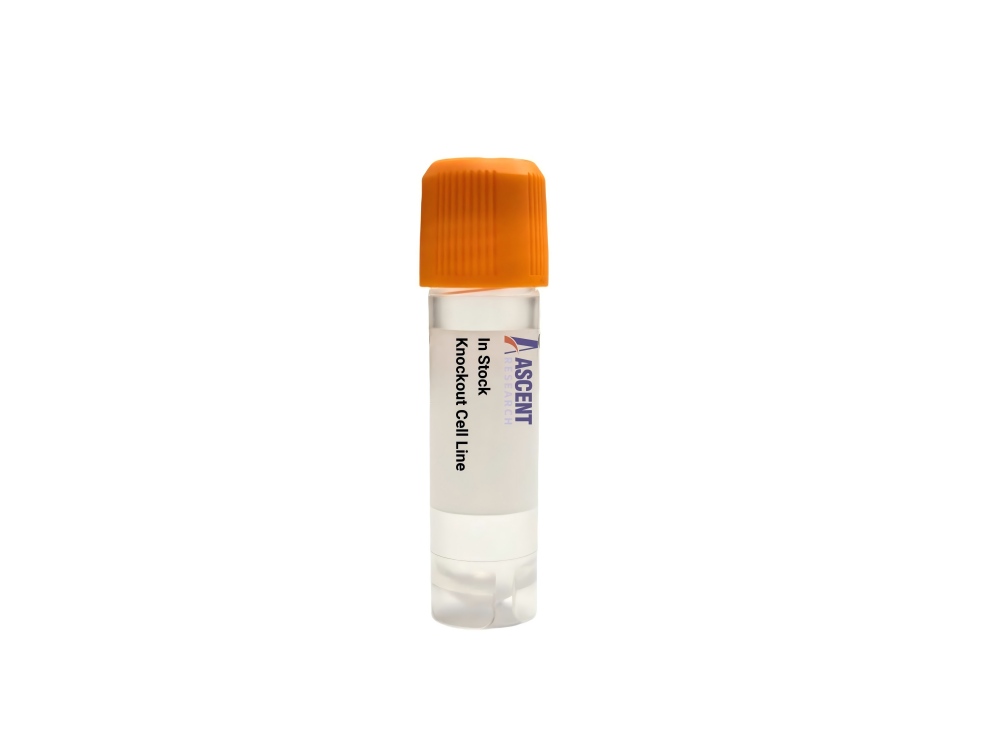
In Stock Cell Lines
Mus musculus (Mouse)
Ascites
Adherent
The Ncf1 Knockout RAW 264.1 Cell Line is a CRISPR/Cas9-edited knockout cell line featuring disruption of the Ncf1 gene in murine RAW 264.7 macrophages. This model ablates p47phox, the organizer subunit of the NADPH oxidase complex, severely impairing the phagocytic respiratory burst. By eliminating superoxide production and downstream ROS-dependent signaling through NF-??B, NLRP3, and MAPK pathways, the line enables precise studies of host defense, chronic granulomatous disease, and autoimmune mechanisms. Used with ROS assays, phagocytosis tests, and cytokine profiling, it is a robust tool for investigating NADPH oxidase biology.
 CYB5A Knockout SK-HEP-1 Polyclonal Cells
Cat. No. ARG15392
INSL5 Knockout HAP1 Polyclonal Cells
Cat. No. ARG22826
IDH3G Knockout A2780 Polyclonal Cells
Cat. No. ARG29182
ACTN4 Knockout HT29 Polyclonal Cells
Cat. No. ARG32848
CKM Knockout HCT116 Polyclonal Cells
Cat. No. ARG7214
CYB5A Knockout SK-HEP-1 Polyclonal Cells
Cat. No. ARG15392
INSL5 Knockout HAP1 Polyclonal Cells
Cat. No. ARG22826
IDH3G Knockout A2780 Polyclonal Cells
Cat. No. ARG29182
ACTN4 Knockout HT29 Polyclonal Cells
Cat. No. ARG32848
CKM Knockout HCT116 Polyclonal Cells
Cat. No. ARG7214
 Fu97
Cat. No. ARC0214
Fu97
Cat. No. ARC0214
The Ncf1 Knockout RAW 264.7 Cell Line is a CRISPR/Cas9-edited knockout cell line generated through targeted disruption of the Ncf1 gene in the RAW 264.7 murine macrophage host. This model provides a stable loss-of-function platform for dissecting the role of p47phox, the critical organizer subunit of the phagocyte NADPH oxidase complex, in innate immune functions under defined experimental conditions.
RAW 264.7 cells, derived from a BALB/c mouse Abelson leukemia virus-transformed macrophage line, serve as a widely accepted in vitro model of mature macrophages. They recapitulate key functional attributes including phagocytic uptake of microbial pathogens and opsonized particles, robust production of pro-inflammatory cytokines such as TNF and IL-6, and antigen presentation capacity, making them a versatile system for mechanistic immunology studies.
Ncf1 encodes p47phox, a cytosolic adaptor that assembles with the membrane-bound cytochrome b558 (gp91phox/CYBB and p22phox/CYBA) and the regulatory subunits p67phox (NCF2) and p40phox (NCF4), along with the small GTPase Rac1/2. Upon activation by upstream stimuli including PKC-mediated phosphorylation, TLR ligands (e.g., LPS), formyl peptide fMLP, phorbol ester (PMA), or Fc?? receptor cross-linking, p47phox translocates to the membrane and orchestrates electron transfer to generate superoxide anion. This reactive oxygen species (ROS) burst subsequently influences downstream effectors such as NF-??B, NLRP3 inflammasome assembly, and MAPK cascades (ERK, p38), thereby coupling phagocytic recognition to transcriptional and inflammasome-mediated responses.
In RAW 264.7 macrophages, ablation of Ncf1 cripples the respiratory burst, severely attenuating superoxide and hydrogen peroxide production. This deficiency recapitulates the hallmark functional defect of chronic granulomatous disease (CGD), a primary immunodeficiency characterized by recurrent bacterial and fungal infections. Moreover, the loss of ROS-mediated redox signaling perturbs cross-talk with innate immune pathways, providing a relevant context for exploring the role of NADPH oxidase activity in autoimmune disorders such as lupus and rheumatoid arthritis, where aberrant ROS production modulates inflammatory thresholds.
This knockout cell line is well suited for a broad array of research applications, including investigations into ROS-dependent microbial killing, phagosome maturation, and redox regulation of signaling networks. Typical experimental endpoints can be assessed through luminol- or lucigenin-based ROS detection, DHR 123 flow cytometry, phagocytosis assays with fluorescent bacteria or beads, gentamicin protection bacterial survival assays, western blotting for p47phox, and multiplex cytokine ELISAs. The model is especially valuable for CGD disease modeling, dissection of Fc??R- and TLR-coordinated pathways, and screening of compounds that bypass or restore NADPH oxidase activity. For technical inquiries or ordering, please contact Ascent Research.