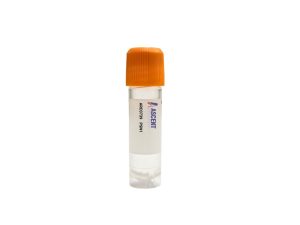
In Stock Cell Lines
Homo sapiens (Human)
Blood (peripheral blood)
Suspension
The NCOA4 Knockout THP-1 Cell Line is a CRISPR/Cas9?edited loss?of?function model derived from human monocytic leukemia cells. It targets NCOA4, a selective autophagy receptor that mediates ferritin degradation (ferritinophagy) by binding ferritin heavy chain (FTH1) and interacting with LC3B, thereby regulating intracellular iron availability and ferroptosis sensitivity. This product is ideal for investigating iron metabolism, autophagy, macrophage biology, and ferroptosis in a physiologically relevant immune cell background. Key applications include western blotting, iron assays, lipid peroxidation measurements, and macrophage polarization studies, supporting research in cancer, neurodegeneration, and iron-related disorders.
 ASGR2 Knockout HAP1 Polyclonal Cells
Cat. No. ARG21946
ESD Knockout A2780 Polyclonal Cells
Cat. No. ARG18892
COMMD1 Knockout NCI-H1299 Polyclonal Cells
Cat. No. ARG17594
ANKRD16 Knockout NCI-H1299 Polyclonal Cells
Cat. No. ARG30329
GRIPAP1 Knockout HGC-27 Polyclonal Cells
Cat. No. ARG29870
MTMR14 Knockout MES-OV Polyclonal Cells
Cat. No. ARG6094
ASGR2 Knockout HAP1 Polyclonal Cells
Cat. No. ARG21946
ESD Knockout A2780 Polyclonal Cells
Cat. No. ARG18892
COMMD1 Knockout NCI-H1299 Polyclonal Cells
Cat. No. ARG17594
ANKRD16 Knockout NCI-H1299 Polyclonal Cells
Cat. No. ARG30329
GRIPAP1 Knockout HGC-27 Polyclonal Cells
Cat. No. ARG29870
MTMR14 Knockout MES-OV Polyclonal Cells
Cat. No. ARG6094
The NCOA4 Knockout THP-1 Cell Line is a CRISPR/Cas9-edited human cell line with disrupted NCOA4 expression. This genetic knockout model enables the study of NCOA4 as a selective autophagy receptor for ferritin and a nuclear receptor coactivator, critical for ferritinophagy and iron homeostasis. The line provides a stable loss-of-function system for mechanistic investigations in a leukemic monocyte background.
The THP-1 host line originates from the peripheral blood of an acute monocytic leukemia patient and is a well-established model for monocyte and macrophage biology. These cells can be differentiated into adherent macrophages, recapitulating many aspects of innate immune function such as phagocytosis and inflammatory cytokine release, making them suitable for exploring the intersection of iron metabolism and immunity.
NCOA4 directly binds ferritin heavy chain (FTH1) and light chain (FTL), targeting them to autophagosomes via interactions with LC3B and GABARAP, leading to lysosomal degradation. This ferritinophagy process is regulated by intracellular iron levels, TP53, and mTOR signaling, and it governs the size of the labile iron pool. NCOA4 also acts as a coactivator for the androgen receptor (AR), bridging autophagy and transcriptional regulation. Knockout of NCOA4 disrupts ferritin turnover, altering iron availability and ferroptosis sensitivity through downstream effects on lipid peroxidation and lysosomal hydrolase activity.
In the THP-1 monocytic context, NCOA4 loss perturbs iron-dependent immune functions, including macrophage polarization and inflammatory responses. The knockout cell line offers a unique tool to investigate how ferritinophagy influences ferroptosis in a leukemic background, with implications for cancer cell fate and drug resistance. It also allows dissection of autophagy?immune crosstalk in myeloid cells.
This cell line is suitable for diverse assays such as western blotting for NCOA4 and ferritin subunits, iron quantification with FerroOrange, lipid peroxidation assessments using C11-BODIPY, and autophagy flux analysis via LC3 turnover. RT?qPCR for iron?responsive genes, flow cytometry for labile iron, and macrophage polarization experiments are additional applications. It serves as a robust platform for drug screening in iron overload disorders, neurodegeneration, and cancer. For further details, please contact Ascent Research.