In Stock Cell Lines
Mus musculus (Mouse)
Ascites
Adherent
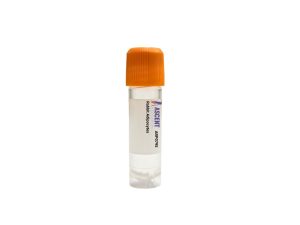
The NLRP3 Knockout RAW 264.7 Cell Line is a CRISPR/Cas9-edited macrophage cell line lacking functional NLRP3, the sensor protein of the NLRP3 inflammasome. This model eliminates canonical inflammasome responses including caspase-1 activation, IL-1??/IL-18 maturation, and gasdermin D-mediated pyroptosis. Ideal for inflammasome signaling studies, inhibitor screening, and disease modeling, the line enables dissection of NLRP3-dependent pathways in an innate immune context. Key applications include western blot, ELISA, and LDH release assays to assess cytokine secretion and pyroptotic cell death.
 CLK4 Knockout SKOV3 Polyclonal Cells
Cat. No. ARG12395
ALDH1A1 Knockout A549 Polyclonal Cells
Cat. No. ARG34527
DTWD1 Knockout HEK293T Polyclonal Cells
Cat. No. ARG39922
B4GALT6 Knockout HAP1 Polyclonal Cells
Cat. No. ARG27369
FHIT Knockout Hela Polyclonal Cells
Cat. No. ARG7613
CLK4 Knockout SKOV3 Polyclonal Cells
Cat. No. ARG12395
ALDH1A1 Knockout A549 Polyclonal Cells
Cat. No. ARG34527
DTWD1 Knockout HEK293T Polyclonal Cells
Cat. No. ARG39922
B4GALT6 Knockout HAP1 Polyclonal Cells
Cat. No. ARG27369
FHIT Knockout Hela Polyclonal Cells
Cat. No. ARG7613
 SF188
Cat. No. ARC0809
SF188
Cat. No. ARC0809
The NLRP3 Knockout RAW 264.7 Cell Line is a CRISPR/Cas9-edited murine macrophage cell line with targeted disruption of the Nlrp3 gene. This loss-of-function model permits rigorous investigation of NLRP3-dependent innate immune pathways, including inflammasome assembly, pro-inflammatory cytokine processing, and pyroptotic cell death, in a defined macrophage background.
The host cell line, RAW 264.7, is an Abelson murine leukemia virus-transformed macrophage derived from BALB/c mice. It exhibits robust phagocytic activity and secretes a wide array of cytokines upon stimulation. Widely used in inflammasome research, these cells respond to TLR ligands like LPS and to sterile activators, making them an ideal platform for studying NLRP3 signaling.
NLRP3 is the sensor component of the canonical inflammasome that responds to pathogen- and danger-associated signals. Priming via TLR/NF-??B upregulates NLRP3 and pro-IL-1??, while activating stimuli such as extracellular ATP (via P2X7), nigericin, monosodium urate crystals, or ROS trigger inflammasome assembly. Activated NLRP3 recruits ASC/PYCARD and pro-caspase-1, leading to caspase-1 autoactivation. Active caspase-1 cleaves pro-IL-1?? and pro-IL-18 into mature cytokines and processes gasdermin D to generate its pore-forming N-terminal fragment, which induces pyroptosis.
In NLRP3 knockout macrophages, canonical inflammasome output??caspase-1 activation, IL-1??/IL-18 release, and gasdermin D-driven pyroptosis??is abolished. This provides a clean genetic system to distinguish NLRP3-dependent from -independent inflammatory and death pathways, and to assess inhibitor specificity. The model is highly relevant for autoinflammatory diseases (CAPS, Muckle-Wells syndrome, gout) and for metabolic and neurodegenerative conditions like type 2 diabetes and Alzheimer??s disease, supporting mechanistic studies and drug screening.
Principal applications include western blotting for caspase-1 p20, IL-1??, and gasdermin D; ELISA for secreted IL-1?? and IL-18; LDH release assays for pyroptosis; immunofluorescence to detect ASC specks; and flow cytometry (FLICA) for active caspase-1. These techniques enable detailed characterization of inflammasome biology, pyroptotic signaling, and pharmacological interventions. For further technical information and ordering, please contact Ascent Research.