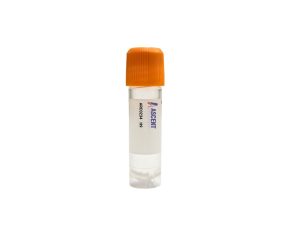
In Stock Cell Lines
Mus musculus (Mouse)
Unknown
Adherent
The P2ry2 Knockout ATDC-5 Cell Line is a CRISPR/Cas9-edited mouse cell line lacking functional P2Y2 purinergic receptors, derived from the chondrogenic ATDC-5 model. P2ry2 encodes a G??q/11-coupled receptor activated by extracellular ATP/UTP, triggering calcium mobilization and downstream ERK1/2, PI3K/Akt, and NF-??B signaling, which regulates pro-inflammatory mediators such as COX-2, MMP-13, and IL-6. This knockout model enables investigation of P2Y2 function in chondrogenesis, cartilage maintenance, and joint disease pathogenesis, including osteoarthritis and rheumatoid arthritis. It supports a range of experimental approaches, from chondrogenic differentiation assays and calcium imaging to phospho-protein analysis and cytokine profiling, and is also applicable for drug discovery targeting purinergic pathways.
 PML Knockout THP-1 Cell Line
Cat. No. ARG44045
PML Knockout THP-1 Cell Line
Cat. No. ARG44045
 HINT1 Knockout HEK293T Polyclonal Cells
Cat. No. ARG26056
ABRACL Knockout SK-HEP-1 Polyclonal Cells
Cat. No. ARG32041
ART1 Knockout SK-Hep-1 Polyclonal Cells
Cat. No. ARG36657
EIF2AK3 Knockout HT29 Polyclonal Cells
Cat. No. ARG40966
HINT1 Knockout HEK293T Polyclonal Cells
Cat. No. ARG26056
ABRACL Knockout SK-HEP-1 Polyclonal Cells
Cat. No. ARG32041
ART1 Knockout SK-Hep-1 Polyclonal Cells
Cat. No. ARG36657
EIF2AK3 Knockout HT29 Polyclonal Cells
Cat. No. ARG40966
 MRK-nu-1
Cat. No. ARC0543
MRK-nu-1
Cat. No. ARC0543
The P2ry2 Knockout ATDC-5 Cell Line is a CRISPR/Cas9-edited mouse knockout cell line in which the P2ry2 gene has been disrupted to create a loss-of-function model for purinergic signaling studies in chondrogenic cells. Derived from the ATDC-5 chondroprogenitor line, it provides a genetically defined system to investigate the P2Y2 receptor’s role in cartilage biology, free from endogenous wild-type expression. This product is suitable for advanced applications in signal transduction, inflammation, and musculoskeletal disease research.
ATDC-5 cells, established from mouse teratocarcinoma, are a leading model for in vitro chondrogenesis. Upon insulin stimulation, they sequentially differentiate through chondrocyte maturation and hypertrophy, recapitulating endochondral ossification. The line has been essential for elucidating molecular pathways in cartilage development, extracellular matrix synthesis, and growth plate dynamics, making it a physiologically relevant host for gene knockout studies.
P2ry2 encodes the G??q/11-coupled P2Y2 purinergic receptor, activated by extracellular ATP and UTP. Ligand binding stimulates PLC?? to produce IP3 and DAG, triggering intracellular calcium release and PKC activation. This engages multiple kinase cascades, including ERK1/2, p38 MAPK, JNK, and PI3K/Akt, ultimately regulating transcription factors such as NF-??B. Downstream targets encompass COX-2, MMP-13, IL-6, and c-fos, linking receptor activation to inflammation, matrix degradation, and cell proliferation. P2Y2 function is influenced by mechanical cues and cytokines like TNF-?? and IL-1?? and is integrated with other pathways through interactions with ??-arrestin, NHERF1/EBP50, and integrins.
In chondrocytes, P2Y2 signaling modulates anabolic and catabolic processes critical for cartilage homeostasis. Disruption of P2ry2 in ATDC-5 cells permits dissection of purinergic contributions to chondrogenesis, mechanotransduction, and inflammatory responses. This model is highly relevant for studying osteoarthritis, rheumatoid arthritis, and other conditions where dysregulated calcium signaling, NF-??B activity, and matrix metalloproteinase expression drive joint pathology.
This knockout cell line supports diverse assays: chondrogenic differentiation with Alcian blue staining, RT-qPCR and Western blotting for gene/protein analysis, calcium imaging for purinergic responses, and phospho-signaling profiling of ERK1/2 and Akt. Functional readouts include NF-??B luciferase reporter, ELISA for IL-6 and PGE2, migration/invasion assays, and co-immunoprecipitation of signaling complexes. It also facilitates drug screening targeting P2Y2-related pathways. For more information, please contact Ascent Research.