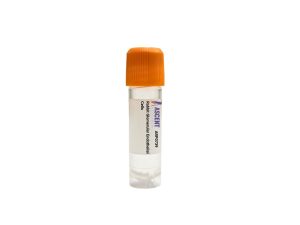
In Stock Cell Lines
Homo sapiens (Human)
Kidney
Adherent
The PCDH9 Knockout HEK293T Cell Line is a CRISPR/Cas9-edited human cell line lacking protocadherin-9. Loss of this calcium-dependent adhesion protein disrupts homophilic interactions and downstream signaling through beta-catenin and Rho GTPases such as RAC1 and CDC42. Based on high-transfectability HEK293T cells, this line enables robust functional studies including cell adhesion, migration, and TOP/FOP Flash reporter assays. Applications encompass tumor suppressor research, neurodevelopmental disease modeling, and protein?Cprotein interaction analysis, providing a precise tool for dissecting protocadherin-9 function in signal transduction.
 GNG11 Knockout HAP1 Polyclonal Cells
Cat. No. ARG22272
IAPP Knockout HAP1 Polyclonal Cells
Cat. No. ARG22676
KDM5D Knockout HGC-27 Polyclonal Cells
Cat. No. ARG36149
CACNA2D1 Knockout HCT116 Polyclonal Cells
Cat. No. ARG41754
ARHGAP5 Knockout AGS Polyclonal Cells
Cat. No. ARG26632
MPP1 Knockout 786-O Polyclonal Cells
Cat. No. ARG5284
GNG11 Knockout HAP1 Polyclonal Cells
Cat. No. ARG22272
IAPP Knockout HAP1 Polyclonal Cells
Cat. No. ARG22676
KDM5D Knockout HGC-27 Polyclonal Cells
Cat. No. ARG36149
CACNA2D1 Knockout HCT116 Polyclonal Cells
Cat. No. ARG41754
ARHGAP5 Knockout AGS Polyclonal Cells
Cat. No. ARG26632
MPP1 Knockout 786-O Polyclonal Cells
Cat. No. ARG5284
The PCDH9 Knockout HEK293T Cell Line is a human knockout cell line generated by CRISPR/Cas9-mediated disruption of the PCDH9 gene, encoding protocadherin-9. This stable loss-of-function model provides an isogenic system for investigating PCDH9-dependent cellular processes in a defined genetic background.
The parental HEK293T cell line is a human embryonic kidney line transformed with SV40 large T antigen, exhibiting adherent epithelial morphology and exceptionally high transfection efficiency. It is widely utilized for protein expression, virus production, and functional genomics studies, ensuring reproducibility across diverse assay platforms.
Protocadherin-9 is a calcium-dependent transmembrane adhesion molecule that mediates homophilic cell-cell contacts. It interacts with catenins, including beta-catenin and p120 catenin, to influence Wnt/beta-catenin signaling and Rho family GTPases such as RAC1 and CDC42. Loss of PCDH9 disrupts these interactions, potentially altering beta-catenin localization, TCF/LEF transcriptional activity, and actin cytoskeletal dynamics driven by Rho GTPases.
In HEK293T cells, the knockout enables dissection of adhesion-dependent signaling in a system expressing core Wnt and MAPK/ERK pathway components. This host background supports rescue experiments, luciferase reporter assays, and co-expression studies, allowing exploration of PCDH9??s role downstream of WNT ligands and Frizzled receptors and its impact on transcription and cytoskeletal organization.
Applications include cell adhesion and migration/invasion assays, co-immunoprecipitation with beta-catenin or NHERF1, TOP/FOP Flash reporter assays for Wnt activity, and actin staining. The line is relevant to cancer biology, neurodevelopmental disorder research, and tumor suppressor studies. For further information, please contact Ascent Research.