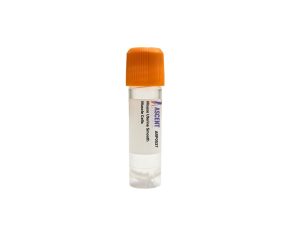
In Stock Cell Lines
Mus musculus (Mouse)
Ascites
Adherent
The Pla2g7 Knockout RAW 264.7 Cell Line is a CRISPR/Cas9-edited murine macrophage cell line with targeted disruption of the gene encoding platelet-activating factor acetylhydrolase (PAF-AH). Loss of PLA2G7 impairs hydrolysis of platelet-activating factor (PAF) and oxidized phospholipids, leading to enhanced pro-inflammatory signaling in macrophages. This model serves as a valuable tool for investigating PAF-mediated inflammatory pathways, atherosclerosis, and Lp-PLA2 inhibitor evaluation. Applications include PAF quantification, cytokine profiling, and NF-??B reporter assays, supporting studies in sepsis, acute lung injury, and macrophage activation.
 ATP8B3 Knockout HAP1 Polyclonal Cells
Cat. No. ARG22000
NSD1 Knockout SK-HEP-1 Polyclonal Cells
Cat. No. ARG15401
PARD6B Knockout Hela Polyclonal Cells
Cat. No. ARG8757
CBX3 Knockout Hela Polyclonal Cells
Cat. No. ARG42760
CA12 Knockout HAP1 Polyclonal Cells
Cat. No. ARG41623
MTRR Knockout HEK293T Polyclonal Cells
Cat. No. ARG4290
ATP8B3 Knockout HAP1 Polyclonal Cells
Cat. No. ARG22000
NSD1 Knockout SK-HEP-1 Polyclonal Cells
Cat. No. ARG15401
PARD6B Knockout Hela Polyclonal Cells
Cat. No. ARG8757
CBX3 Knockout Hela Polyclonal Cells
Cat. No. ARG42760
CA12 Knockout HAP1 Polyclonal Cells
Cat. No. ARG41623
MTRR Knockout HEK293T Polyclonal Cells
Cat. No. ARG4290
The Pla2g7 Knockout RAW 264.7 Cell Line is a CRISPR/Cas9-edited knockout cell line derived from the murine macrophage cell line RAW 264.7, in which the gene encoding platelet-activating factor acetylhydrolase (PAF-AH) has been disrupted. This model provides a stable loss-of-function system for dissecting the role of Pla2g7 in macrophage-mediated inflammatory processes.
RAW 264.7 is an Abelson murine leukemia virus-transformed monocyte/macrophage line established from BALB/c mice. These cells are widely used as a model for macrophage biology, exhibiting key innate immune effector functions such as phagocytosis, cytokine secretion, and responsiveness to inflammatory stimuli. Their robust in vitro growth and well-characterized signaling pathways make them a versatile host for gene-editing studies focused on inflammation and lipid metabolism.
PLA2G7 catalyzes the hydrolysis of platelet-activating factor (PAF) and oxidized phospholipids, thereby attenuating pro-inflammatory signaling. In macrophages, Pla2g7 expression is regulated by lipopolysaccharide (LPS), tumor necrosis factor-alpha (TNF-??), and interleukin-1 beta (IL-1??) through NF-??B and AP-1 transcription factors. The enzyme reduces PAF levels, limiting downstream PAF receptor (PAFR) signaling and generation of bioactive lipids such as lysophosphatidylcholine. PLA2G7 also interacts with apolipoprotein B-100 (apoB-100) and lipoprotein particles (LDL, HDL), influencing the inflammatory properties of oxidized LDL. Key nodes in this network include PTGS2 (COX-2), NFKB1, and the MAPK1/3 (ERK) and AKT1 kinases, which coordinate macrophage activation responses.
Disruption of Pla2g7 in RAW 264.7 cells impairs PAF catabolism, leading to accumulation of PAF and oxidized phospholipids, and consequently amplified inflammatory signaling. This knockout cell line thus serves as a powerful tool for modeling excessive inflammation and atherosclerosis-associated macrophage dysfunction. It enables examination of how uncontrolled PAF?CPAFR axis activity drives cytokine release, lipid uptake, and polarization of macrophages toward pro-inflammatory phenotypes.
Researchers can employ this cell line to investigate PAF-mediated inflammatory cascades, evaluate Lp-PLA2 inhibitors, and study oxLDL catabolism. Typical assays include PAF-acetylhydrolase activity measurements, PAF ELISA, RT-qPCR for Pla2g7 mRNA, Western blotting for PAF-AH, and cytokine profiling for TNF and IL-6. NF-??B luciferase reporter assays, oxLDL uptake, and flow cytometry for CD80/CD206 activation markers are also applicable. This model also supports acute lung injury and sepsis research. For further details, please contact Ascent Research.