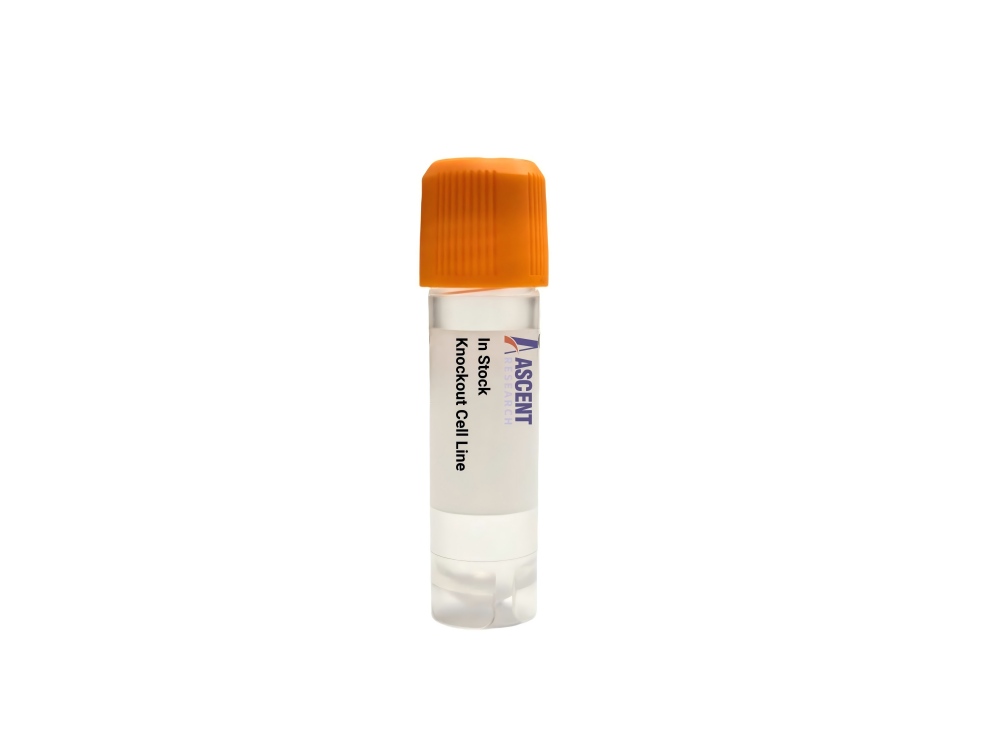
In Stock Cell Lines
Homo sapiens (Human)
Liver
Adherent
The RNF165 Knockout Huh-7 Cell Line is a CRISPR/Cas9-edited human liver cancer cell line carrying a targeted disruption of the RNF165 gene. Derived from the widely used Huh-7 hepatocellular carcinoma line, this knockout model eliminates the putative E3 ubiquitin-protein ligase function of RNF165, enabling investigation of its role in ubiquitin-mediated signaling in a disease-relevant hepatocyte context. RNF165 operates within the ubiquitin-proteasome system, potentially targeting cell cycle regulators such as Cyclins and pro-apoptotic factors for degradation. Its activity is linked to Wnt (via the beta-catenin destruction complex) and TGF-beta pathways. This cell line supports applications in ubiquitination studies, apoptosis assays, liver cancer disease modeling, and drug target validation.
 CHST14 Knockout K562 Polyclonal Cells
Cat. No. ARG19295
LRRC8D Knockout SK-HEP-1 Polyclonal Cells
Cat. No. ARG15317
GOLGA7 Knockout Raji Polyclonal Cells
Cat. No. ARG23596
ACAP2 Knockout HAP1 Polyclonal Cells
Cat. No. ARG27184
CHST14 Knockout K562 Polyclonal Cells
Cat. No. ARG19295
LRRC8D Knockout SK-HEP-1 Polyclonal Cells
Cat. No. ARG15317
GOLGA7 Knockout Raji Polyclonal Cells
Cat. No. ARG23596
ACAP2 Knockout HAP1 Polyclonal Cells
Cat. No. ARG27184
 Mouse Adrenal Medullary Cell Medium
Cat. No. ARM0523
Mouse Adrenal Medullary Cell Medium
Cat. No. ARM0523
 Rat Ureteral Smooth Muscle Cells
Cat. No. ARP0254
Rat Ureteral Smooth Muscle Cells
Cat. No. ARP0254
The RNF165 Knockout Huh-7 Cell Line is a precisely engineered human liver cancer cell product generated by CRISPR/Cas9-mediated disruption of the RNF165 gene. This knockout model provides a constitutive loss-of-function background that enables dissection of RNF165-dependent ubiquitin signaling without confounding endogenous expression. The cell line is supplied as a stable, validated knockout population derived from the widely used Huh-7 parental line and is suitable for molecular, biochemical, and functional genomics applications in hepatocellular carcinoma research.
Huh-7 is an epithelial-like hepatocellular carcinoma cell line originally isolated from a human liver tumor. It serves as a critical in vitro platform for studying hepatitis C virus replication, liver cancer biology, and hepatocyte signaling. The cells harbor relevant oncogenic alterations and retain key characteristics of malignant hepatocytes, making them a relevant context in which to interrogate tumor-suppressive or oncogenic ubiquitin ligase activities. The Huh-7 background is routinely used for drug testing, pathway analysis, and tumorigenicity assays.
RNF165 encodes a putative E3 ubiquitin-protein ligase that operates within the ubiquitin-proteasome system. The enzyme functions by interacting with E2 ubiquitin-conjugating enzymes, substrate adaptors, and the 26S proteasome to catalyze the transfer of ubiquitin onto target proteins, marking them for degradation. Among its projected substrates are cell cycle regulators such as Cyclins and pro-apoptotic factors, placing RNF165 at the nexus of growth and apoptosis control. Mechanistically, RNF165 activity may be regulated by cellular stress signals and TP53-mediated transcription. It is implicated in modulating Wnt signaling??potentially through components of the beta-catenin destruction complex??and intersects with TGF-beta pathways, thereby influencing liver cell fate decisions.
In the hepatocellular carcinoma context, loss of RNF165 allows investigation of its role in controlling hepatocyte proliferation and survival directly within a disease-relevant cellular background. Huh-7 cells possess active Wnt and TGF-beta signaling networks, and by ablating RNF165, researchers can examine how ubiquitin-mediated degradation of downstream effectors alters these pathways. This model supports studies into the molecular drivers of liver cancer, including ubiquitination dynamics and signal transduction cascades that contribute to tumor progression and therapeutic resistance.
This knockout cell line is a powerful tool for a range of experimental applications. It is well suited for phenotypic assays such as cell viability (MTT or CCK-8), apoptosis measurement (Annexin V/7-AAD staining), colony formation, and immunofluorescence. Biochemical investigation can be pursued through Western blotting to assess global ubiquitin laddering or specific substrate turnover, co-immunoprecipitation to map protein interactions, and RT?qPCR for transcriptional readouts. The model also enables drug target validation and high-throughput screening approaches. For further technical details or to discuss custom projects, please contact Ascent Research.