
In Stock Cell Lines
Homo sapiens (Human)
Stomach
Adherent
The SEMA5A Knockout AGS Cell Line is a CRISPR/Cas9-edited knockout cell line derived from AGS human gastric adenocarcinoma cells, featuring targeted disruption of the SEMA5A gene. This model provides a loss-of-function system for investigating semaphorin-5A signaling in gastric cancer, where SEMA5A acts as a ligand for plexin/neuropilin receptors (e.g., PLXNA1, NRP1) to regulate cell migration and adhesion via Rac1 and FAK. Disruption of SEMA5A impairs downstream AKT and MAPK signaling, reducing migratory and tumorigenic potential. Ideal for applications in gastric cancer biology, migration/invasion assays, drug screening, and signal transduction studies, supporting techniques such as transwell migration, Western blotting, phospho-signaling analysis, and immunofluorescence.
 MR1 Knockout NCI-H1975 Polyclonal Cells
Cat. No. ARG16696
DAXX Knockout SK-Hep-1 Polyclonal Cells
Cat. No. ARG15139
HMBOX1 Knockout HGC-27 Polyclonal Cells
Cat. No. ARG29941
GSPT2 Knockout HT29 Polyclonal Cells
Cat. No. ARG33298
MR1 Knockout NCI-H1975 Polyclonal Cells
Cat. No. ARG16696
DAXX Knockout SK-Hep-1 Polyclonal Cells
Cat. No. ARG15139
HMBOX1 Knockout HGC-27 Polyclonal Cells
Cat. No. ARG29941
GSPT2 Knockout HT29 Polyclonal Cells
Cat. No. ARG33298
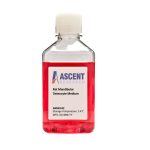 Rat Mandibular Osteocyte Medium
Cat. No. ARM0342
Rat Mandibular Osteocyte Medium
Cat. No. ARM0342
 SNU-368
Cat. No. ARC0864
SNU-368
Cat. No. ARC0864
The SEMA5A Knockout AGS Cell Line is a genetically engineered cell model derived from the AGS human gastric adenocarcinoma cell line through CRISPR/Cas9-mediated gene disruption of the SEMA5A locus. This targeted knockout cell line offers a stable loss-of-function platform for investigating the biological roles of semaphorin-5A in gastric epithelial cells. By ablating SEMA5A expression, researchers can explore its contributions to key cellular processes such as migration, adhesion, and signal transduction in a well-characterized gastric cancer model.
AGS cells are a widely used model for gastric adenocarcinoma research, retaining key characteristics of the gastric epithelium, including epithelial barrier function and secretory activity. These cells are highly relevant for studying gastric cancer cell biology, signal transduction, and the mechanisms underlying tumor progression and metastasis. The AGS background provides a physiologically appropriate context for examining how SEMA5A knockout influences gastric cancer phenotypes.
Semaphorin-5A (SEMA5A) is a member of the semaphorin family of guidance cues that signal through plexin and neuropilin receptors, including PLXNA1, PLXNB3, NRP1, and NRP2. Mechanistically, SEMA5A functions as a ligand that regulates actin cytoskeleton dynamics and cell adhesion by modulating the activity of small GTPases such as Rac1, RhoA, and Cdc42. Downstream of receptor activation, SEMA5A engages key signaling intermediates, including focal adhesion kinase (FAK), AKT (PKB), and MAPK p38, linking its signal to the PI3K-AKT and MAPK pathways. SEMA5A can also interact with the MET receptor tyrosine kinase, further broadening its signaling network. Upstream, TGF-?? has been implicated in regulating SEMA5A expression, positioning it within a broader regulatory framework that controls cell migration and survival. The loss of SEMA5A disrupts these coordinated signaling events, leading to altered actin remodeling and adhesion dynamics.
In the AGS gastric adenocarcinoma cell line, SEMA5A knockout is anticipated to impair cell migration and invasion potential, as the disruption of semaphorin signaling interferes with Rac1/Cdc42-driven cytoskeletal reorganization and FAK-mediated adhesion turnover. Furthermore, attenuation of AKT and MAPK pathway activity may reduce proliferative and survival capacities, potentially diminishing the tumorigenic properties of these cells. This knockout model thus serves as a powerful tool for dissecting SEMA5A??s role in gastric cancer progression, including its involvement in epithelial-to-mesenchymal transition phenotypes, metastatic spread, and resistance to apoptosis. Additionally, given SEMA5A??s functions in immune modulation and axon guidance, the model may be extended to studies of neuro-immune crosstalk within the tumor microenvironment.
The SEMA5A Knockout AGS Cell Line is suitable for a broad range of research applications, including gastric cancer biology, cell migration and invasion assays (e.g., transwell migration, wound healing), angiogenesis assays, drug screening, and cancer signal transduction analysis. Representative assays that are well-supported by this model include Western blotting, RT-qPCR, flow cytometry for apoptosis and cell cycle analysis, co-immunoprecipitation of protein complexes, phospho-signaling activation profiling, and immunofluorescence imaging of actin cytoskeleton and focal adhesions. These applications make the cell line a versatile resource for both mechanistic dissection and translational research efforts aimed at identifying new therapeutic targets. For additional information or technical support, please contact Ascent Research.

