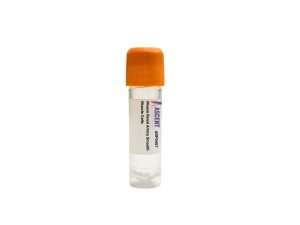
In Stock Cell Lines
Homo sapiens (Human)
Skin
Suspension
The SESN3 Knockout HuT 78 Cell Line is a CRISPR/Cas9-edited loss-of-function model in the HuT 78 cutaneous T-cell lymphoma background. SESN3, an antioxidant and negative regulator of mTORC1, is disrupted to enable study of its role in stress responses and signaling. HuT 78 cells exhibit constitutive NF-??B activation, providing a relevant malignant T lymphocyte model. This line facilitates investigation of mTOR pathway dynamics, autophagy, and redox regulation in lymphoma. SESN3 operates upstream of mTORC1 via AMPK and TSC2, and this knockout model is ideal for western blotting, apoptosis, and drug sensitivity assays. Applications include studying p53-dependent stress responses and therapeutic target evaluation.
 HSPBP1 Knockout K562 Polyclonal Cells
Cat. No. ARG20611
CALU Knockout K562 Polyclonal Cells
Cat. No. ARG20376
FEM1B Knockout HEK293 Polyclonal Cells
Cat. No. ARG12670
IGFBP2 Knockout HAP1 Polyclonal Cells
Cat. No. ARG22721
HNRNPUL2 Knockout HAP1 Polyclonal Cells
Cat. No. ARG37090
MYO5C Knockout HEK293T Polyclonal Cells
Cat. No. ARG4242
HSPBP1 Knockout K562 Polyclonal Cells
Cat. No. ARG20611
CALU Knockout K562 Polyclonal Cells
Cat. No. ARG20376
FEM1B Knockout HEK293 Polyclonal Cells
Cat. No. ARG12670
IGFBP2 Knockout HAP1 Polyclonal Cells
Cat. No. ARG22721
HNRNPUL2 Knockout HAP1 Polyclonal Cells
Cat. No. ARG37090
MYO5C Knockout HEK293T Polyclonal Cells
Cat. No. ARG4242
The SESN3 Knockout HuT 78 Cell Line is a CRISPR/Cas9-edited knockout cell line in which the SESN3 gene has been disrupted to create a loss-of-function model. This product provides a defined genetic background for investigating SESN3-dependent signaling in a human T-cell lymphoma context. The HuT 78 cell line is a well-characterized malignant T lymphocyte model, and targeted disruption of SESN3 enables precise dissection of its role in cellular stress responses and proliferation control.
The HuT 78 host cell line was derived from the peripheral blood of a patient with S??zary syndrome, an aggressive form of cutaneous T-cell lymphoma. These cells exhibit constitutive NF-??B activation, a hallmark of many lymphoid malignancies, which contributes to their transformed phenotype. HuT 78 cells are widely employed as a model system for studying T-cell lymphomagenesis, signal transduction, and apoptosis. Their malignant background, coupled with the constitutive active NF-??B pathway, provides a relevant disease context for analyzing the interplay between oncogenic signaling and stress-responsive pathways.
SESN3 encodes an antioxidant protein that functions as a negative regulator of mechanistic target of rapamycin complex 1 (mTORC1) signaling. It is transcriptionally activated by p53 and AMPK in response to oxidative stress or genotoxic insults. SESN3 protein directly interacts with AMPK and the TSC2 tumor suppressor, promoting mTORC1 inhibition through the AMPK-TSC2 axis. This leads to reduced phosphorylation of downstream mTORC1 targets such as p70 S6 kinase (p70S6K) and 4E-BP1, thereby suppressing protein synthesis and cell growth. Concurrently, SESN3 stimulates autophagy, a catabolic process essential for cellular homeostasis, by facilitating ULK1 activation and ATG protein recruitment. This dual function links SESN3 to the antioxidant response and metabolic adaptation, positioning it as a critical node in the p53-AMPK-mTOR signaling network.
In the context of HuT 78 T lymphoma cells, SESN3 knockout is expected to relieve mTORC1 inhibition, potentially leading to enhanced proliferation and reduced autophagic flux. Given the constitutive NF-??B activity in these cells, loss of SESN3 may further shift the balance toward unchecked growth and survival, mimicking aspects of aggressive lymphoma. Conversely, the absence of SESN3 may impair the cell??s ability to cope with oxidative stress, sensitizing them to reactive oxygen species-induced damage. This model thus enables researchers to dissect how SESN3 integrates with oncogenic signals in cutaneous T-cell lymphoma, and to evaluate whether therapeutic modulation of the SESN3-mTOR axis can revert malignant phenotypes.
This SESN3 knockout cell line is suitable for a wide range of experimental applications. Researchers can analyze mTOR pathway activity by western blotting for phosphorylated p70S6K and AMPK, quantify SESN3 mRNA levels via RT-qPCR, and assess apoptosis using Annexin V/PI flow cytometry. Autophagy status can be monitored through LC3-I/II ratio measurements, and mTOR activity reporters provide real-time readouts. Drug sensitivity studies with mTOR inhibitors such as rapamycin can reveal synthetic lethalities or resistance mechanisms. Co-immunoprecipitation assays facilitate the study of SESN3??s interactions with AMPK or TSC2. This tool is ideal for investigations into mTOR signaling in T-cell lymphoma, p53-dependent stress responses, and the development of targeted therapies. For additional details, please contact Ascent Research.