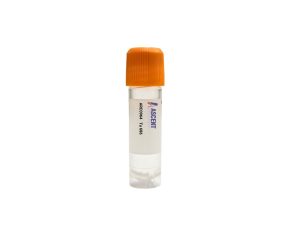
In Stock Cell Lines
Homo sapiens (Human)
Liver
Adherent
The UBE2S Knockout Huh-7 Cell Line is a genetically engineered human hepatocellular carcinoma cell model with CRISPR/Cas9-mediated disruption of the UBE2S gene, encoding an E2 ubiquitin-conjugating enzyme critical for cell cycle progression. Derived from the widely used Huh-7 hepatoma line, this knockout cell line provides a stable loss-of-function system for studying ubiquitin-proteasome pathway dysregulation in liver cancer. UBE2S collaborates with the APC/C ligase to target key mitotic regulators such as cyclin B1 and securin for degradation; its disruption impairs mitotic exit and promotes genomic instability. Applications include cell cycle analysis, ubiquitination assays, and drug target validation in hepatocellular carcinoma research.
 GATAD2B Knockout A2780 Polyclonal Cells
Cat. No. ARG18847
NOMO2 Knockout NCI-H1299 Polyclonal Cells
Cat. No. ARG17509
KIDINS220 Knockout HGC-27 Polyclonal Cells
Cat. No. ARG30123
ITGB1 Knockout DLD-1 Polyclonal Cells
Cat. No. ARG35567
DNAJA2 Knockout HEK293T Polyclonal Cells
Cat. No. ARG39067
IDH1 Knockout huh-7 Polyclonal Cells
Cat. No. ARG28359
GATAD2B Knockout A2780 Polyclonal Cells
Cat. No. ARG18847
NOMO2 Knockout NCI-H1299 Polyclonal Cells
Cat. No. ARG17509
KIDINS220 Knockout HGC-27 Polyclonal Cells
Cat. No. ARG30123
ITGB1 Knockout DLD-1 Polyclonal Cells
Cat. No. ARG35567
DNAJA2 Knockout HEK293T Polyclonal Cells
Cat. No. ARG39067
IDH1 Knockout huh-7 Polyclonal Cells
Cat. No. ARG28359
The UBE2S Knockout Huh-7 Cell Line is a human hepatocellular carcinoma-derived cell model featuring CRISPR/Cas9-mediated disruption of the UBE2S gene, which encodes an E2 ubiquitin-conjugating enzyme essential for mitotic progression and protein homeostasis. This knockout cell line provides a genetically defined loss-of-function system for investigating the ubiquitin-proteasome pathway and cell cycle regulation. As a stable knockout cell line derived from the well-characterized Huh-7 hepatocarcinoma line, it enables precise dissection of UBE2S-dependent mechanisms in liver cancer biology without the confounding effects of transient gene silencing approaches.
Huh-7 is an immortalized human hepatocellular carcinoma cell line widely used in liver research, including studies on hepatitis C virus replication and drug metabolism. This adherent line retains hepatocyte features, providing a relevant model for liver cancer biology. The UBE2S knockout Huh-7 line utilizes this hepatoma background to assess how dysregulated ubiquitin-mediated proteolysis drives malignant proliferation and tumor maintenance, enabling translational studies in hepatocellular carcinoma.
UBE2S is an E2 enzyme that elongates K11-linked ubiquitin chains on APC/C substrates, targeting them for proteasomal degradation. Regulated by the APC/C complex, CDK1, and mitotic checkpoint, its activity governs the turnover of cyclin B1, securin, CDH1, and CDC20. UBE2S interacts with APC/C, ubiquitin, UBCH10, and E1 enzymes. Disruption of UBE2S leads to impaired substrate degradation, causing mitotic defects and genomic instability, salient features of hepatocellular carcinoma.
In hepatocellular carcinoma, UBE2S deregulation contributes to uncontrolled proliferation. This knockout cell line allows examination of UBE2S loss on ubiquitination dynamics and cell cycle progression in liver cancer cells. Researchers can probe hepatoma cell dependence on UBE2S for growth and survival, and identify therapeutic vulnerabilities. The model facilitates studies on APC/C-mediated proteolysis in liver cancer, directly linking UBE2S ablation to stabilization of mitotic regulators like cyclin B1 and securin, and consequent cell cycle abnormalities.
This cell line supports diverse experimental approaches such as western blotting to monitor ubiquitination and stability of APC/C substrates, flow cytometry for cell cycle analysis, and proliferation and viability assays to quantify growth dependency on UBE2S. Ubiquitination assays and APC/C activity measurements using this knockout model can elucidate UBE2S??s enzymatic function and substrate specificity. Furthermore, it serves in drug target validation, screening for synthetic lethal interactions, and investigating proteasome inhibitor resistance mechanisms in liver cancer. For more information, please contact Ascent Research.