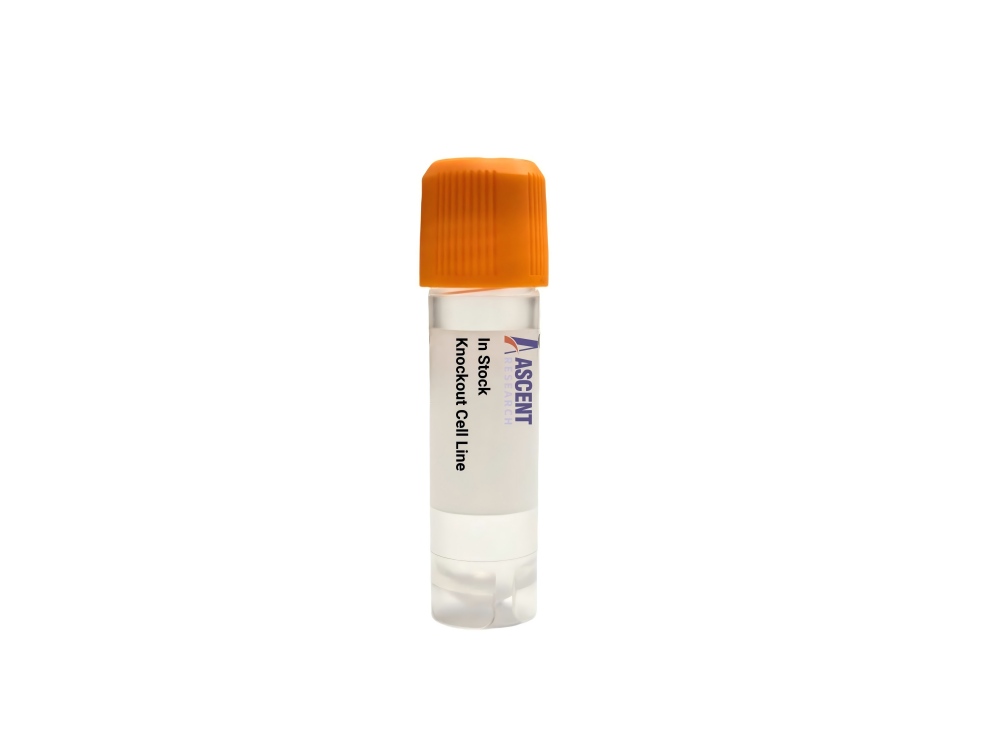
In Stock Cell Lines
The DPP4 Knockout IPEC-J2 Cell Line is a CRISPR/Cas9-edited porcine jejunal epithelial knockout model with targeted disruption of the DPP4 gene. DPP4 is a serine exopeptidase that regulates glucose homeostasis by degrading incretin hormones GLP-1 and GIP and modulates immune responses via chemokine processing (CXCL12, CCL5) and T-cell co-stimulation. In the IPEC-J2 background, this knockout line enables investigation of DPP4??s roles in intestinal barrier function, insulin secretion pathways, and NF-??B-mediated inflammation. Key applications include metabolic disease research, DPP4 inhibitor testing, and host-microbe interaction studies, using assays such as glucose uptake, TEER, and flow cytometry for CD26 surface expression.
 C2CD2L Knockout A549 Polyclonal Cells
Cat. No. ARG31979
PDLIM5 Knockout Hela Polyclonal Cells
Cat. No. ARG8105
ARHGEF6 Knockout Hela Polyclonal Cells
Cat. No. ARG20901
HOOK3 Knockout 786-O Polyclonal Cells
Cat. No. ARG25286
JMY Knockout A549 Polyclonal Cells
Cat. No. ARG34443
C2CD2L Knockout A549 Polyclonal Cells
Cat. No. ARG31979
PDLIM5 Knockout Hela Polyclonal Cells
Cat. No. ARG8105
ARHGEF6 Knockout Hela Polyclonal Cells
Cat. No. ARG20901
HOOK3 Knockout 786-O Polyclonal Cells
Cat. No. ARG25286
JMY Knockout A549 Polyclonal Cells
Cat. No. ARG34443
 SNU-1066
Cat. No. ARC0854
SNU-1066
Cat. No. ARC0854
The DPP4 Knockout IPEC-J2 Cell Line is a CRISPR/Cas9-edited knockout cell line featuring targeted disruption of the DPP4 gene in the IPEC-J2 background. This loss-of-function model enables the investigation of DPP4-dependent processes in a physiologically relevant porcine intestinal epithelial context, without assumptions of specific editing outcomes.
The IPEC-J2 host cell line is a spontaneously immortalized, non-transformed porcine jejunal epithelial cell line widely used to model intestinal nutrient absorption, barrier integrity, and host?Cmicrobial interactions. Its epithelial origin and retention of key functional attributes make it a suitable platform for studying enterocyte biology and gut physiology in vitro.
DPP4 is a multifunctional serine exopeptidase that cleaves N-terminal dipeptides from a range of substrates, including the incretin hormones GLP-1 and GIP, thereby attenuating insulinotropic signaling through the GLP-1 receptor/GIP receptor?Cadenylate cyclase?CPKA?CCREB pathway. Beyond metabolic regulation, DPP4 functions as a co-stimulatory molecule in T-cell activation, interacting with ADA, caveolin-1, CD45, and the CD3 complex, and processing chemokines such as CXCL12 (SDF-1) and CCL5. DPP4 signaling integrates inputs from upstream regulators HNF1??, FoxO1, SREBP-1c, PPAR??, and inflammatory cytokines TNF-??, IL-6, and IFN-??, and its activity modulates NF-??B and Wnt/??-catenin pathways. Through interactions with fibronectin and collagen, DPP4 participates in extracellular matrix remodeling and cell adhesion.
In the IPEC-J2 knockout model, loss of DPP4 disrupts local incretin degradation, potentially enhancing GLP-1 and GIP availability and altering downstream insulin secretion responses. Concurrently, ablation of DPP4 impacts chemokine processing and T-cell co-stimulatory functions, affecting intestinal immune homeostasis and inflammation. The model also provides a tool to dissect DPP4-mediated modulation of barrier function, as DPP4 interacts with junctional and matrix proteins, influencing epithelial permeability and repair mechanisms.
This knockout cell line is suited for metabolic disorder research, including the evaluation of DPP4 inhibitor pharmacodynamics through glucose uptake and insulin secretion assays. Researchers can employ RT-qPCR, Western blotting, and enzyme activity measurements to validate DPP4 disruption and downstream effects. Barrier function can be assessed via transepithelial electrical resistance (TEER) measurements and cytokine secretion profiling, while cell migration and invasion assays probe DPP4 roles in extracellular matrix remodeling. Flow cytometric analysis of CD26 surface expression offers a direct readout of knockout efficiency. For further details or to discuss application-specific protocols, please contact Ascent Research.